MONROVIA — The decision by the House of Representatives, led by Speaker Richard Nagbe Koon, to summon the leadership of the Liberia Board for Nursing and Midwifery (LBNM) has triggered growing concern among stakeholders, with questions emerging over legislative overreach, regulatory independence, and potential pressure tied to accreditation decisions in the health sector.
At the center of the controversy is a March 18 communication from the House directing LBNM Registrar, Cecelia C. K. Flomo, to appear before lawmakers and provide clarity on the Board’s finances, including alleged subsidies outside the national budget and the submission of a three-year financial report.
While the Legislature maintains that its actions fall within its oversight mandate, critics argue that the move may encroach on functions traditionally reserved for institutions such as the General Auditing Commission (GAC), particularly in matters relating to financial audits and compliance. However, it is important to note that the Nursing Board has consistently subjected its financial activities to regular audits, as evidenced by the presentation of its three-year audited financial report to the Legislature during its appearance on March 30, 2026.
Accreditation Dispute Raises Red Flags
The situation has been further complicated by developments surrounding Barshell University, which has repeatedly sought accreditation to operate a nursing program but has failed to meet regulatory requirements set by the LBNM.
Documents reviewed show that as far back as 2020, the Board explicitly warned the institution that it was not authorized to run a nursing or midwifery program and cautioned that recruiting students without accreditation would be illegal.
A spot-check report by the Board identified significant deficiencies, including lack of proper infrastructure, absence of qualified faculty documentation, inadequate library resources, and no evidence of approved clinical training sites—key requirements under Liberia’s health training regulations.
Despite these findings, recent actions by House leadership—including directing the Board to reassess the university within a two-week timeframe—have raised concerns about possible attempts to fast-track accreditation.
Allegations of Intimidation
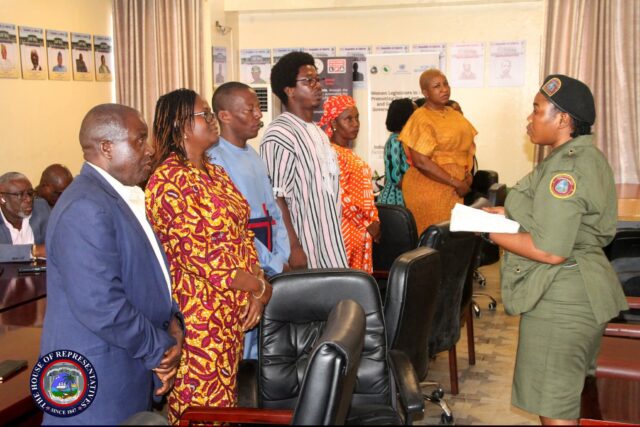
Multiple sources familiar with the March 30 appearance of LBNM officials before the House allege that the session was marked by pressure on the Board to grant operating licenses under expedited conditions.
Though these claims have not been independently verified, they have intensified fears that regulatory standards—particularly in the training of nurses and midwives—could be compromised.
Health experts warn that any weakening of accreditation processes could have serious implications for patient safety.
“Nursing education is not an area where standards can be negotiated,” one health professional noted. “Lives depend on the competence of those being trained.”
Funding Paradox
The controversy also highlights a longstanding structural issue: the LBNM operates with limited or no direct funding from the national budget, relying instead on internally generated revenue such as licensing fees and accreditation charges.
Despite these constraints, the Board has significantly expanded the number of accredited nursing institutions in Liberia—from fewer than 10 to nearly 30—under the current administration.
Notably, one of the most recent accreditations was granted in 2025 to Apex University of Liberia’s nursing program, an institution linked to the current Deputy Speaker, after reportedly meeting all required standards.
Balancing Oversight and Independence
In a statement, the House Press Bureau defended its actions, announcing that its Public Accounts Committee has been mandated to review the Board’s financial activities, including revenue sources and expenditures.
The House also reiterated its directive for Barshell University to reapply for accreditation, emphasizing that licensure should only be granted upon full compliance with established standards.
However, governance experts caution that while legislative oversight is essential, it must not undermine the independence of specialized regulatory bodies.
“This is about maintaining the integrity of systems that protect public health,” one analyst said. “Oversight must not become influence.”
A Critical Moment for Health Standards
As the debate unfolds, the stakes extend beyond institutional tensions. At issue is the credibility of Liberia’s healthcare training system and the safeguards designed to ensure that only qualified professionals enter the workforce.
For many observers, the message is clear: regulatory standards in the health sector must remain insulated from political pressure. Because in the end, the consequences of compromise are not administrative—they are human.
Follow The Liberian Post on Facebook and X (formerly twitter)