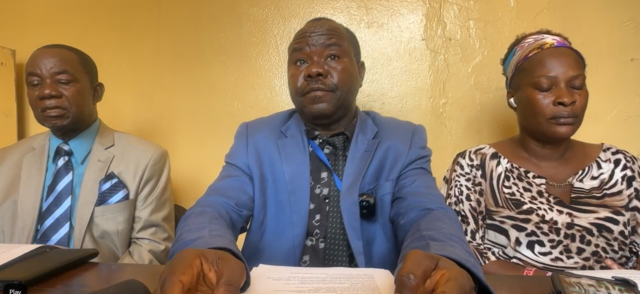
ZWEDRU, Grand Gedeh County — Citizens of Putu Administrative District, through the Putu Contact Group (PCG), have issued a strong statement outlining strict conditions for their support to the revival of the multi-billion-dollar Putu Iron Ore Project, emphasizing transparency, legal compliance, and protection of community interests.
The statement, released Wednesday, comes amid renewed government efforts to reactivate the long-stalled mining concession—one of Liberia’s largest untapped mineral assets—now being advanced with a new preferred developer, Africa Metallic Resources Inc. (AMR).
Support for Project—But With Clear Conditions
While welcoming the government’s move to revive the project, the PCG stressed that its backing remains “constructive—but strictly conditional,” anchored on transparency, accountability, and verified investor credibility.
The group, representing Project Affected Communities (PACs) in Grand Gedeh County, warned that any agreement must guarantee full disclosure of all contractual terms, including the Mineral Development Agreement (MDA), and ensure that local communities benefit directly from the project.
“We support the revival of the Putu Project, but only under conditions that protect the rights and interests of our people,” the statement emphasized.
Calls for Transparency and Legal Compliance
A central concern raised by the group is the need for strict adherence to Liberian laws and international best practices, particularly regarding Free, Prior, and Informed Consent (FPIC).
The PCG called on the government to:
- Ensure full transparency in all negotiations;
- Mandate verified FPIC compliance;
- Strengthen legislative oversight;
- Align agreements with national and international legal frameworks;
- Require independent verification of investor financing and solvency.
The group also warned against speculative practices, including what it described as “asset flipping”—where concession rights are transferred without actual development.
Questions Over Ownership and Financing
In a key clarification, the PCG stressed that recent administrative steps linked to the project do not constitute ownership transfer, urging the public to avoid misinterpretation.
“Any suggestion that ownership transfer is complete at this stage is premature and procedural—not final,” the group noted.
It further clarified that the issuance of administrative fees or invoices does not equate to legal acquisition of concession rights or fulfillment of contractual obligations.
The group also highlighted the importance of due diligence, stating that any transfer of control must receive formal government approval and pass technical, financial, and legal scrutiny.
Concerns Over Timeline and Feasibility
The PCG raised doubts about expectations for rapid project rollout, describing near-term operational timelines as unrealistic given the complexities of large-scale mining.
According to the group, key requirements—including environmental and social impact assessments, infrastructure development, community consultations, and financing—typically take 18 to 36 months under optimal conditions.
“Without secured financing and export infrastructure, any projected timeline for production lacks technical and financial credibility,” the statement said.
Economic Promise, But Lingering Skepticism
The Putu Iron Ore Project is widely regarded as a potential economic gamechanger for Liberia, with estimates suggesting billions of tons of iron ore deposits capable of generating jobs, infrastructure, and revenue.

However, past failures and delays—including the withdrawal of previous operators and years of inactivity—have left communities cautious about new commitments.
Citizens and analysts alike have warned that without proper safeguards, the project risks repeating Liberia’s history of extractive investments that failed to deliver lasting benefits to local populations.
Infrastructure and Community Benefits Key
The PCG emphasized that infrastructure investments tied to the project—such as rail and port systems—must not only support mining operations but also benefit surrounding communities and the broader national economy.
It also called for:
- Binding commitments on local employment and managerial inclusion;
- Transparent benefit-sharing mechanisms;
- Strong environmental and social safeguards.
A Test Case for Liberia’s Extractive Sector
As the Boakai administration moves to fast-track the Putu project, the growing scrutiny from local stakeholders signals a shift toward greater accountability in Liberia’s extractive sector.
Experts say the outcome of the Putu negotiations could set a precedent for how future concession agreements are structured—balancing investor interests with community rights and national development goals.
For now, the message from Putu’s citizens is unmistakable: development is welcome, but only if it is transparent, credible, and inclusive.
Follow The Liberian Post on Facebook and X (formerly twitter)