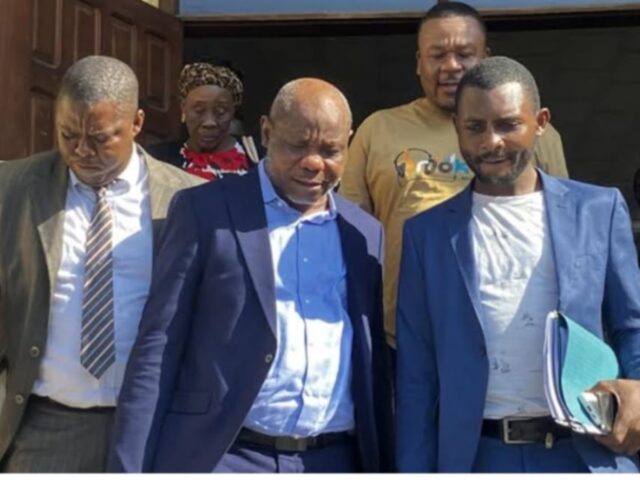
CAPITOL HILL, Monrovia – The Supreme Court of Liberia has rejected a petition for re-argument filed by former Finance and Development Planning Minister Samuel D. Tweah and four other former senior government officials, ruling that they are not shielded by presidential immunity and must stand trial on multiple criminal charges.
In a judgment delivered Thursday, the High Court reaffirmed its December 18, 2025 decision denying the officials’ petition for a writ of prohibition, which had sought to halt proceedings before Criminal Court “C” at the Temple of Justice in Montserrado County.
The former officials—Samuel D. Tweah, Cllr. Nyenati Tuan, Stanley S. Ford, D. Moses P. Cooper, and Jefferson Karmoh—are facing charges including economic sabotage, theft of property, money laundering, criminal facilitation, and criminal conspiracy. The case stems from allegations linked to their tenure in government and their roles within the National Security Council (NSC).
Immunity Argument Rejected
The defendants had argued that as members of the National Security Council, they operated under the authority of the Office of the President and were therefore entitled to the constitutional immunity granted to the President under Article 61 of the 1986 Constitution.
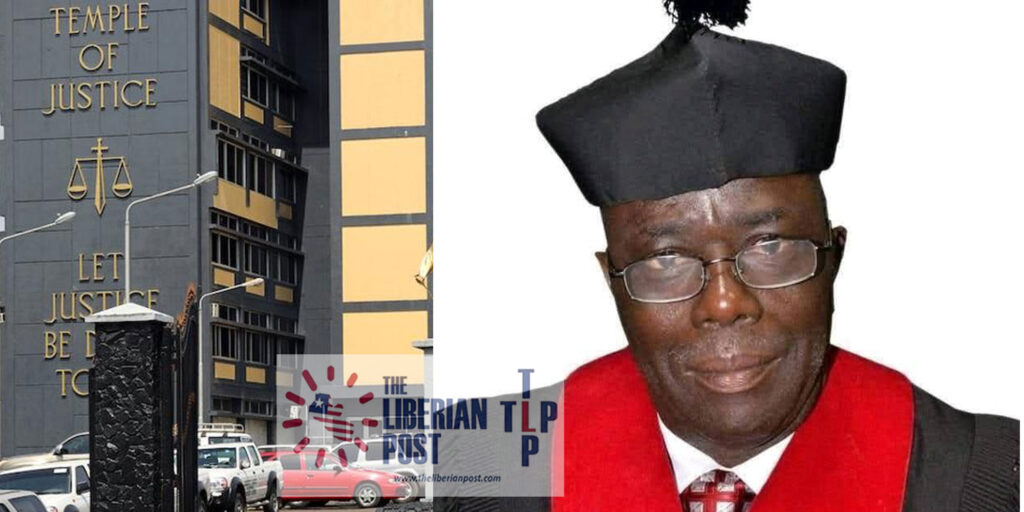
However, the Supreme Court categorically rejected that claim, holding that presidential immunity is personal to the President and cannot be extended to other officials—even those serving on high-level advisory or security bodies within the Executive Mansion.
“The immunity enjoyed by the President springs from the Constitution and is not transferable to third parties,” the Court declared in its ruling.
The justices further noted that nothing in the National Security Reform and Intelligence Act of 2011 confers immunity on members of the National Security Council. The Court emphasized that statutory membership in an executive body does not elevate officials to constitutional immunity.
Miscitation Deemed Harmless
In their request for re-argument, the petitioners contended that the Court had relied on the wrong statutory provision in its earlier ruling, citing Section 2(g) instead of Section 3(b) of the National Security Reform and Intelligence Act, which outlines the composition of the NSC.
The Court acknowledged the mis-citation but described it as inadvertent and harmless, stating that it had no bearing on the substantive legal conclusion.
According to the judgment, even under Section 3(b), which details the composition of the Council, there is no language granting immunity to its members.
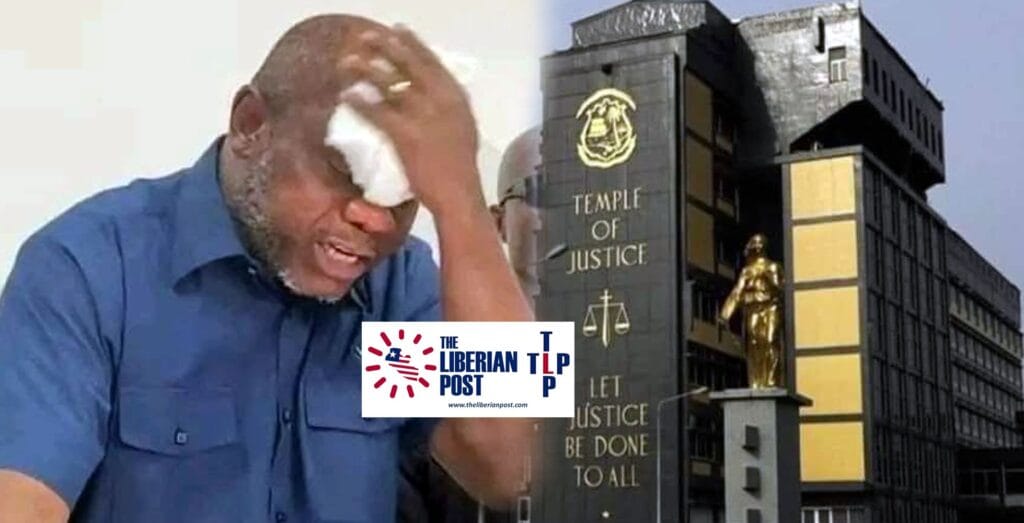
Re-Argument Not a Second Bite at the Apple
The Supreme Court reiterated that a petition for re-argument is permitted only when it can be shown that the Court overlooked a material fact or controlling point of law that would have altered the outcome.
The justices stressed that the process is not designed to give dissatisfied litigants a second opportunity to relitigate issues already decided.
Finding no overlooked fact or legal authority that would change its prior decision, the Court denied the petition.
Trial to Resume
The Clerk of the Supreme Court has been instructed to issue a mandate directing Criminal Court “C” to resume jurisdiction and proceed with the trial.
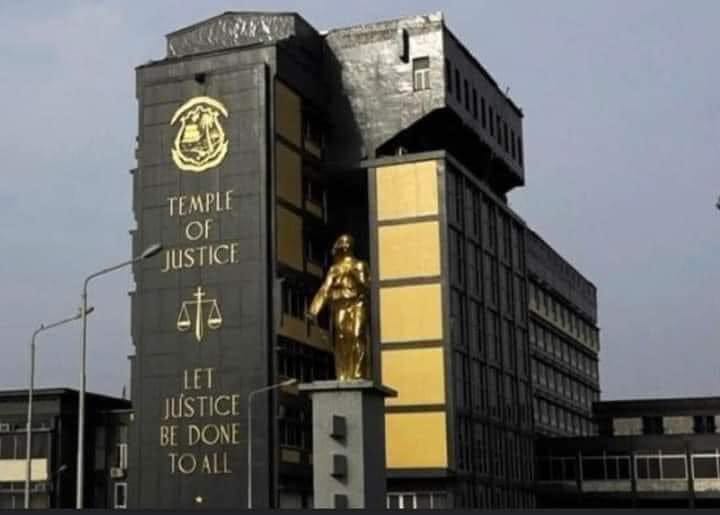
Chief Justice Yamie Quiqui Gbeisay, Sr., and Associate Justices Yussif D. Kaba and Boakai N. Kanneh signed the judgment. Associate Justices Jamesetta Howard Wolokolie and Ceaineh D. Clinton-Johnson recused themselves and did not participate in the decision.
The ruling effectively clears the final procedural hurdle at the Supreme Court level, paving the way for the criminal trial of the former officials to continue.
Legal analysts say the decision reinforces a long-standing constitutional principle: while the President enjoys limited immunity during tenure, other executive officials remain accountable under the law.
The case is expected to resume in Criminal Court “C” in the coming days.
Follow The Liberian Post on Facebook and X (formerly twitter)