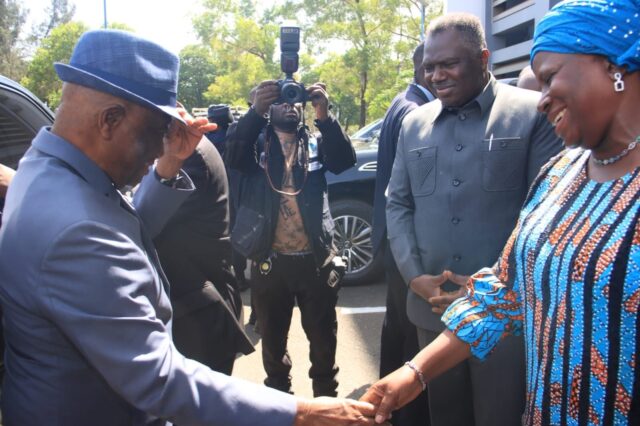
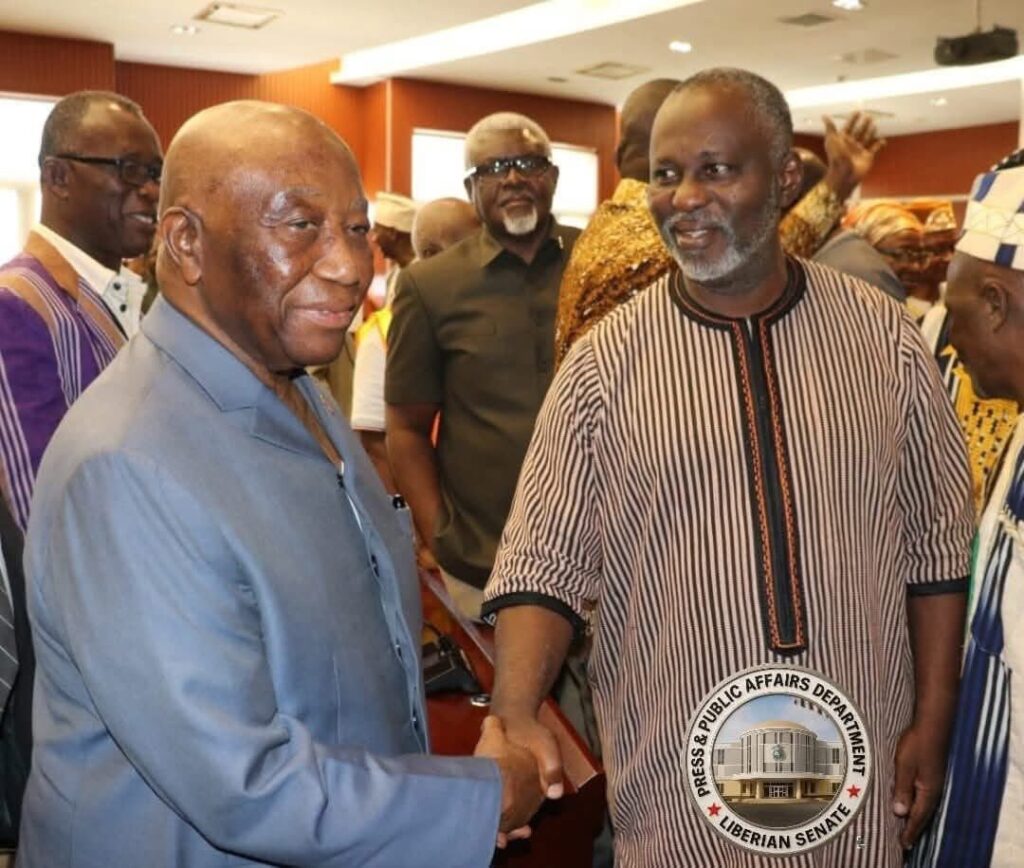
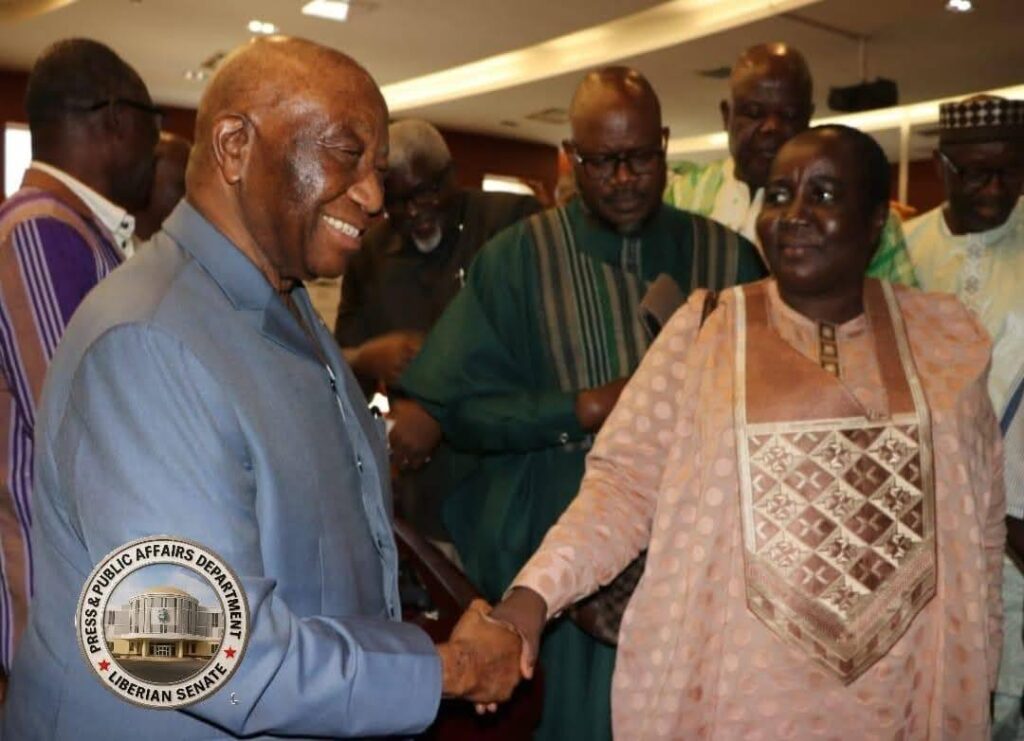
CAPITOL HILL, Monrovia — President Joseph Nyuma Boakai on Thursday, March 19, 2026, held a rare and extensive engagement with members of the Liberian Senate, in what officials describe as a strategic effort to strengthen coordination between the Executive and Legislative branches amid mounting national challenges.
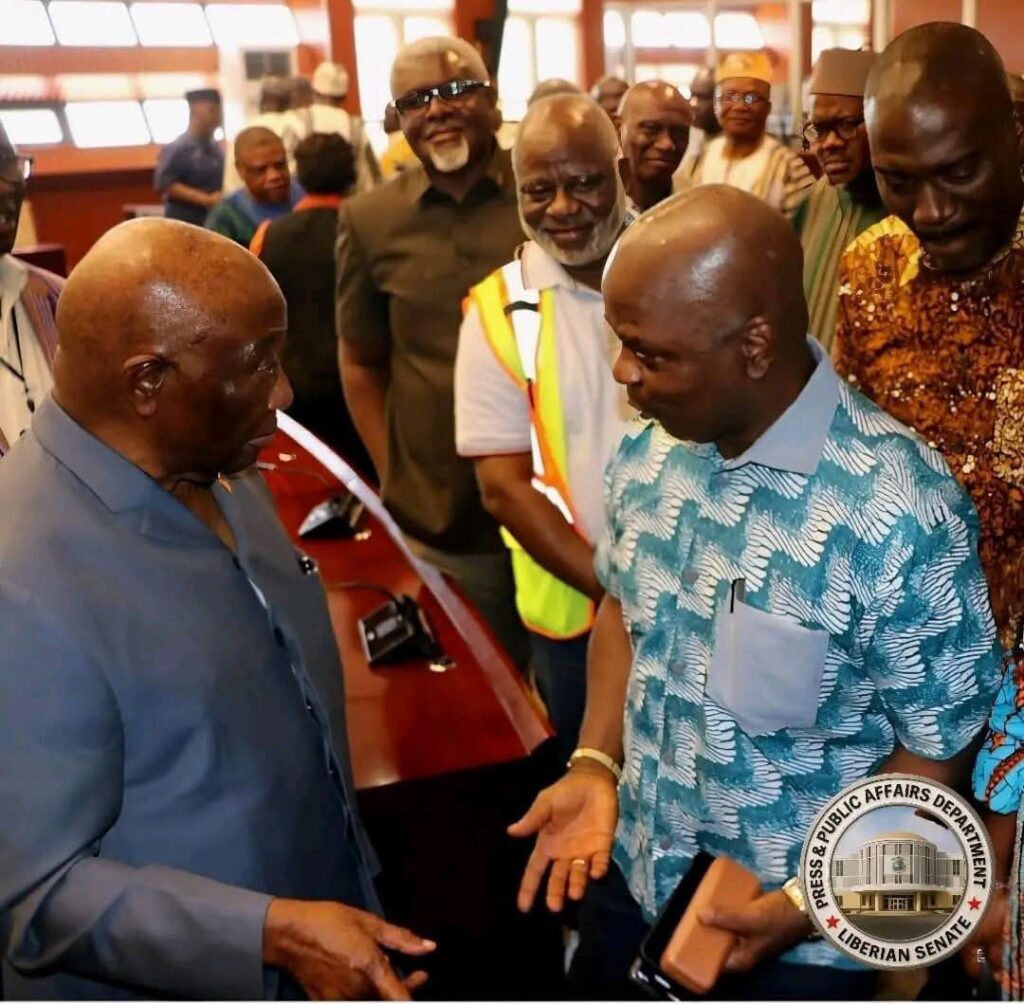
The high-level meeting, held at the Capitol Building, followed a formal invitation from the Senate and brought together nearly the entire membership of the Upper House for more than two hours of direct dialogue with the President.
A Meeting Focused on National Priorities
The session, presided over by Vice President Jeremiah Kpan Koung, who also serves as President of the Senate, and led by Senate President Pro Tempore Nyonblee Karnga Lawrence, centered on key governance and development issues affecting the country.
Of the 30 Senators, 29 were present, underscoring the significance attached to the meeting. Only Senator Bill Tweaway was absent due to illness.
During the engagement, President Boakai provided updates on a wide range of national issues, including:
- The state of the economy
- National security developments
- Progress on major government programs, including the Yellow Machines initiative
- Liberia’s foreign policy engagements
- Ongoing development efforts across the counties
Why the Meeting Matters
The meeting comes at a critical time for Liberia, as the Boakai administration works to stabilize the economy, expand infrastructure, and navigate regional diplomatic tensions—particularly along the Guinea border.
Analysts say the President’s direct engagement with Senators signals a deliberate shift toward consensus-driven governance, aimed at aligning national priorities and reducing friction between branches of government.
“This was not just a courtesy visit—it was a working session designed to ensure that the Executive and Legislature are moving in the same direction,” a senior official familiar with the discussions noted.
Lawmakers Raise Constituency Concerns
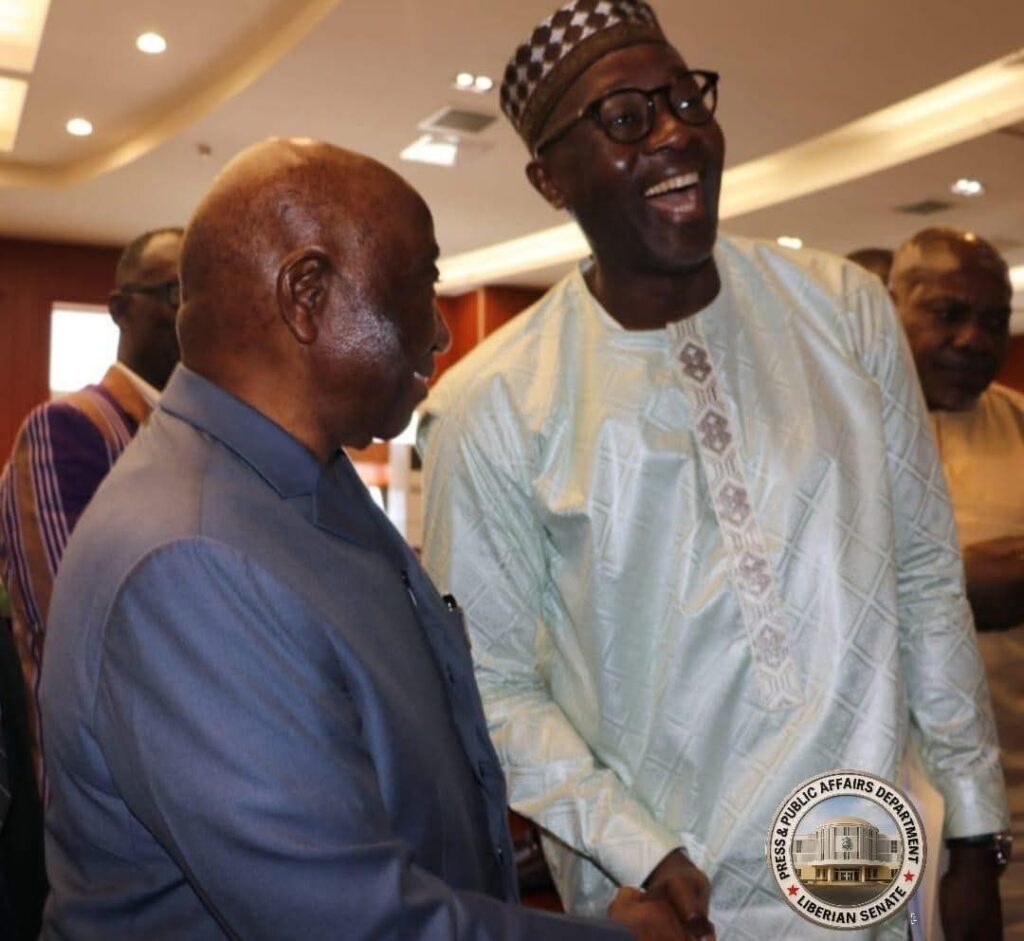
Senators used the opportunity to highlight pressing challenges in their respective counties, ranging from inadequate social services to local governance bottlenecks.
Key concerns raised included:
- Improving service delivery at the grassroots level
- Strengthening transparency and accountability
- Expanding access to healthcare, education, and infrastructure
- Addressing administrative and development gaps in rural communities
The discussions reflected a shared urgency to translate national policies into tangible improvements for ordinary Liberians.
Executive-Legislative Collaboration in Focus
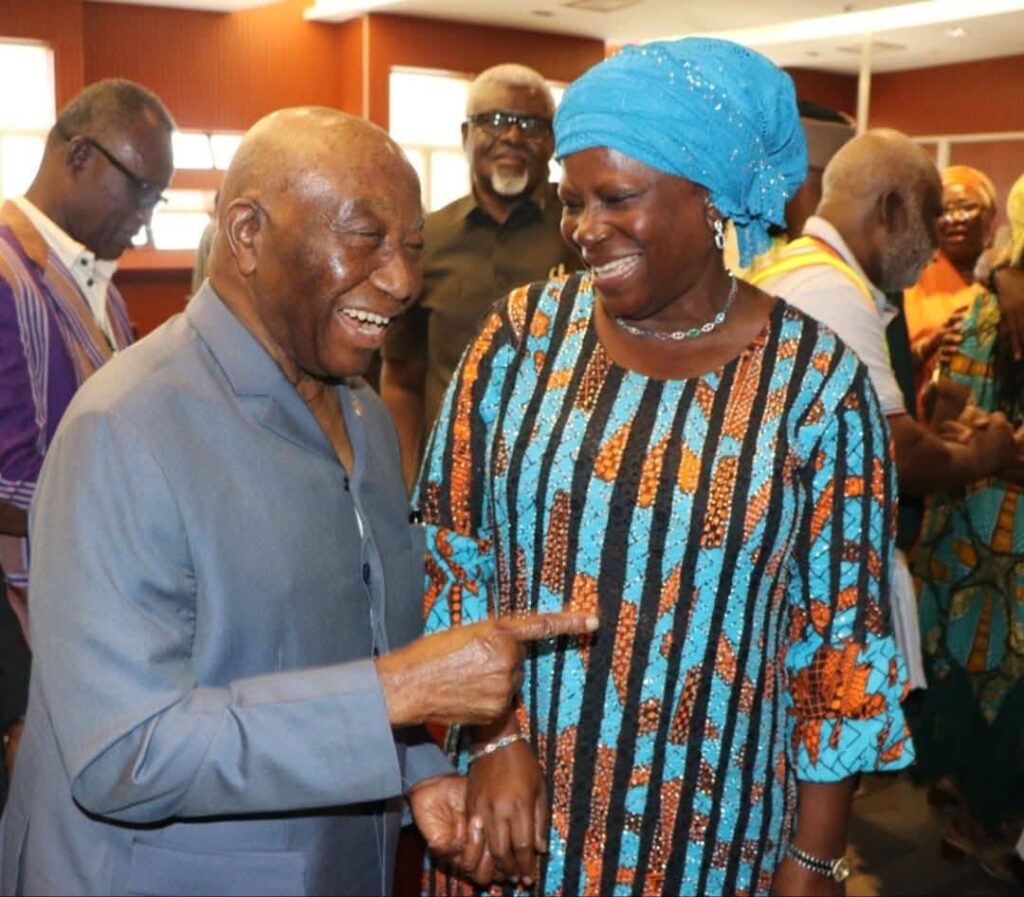
President Boakai emphasized that effective governance depends on strong collaboration between the branches of government.
“Progress for Liberia requires that we work together in a spirit of unity and shared responsibility,” the President told lawmakers, according to officials.
He was accompanied by senior Cabinet members and key government officials, highlighting the administration’s intent to engage the Legislature comprehensively on policy and implementation.
For her part, Pro Tempore Lawrence welcomed the President’s presence, describing the meeting as an important step in strengthening institutional cooperation.
She reaffirmed the Senate’s commitment to maintaining a constructive relationship with the Executive in pursuit of national development.
Background: A Governance Strategy Taking Shape
Since taking office, President Boakai has prioritized rebuilding trust in public institutions and improving coordination across government.
Thursday’s meeting fits into a broader pattern of engagement aimed at ensuring that legislative support aligns with executive policy goals—particularly in areas such as infrastructure development, economic reform, and decentralization.
The inclusion of discussions on flagship initiatives like the Yellow Machines program—which targets road connectivity across rural Liberia—highlights the administration’s focus on delivering visible results.
A Unified Message Moving Forward
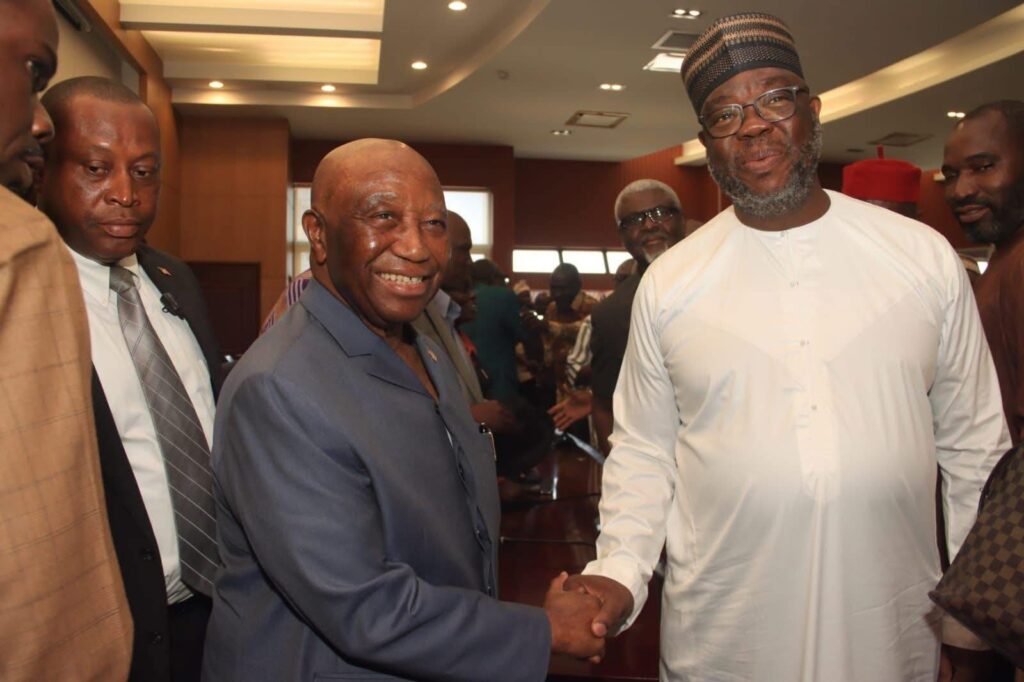
The meeting concluded with both branches reaffirming their commitment to collaboration, stability, and democratic governance.
For many observers, the significance of the visit lies not just in the issues discussed, but in the message it sends: that Liberia’s leadership is seeking to govern through dialogue, coordination, and shared accountability.
In a political environment where tensions between branches can slow progress, President Boakai’s direct engagement with the Senate may prove pivotal in advancing his administration’s development agenda.
Follow The Liberian Post on Facebook and X (formerly twitter)