-Layli Maparyan Says NASSCORP Payments, Salary Disparities, New HR Manual, Transportation and Campus Renovation Are Being Addressed as Administration Appeals for Return to Classrooms
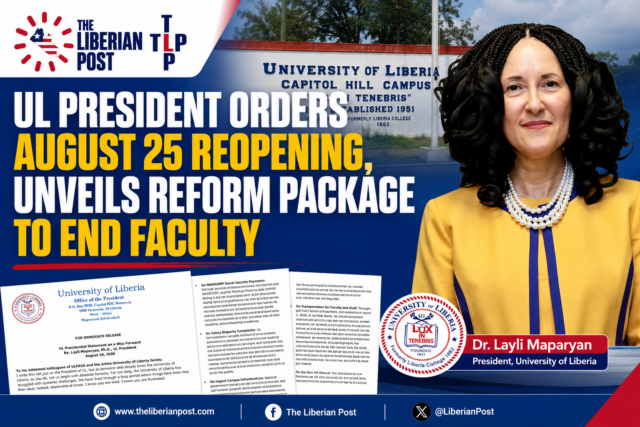
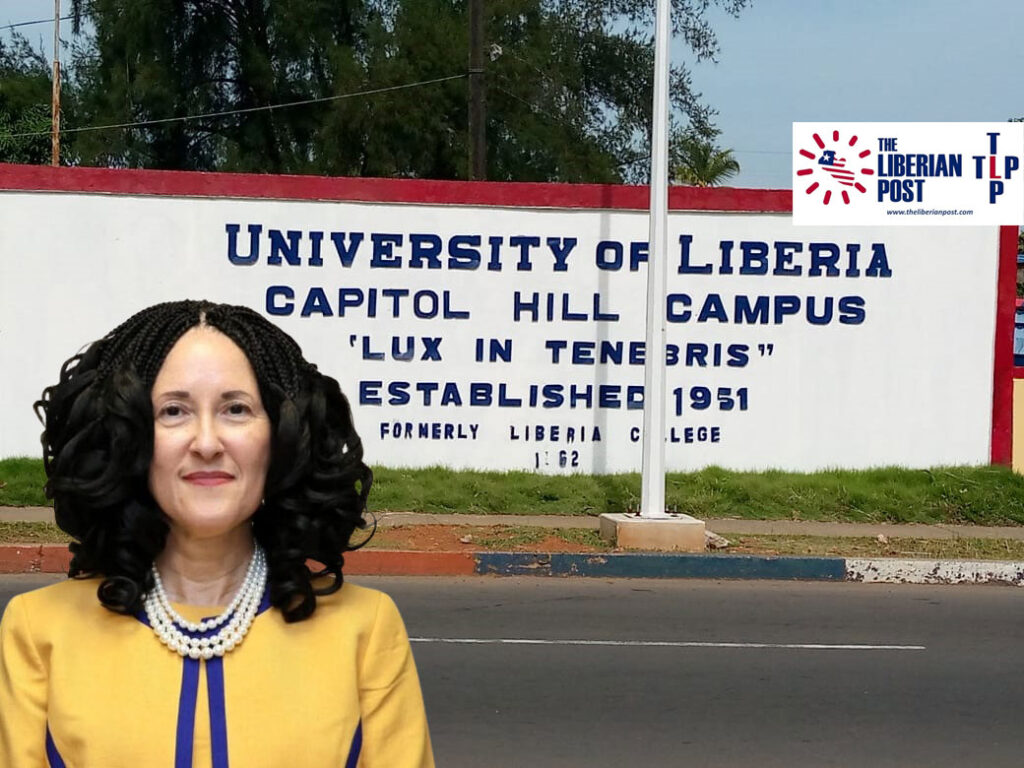
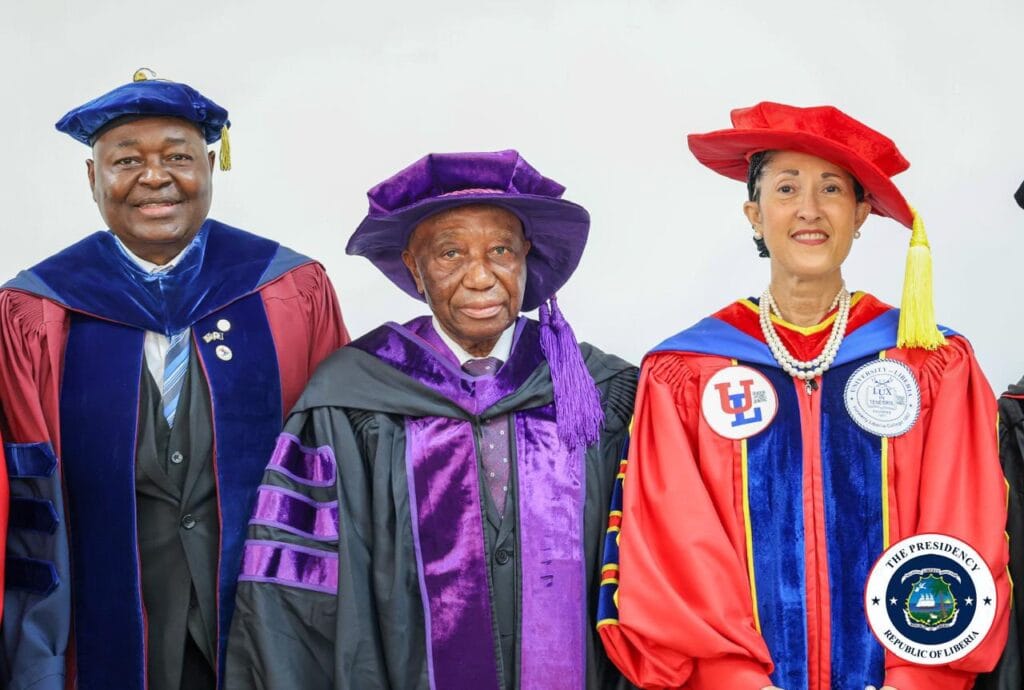
MONROVIA, Liberia — University of Liberia (UL) President Dr. Layli Maparyan has announced a comprehensive “way forward” for Liberia’s premier public university, calling on faculty and staff to return to work on August 25 while outlining measures aimed at resolving long-standing grievances over social security, salary disparities, human-resource policies, transportation and campus infrastructure.
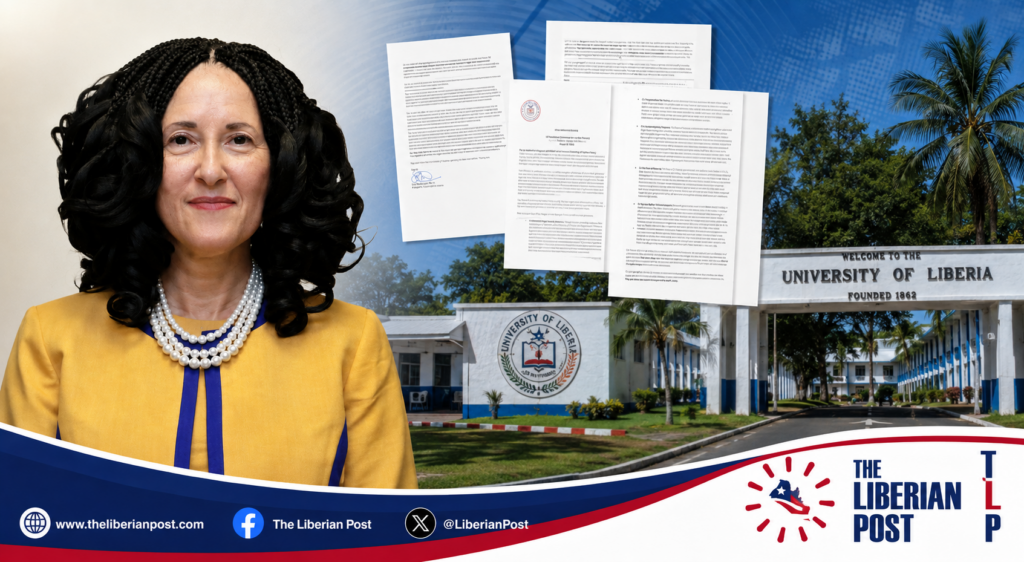
In a four-page presidential statement issued Monday, August 10, Dr. Maparyan acknowledged the depth of frustration among faculty and staff and said the administration had heard their concerns, but argued that resolving institutional problems cannot come at the expense of students whose education has already been disrupted.
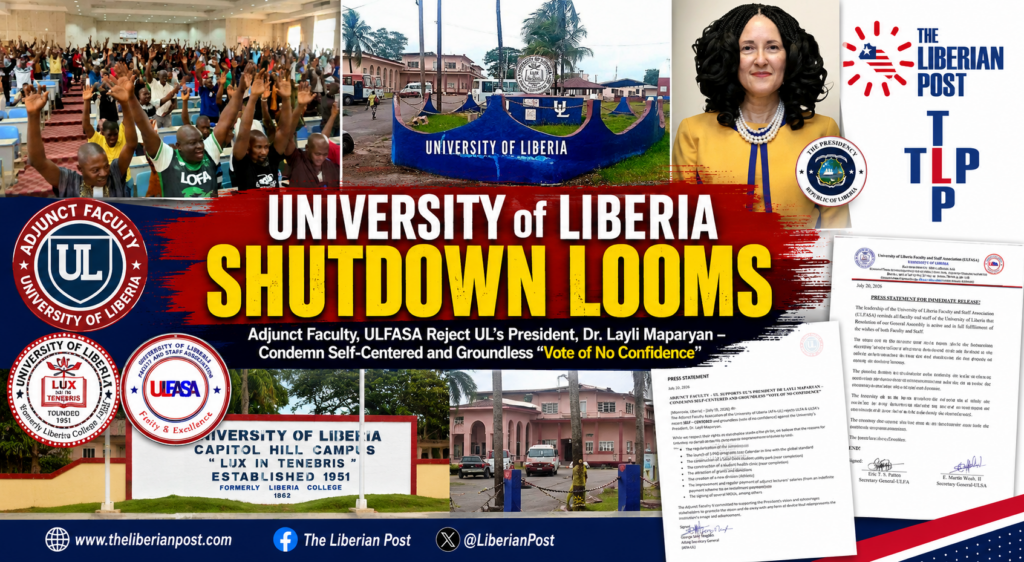
The statement comes amid a period of labor and administrative tensions at the University, with UL faculty and staff raising concerns over working conditions, compensation, social-security payments and other institutional matters.
Dr. Maparyan’s intervention seeks to combine immediate measures to address staff grievances with broader institutional reforms designed to restore discipline, accountability and stability at the University.
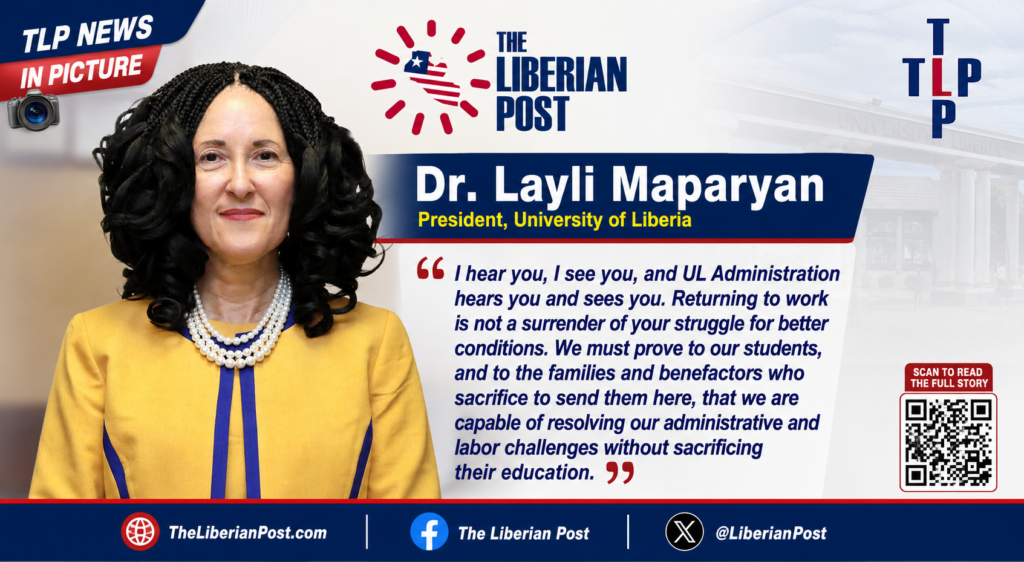
“I hear you, I see you, and UL Administration hears you and sees you,” Maparyan told faculty and staff, acknowledging concerns over deteriorating infrastructure, uncertainty surrounding NASSCORP contributions and disparities in compensation for employees performing similar work.
She said the University’s Board of Trustees has given her administration an “urgent mandate” to move from promises to concrete action and demonstrate meaningful progress on the issues confronting faculty and staff.
NASSCORP Payments Take Center Stage
One of the most significant commitments outlined by the UL President concerns NASSCORP social-security payments for retired faculty and staff.
According to Maparyan, the University Administration, NASSCORP and the Ministry of Finance and Development Planning (MFDP) reached a consensus on the amount owed to bring the University into full compliance with its obligations.
She said the Government of Liberia has agreed to pay the amount in full.
As part of the agreement, NASSCORP will begin enrolling eligible University of Liberia retirees and provide them with their full legal pensions.
The President described the arrangement as an important step toward ensuring a more dignified retirement for faculty and staff who have reached retirement age.
The issue is particularly significant because uncertainty over social-security contributions has been among the longstanding grievances cited by University employees.
Salary Disparities to Be Addressed in FY2027 Budget
Maparyan also addressed complaints over salary disparities among University employees performing similar jobs.
She said the administration has accepted data provided by the University of Liberia Staff Association (ULSA) concerning salary disparities and has updated the association’s study with additional data that confirms its findings.
According to the President, the University payroll has been analyzed to determine the amount required to bring employees in each job category to the highest modal salary for that category.
Because salary adjustments must be incorporated into the annual budget process, Maparyan said the University will include the proposed improved salaries for affected employees in its FY2027 budget proposal.
She also announced a broader effort to prevent disparities from recurring.
The administration is undertaking a role-documentation exercise, scheduled for completion by August 31, to establish appropriate salary ranges for different positions based on qualifications, educational degrees, seniority and performance criteria.
ULFA and ULSA will subsequently have an opportunity to review and comment on the proposed framework before its final implementation, according to the statement.
Maparyan said all new hires will be required to conform to the established salary scheme and that the administration is committed to a transparent reconciliation process based on the principle of equal pay for equal work.
New HR Manual Already in Effect
Another major component of the administration’s reform agenda is the University’s new Human Resources Manual.
Maparyan said the UL Board of Trustees endorsed the manual on July 15, 2026, with an effective date of August 1, 2026.
The manual contains transitional provisions requiring annual internal reviews and a comprehensive review every three years.
The Board has also commissioned independent first-year reviews by an external HR expert and the Civil Service Agency to assess alignment with best practices and Liberian law.
According to the statement, copies of the manual will be distributed electronically to all University employees, while hard copies will be provided to division heads, ULFA, ULSA and the Association of Faculty Administrators of the University of Liberia (AFA-UL).
The HR Office will also conduct monthly training workshops from August through December 2026, with the institution transitioning to a semesterly schedule in 2027.
A new physical suggestion box outside the HR Office will additionally provide a continuing channel for employees to submit feedback and recommendations.

New 62-Seat Buses Coming From India
Transportation for students, faculty and staff is another area addressed in the President’s statement.
Maparyan said the Government of Liberia, through the National Transit Authority (NTA), is procuring new buses for the University following a gift initiative by President Joseph Nyuma Boakai, Sr., approved by the National Legislature.
According to the statement, the NTA has confirmed to the University Administration that the 62-seat buses have been ordered from India and are expected to arrive before the end of 2026.
The University plans to conduct a transportation-demand survey in September to determine the needs of the University’s three constituencies and obtain location data from stakeholders.
The information will be used to design bus routes based on the number of buses ultimately donated.
Proposed routes will be submitted to ULFA, ULSA and student leaders for review and comment before final decisions are made.

US$6.3 Million Campus Renovation Plan
Infrastructure is another major element of the administration’s proposed turnaround.
Maparyan disclosed that consultations between the national government and the University have produced a campus renovation and modernization plan.
Under the plan, US$2.2 million has been allocated in FY2026 for construction of a new 25-classroom building at the Fendall Campus.
The new structure is expected to provide immediate swing space while major renovations are undertaken at the A/B Building, Science College and Engineering College.
The remaining US$4.1 million will be used to upgrade or overhaul facilities at Capitol Hill, Dworlioti and Straz-Sinje, according to the presidential statement.
Maparyan said the investments are intended to address immediate infrastructure concerns raised by faculty and staff while modernizing the University’s physical environment.
The infrastructure commitment adds to a series of recent efforts by UL to strengthen its academic capacity and institutional offerings. The University has, for example, launched a bachelor’s degree program in psychology and recently announced doctoral-level opportunities in education.

“Returning to Work Is Not a Surrender”
Despite the reforms outlined in the statement, Maparyan made clear that she does not consider the call for faculty and staff to resume work an abandonment of their demands.
“Returning to work is not a surrender of your struggle for better conditions,” she said.
Instead, she described the return as a demonstration that the University community remains committed to its students while continuing to pursue solutions to its administrative and labor problems.
“We must prove to our students, and to the families and benefactors who sacrifice to send them here, that we are capable of resolving our administrative and labor challenges without sacrificing their education.”
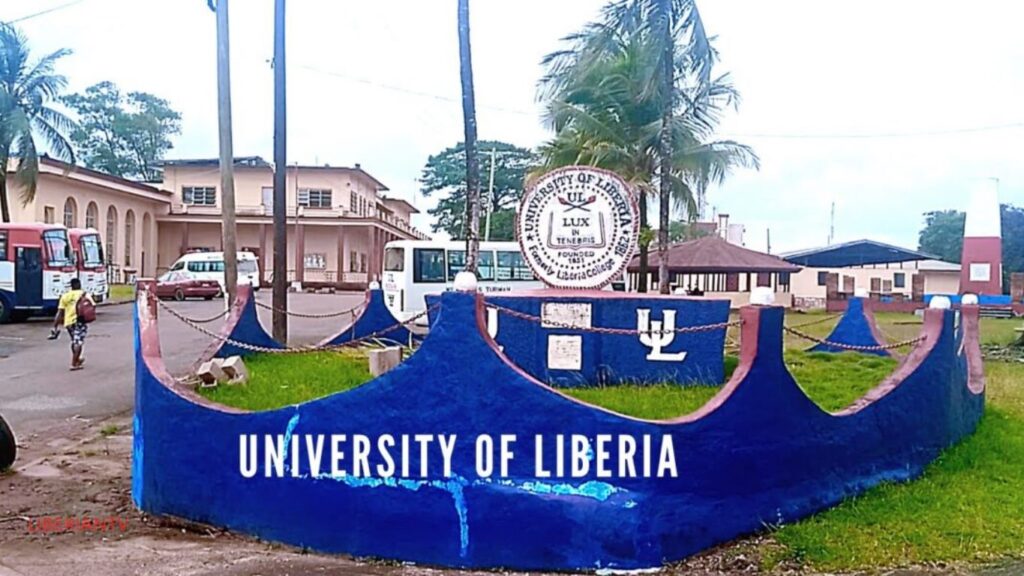
The President said the University will reopen its doors in the coming weeks but insisted that it should not simply return to the conditions that produced the current crisis.
“We are going back to the classrooms to serve and support our students. But as we return, we are not returning to the same broken environment.”
She said the goal is to create a University where fairness, reason and justice prevail and where students, faculty and staff can work in a stable and conducive environment.
Maparyan Calls for “New Era” at Liberia’s Flagship University
The UL President framed the current moment as an opportunity for institutional transformation rather than merely a settlement of a labor dispute.
“When we open our doors in coming days, we are not just reopening campus buildings; we are inaugurating a completely new era for the University of Liberia.”
She acknowledged that the institution has suffered from what she described as a culture in which “anything goes” and rules are treated as suggestions.
According to Maparyan, weak discipline, favoritism in promotions, diversion of institutional resources and inconsistencies in the academic calendar have weakened the University’s standing.
She argued that the institution must now “rebrand” itself and live up to its status as Liberia’s national flagship university.
“We Cannot Give to Liberia What We Do Not Manifest”
Maparyan also placed the University’s internal reform agenda within a broader national context.
She described the University of Liberia as a crucible from which Liberia’s future leaders, policymakers, innovators, educators and wealth creators emerge.
That role, she said, creates an obligation for the University to model the values it expects its graduates to carry into the wider society.
“How can we lift our nation out of poverty, fragility, and corruption if we allow our nation’s premier university to remain fractured, undisciplined, and chaotic?”
“We cannot give to Liberia what we do not manifest ourselves.”
The President’s statement also invokes Christian, Islamic and Bahá’í teachings, as well as Liberia’s secular commitment to the rule of law, to make the case for a University culture based on order, accountability, transparency and fairness.
She cited 1 Corinthians 14:40, which calls for things to be done “decently and in order,” and referenced Islamic principles of daily self-evaluation and accountability, as well as Bahá’í teachings on responsibility and lawful freedom.
Maparyan said that, whether viewed through faith or civic ethics, the conclusion is the same: the University must move away from laxity and toward a culture of accountability, transparency and fairness.

August 25 Reopening Becomes Non-Negotiable
Perhaps the most consequential directive in the statement is the reopening date.
Maparyan said the Board of Trustees has issued a clear and non-negotiable directive that the University of Liberia will reopen its doors on August 25, 2026, and that all faculty and staff must return to work.
She described the directive as not only a decision of the University’s governing body but also a responsibility owed to the Liberian people.
“Our doors must open because of the primary stakeholders of this institution—our students.”
She warned that every day the University remains closed places students’ academic and professional futures on hold.
“Every week of a work stoppage or go-slow action is a week stolen from the next generation of our country’s doctors, engineers, entrepreneurs, civil servants, and educators.”
A Delicate Balance Between Reform and Continuity
Maparyan’s statement attempts to strike a difficult balance: acknowledging that faculty and staff have legitimate grievances while insisting that institutional reform cannot proceed indefinitely at the expense of students.
The University’s leadership has previously called for dialogue and collective action to address longstanding challenges. The University’s official website reported in July that Maparyan had urged dialogue and collective action in confronting institutional problems.
Her latest statement takes that approach further by attaching specific measures, timelines and institutional responsibilities to some of the issues raised by employees.
The emphasis now shifts from promises to implementation.
The NASSCORP agreement must translate into actual pension enrollment and payments. The salary-disparity process must produce a credible compensation framework. The HR Manual must be implemented fairly. The buses must arrive and be deployed according to transparent criteria. And the planned infrastructure funding must translate into completed, functional facilities.
The Bigger Test for UL
The University of Liberia remains one of the country’s most consequential public institutions, with its condition directly affecting thousands of students and the broader national workforce.
The administration’s challenge is therefore larger than resolving an immediate labor dispute.
It must demonstrate that institutional reform, employee welfare, academic continuity and accountability can advance simultaneously.
Maparyan’s proposed way forward offers a framework for doing so, but its credibility will ultimately depend on execution.
Her closing appeal was directed not only at faculty and staff but at the entire University community:
“For the sake of our students, for the honor of our professions, and for the ultimate upliftment of the Republic of Liberia, let us begin this work, today.”
With the University ordered to reopen on August 25, the coming weeks will now determine whether the administration’s commitments can translate into a negotiated return to normal academic operations—and whether the institution can use the current crisis as the foundation for the “new era” its President says she intends to build.
For breaking news, in-depth analysis, and exclusive reports from Liberia and around the world, follow The Liberian Post on Facebook (https://web.facebook.com/profile.php?id=61576017166570) and X, formerly Twitter (https://x.com/LiberianPost).