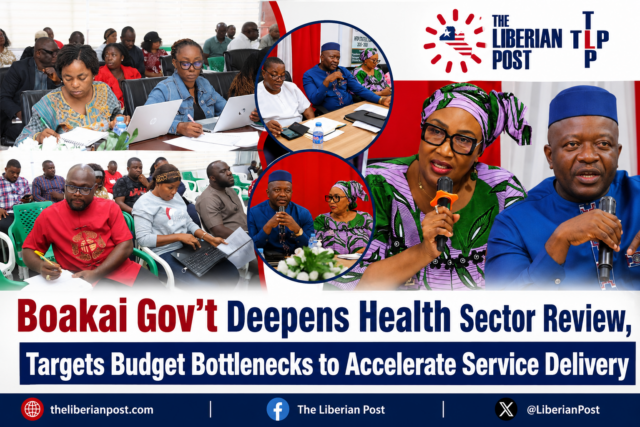
-Finance and Health Ministers Lead High-Level “Deep Dive” as Government Scrutinizes PSIP Projects, Budget Execution and Implementation Challenges Under ARREST Agenda
MONROVIA, Liberia — The Government of Liberia has intensified its push to turn budgetary allocations into measurable improvements in healthcare delivery, as the Ministries of Finance and Development Planning (MFDP) and Health convened a high-level technical “Deep Dive” to examine budget implementation and the progress of health-sector investments.
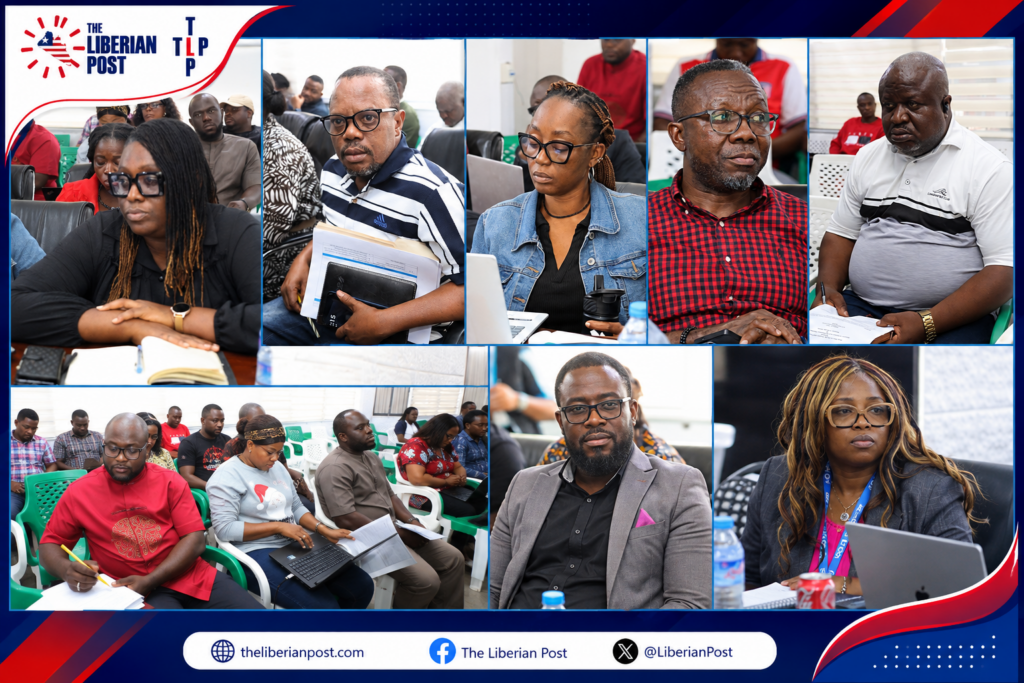
The session, held on Friday, August 7, 2026, brought together Finance and Development Planning Minister Augustine Kpehe Ngafuan, Health Minister Dr. Louise M. Kpoto, senior officials from both ministries and a large team of technical experts to scrutinize the implementation of health projects under the Public Sector Investment Program (PSIP).
The engagement formed part of the MFDP’s continuing sectoral Deep Dive process, designed to move beyond budget approval and examine whether public resources are being executed efficiently, what is delaying implementation and what corrective actions are required to accelerate delivery.
From Budget Allocations to Actual Results
The central focus of Friday’s engagement was the implementation gap that can arise between government appropriations and actual delivery.
According to the information released on the session, officials reviewed budget execution, the progress of health projects under the PSIP and bottlenecks affecting service delivery, with the objective of identifying practical solutions that can be implemented across the two ministries.
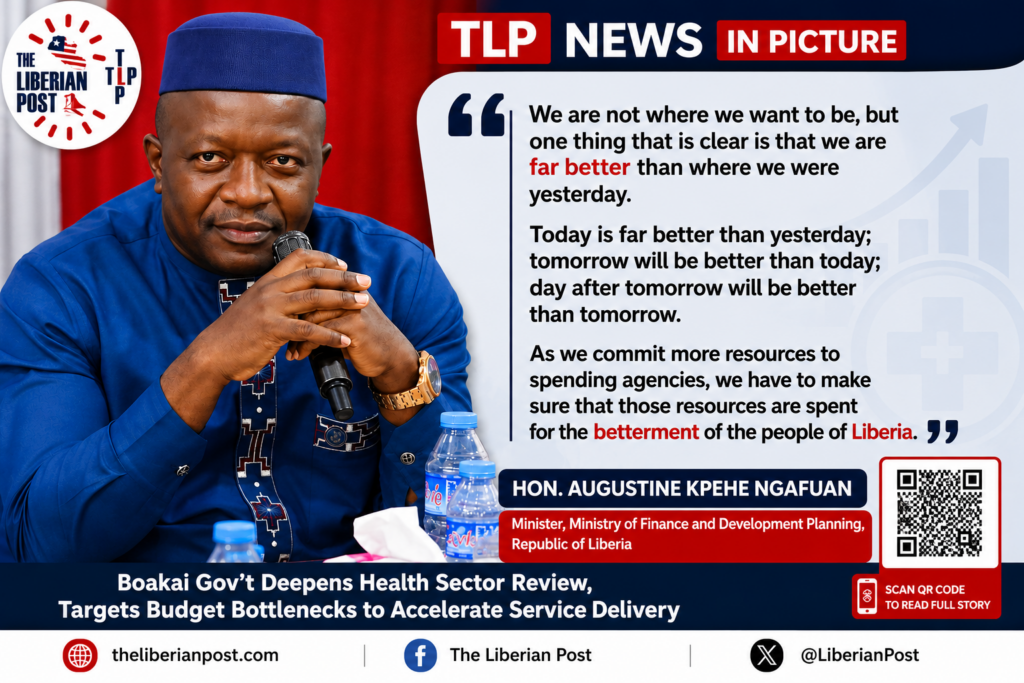
The approach is consistent with the MFDP’s broader Deep Dive initiative, which the ministry launched as a mechanism for assessing government budget execution, identifying implementation challenges and securing firm commitments from participating institutions.
When the initiative was launched in 2025, Finance Minister Ngafuan stressed that the process was intended to accelerate development delivery and address bureaucratic obstacles that can delay government projects.
The MFDP has subsequently applied the approach across several sectors, including public works, agriculture, energy, water and sanitation and revenue generation, making Friday’s health-sector engagement part of a broader government effort to strengthen implementation discipline.
Health Spending Under Increased Scrutiny
The health review comes against the backdrop of a significant increase in government financing for the sector.
According to MFDP figures released earlier this year, Liberia’s health-sector allocation reached approximately US$110 million in FY2026, representing a 21 percent increase over the previous year.
The Ministry also reported a substantial improvement in health-sector budget disbursement, from 70 percent in 2023 to 88 percent in 2024 and 97.7 percent in 2025. Finance Minister Ngafuan attributed the progress partly to expenditure reviews and closer coordination between MFDP and the Ministry of Health.
The latest Deep Dive therefore comes at a critical stage: with more resources being committed to health, the government is increasingly focused on whether those resources are translating into completed projects, functioning facilities and improved services for citizens.

A Follow-Up to Earlier Health Financing Review
Friday’s session also appears to build on an earlier health-sector Deep Dive that the MFDP and Ministry of Health used to develop an implementation compact aimed at addressing bottlenecks, accelerating fund utilization and improving service delivery.
Speaking in May at the World Bank Group’s Health Strategy launch in Accra, Ngafuan said the previous Deep Dive hosted at the Ministry of Health had helped identify constraints and produce an implementation framework for addressing them.
The latest meeting consequently represents a further effort to examine progress, identify unresolved obstacles and ensure that commitments emerging from the process translate into action.
PSIP at the Center of the Review
The Public Sector Investment Program is a critical component of Liberia’s development-planning architecture.
The PSIP was incorporated into the government’s broader ARREST Agenda for Inclusive Development, which President Joseph Nyuma Boakai, Sr. launched as part of the administration’s five-year development framework. The government’s planning process was designed to link national priorities with concrete public investments and county development agendas.
The purpose of Friday’s health-sector review was therefore not simply to examine accounting figures. It was to determine whether investments identified as government priorities are progressing as planned and whether implementation obstacles are preventing those investments from producing the expected results.
That focus is particularly important in health, where delays in infrastructure, equipment, financing, procurement or project execution can have direct consequences for patients and healthcare workers.

Government Seeks One-Government Approach
The participation of ministers, deputy and assistant ministers and technical personnel from both institutions reflects the government’s attempt to address implementation challenges collectively rather than leaving individual ministries to tackle them in isolation.
The Deep Dive model emphasizes direct engagement between policy leaders and the technical teams responsible for executing programs.
The MFDP has previously described the process as a collaborative exercise rather than an effort to dictate to implementing institutions. During a 2025 Deep Dive with the Liberia Water and Sewer Corporation, Ngafuan said the Finance Ministry’s role was to listen, collaborate and help address financing and execution challenges.
That approach is especially relevant to the health sector, where successful project implementation often depends on coordination among the Ministry of Health, MFDP, development partners, contractors, project implementation units and other government institutions.
Health Projects Face Multiple Implementation Demands
The government’s broader health investment portfolio spans infrastructure, medical equipment, workforce development, disease prevention, maternal and newborn health and digital and diagnostic systems.
Recent Ministry of Health initiatives illustrate the scale of the implementation challenge.
In June, the Ministry launched Liberia’s first Ultrasound Reference Guide Manual, aimed at standardizing obstetric ultrasound practices and improving the early detection of pregnancy-related complications.
The Ministry has also been implementing a 365-Day Action Plan focused on reducing preventable maternal and newborn deaths through targeted interventions, including strengthening newborn services and expanding access to skilled health workers in underserved areas.
Meanwhile, the government and development partners are pursuing health projects involving infrastructure, equipment, digital systems and specialized training.
The Ministry’s current procurement notices include initiatives ranging from electronic medical records systems and medical simulation equipment to solar power for health facilities and other health-system strengthening activities.
The Deep Dive provides an opportunity to examine how such investments are progressing within the government’s overall budget and development framework.
Beyond Spending: Absorptive Capacity Matters
One of the central questions in Liberia’s public-finance management has increasingly been whether ministries and agencies can effectively absorb and execute the resources allocated to them.
A budget increase does not automatically translate into better services if funds remain unspent, procurement processes stall, projects encounter administrative delays or implementation agencies lack the capacity to execute planned activities.
That is why the MFDP’s Deep Dive model places emphasis on identifying specific bottlenecks rather than simply reviewing expenditure totals.
The objective is to determine what is preventing implementation, who is responsible for resolving it, what resources are required and how quickly corrective action can be taken.

ARREST Agenda Faces Delivery Test
The health-sector Deep Dive ultimately connects directly to one of the central challenges facing the Boakai administration: translating the ARREST Agenda for Inclusive Development from a national development framework into visible improvements in citizens’ daily lives.
The government’s development-planning process was designed to connect national priorities, the PSIP and county development agendas.
That means the credibility of the agenda will increasingly be measured not by the number of programs announced but by whether projects are completed, services improve and citizens can see the impact of public spending.
In health, those outcomes could include better-equipped facilities, stronger referral systems, improved maternal and newborn care, more reliable diagnostic services and greater access to quality healthcare outside Monrovia.
A Management Tool, Not Just Another Meeting
Friday’s engagement is significant because the Deep Dive mechanism is intended to produce more than discussion.
The MFDP’s original sectoral Deep Dive framework called for sessions to culminate in key takeaways and firm commitments from participating government institutions.
That makes the follow-through after Friday’s meeting particularly important.
The effectiveness of the exercise will ultimately depend on whether the bottlenecks identified by the ministers and technical teams are assigned to responsible institutions, whether deadlines are established and whether progress is subsequently measured.

For the Ministry of Health, the stakes are especially high as the government seeks to improve healthcare outcomes while expanding investment in the sector.
For MFDP, the exercise is an opportunity to demonstrate that improved budget execution can translate into actual development delivery.
The Bigger Question: What Will Liberians See?
The government’s latest Deep Dive sends a clear message that budget execution is increasingly being treated as a development-delivery issue rather than simply an accounting exercise.
The real test, however, will come outside the conference room.
Liberians will ultimately judge the process by whether delayed health projects begin moving, whether facilities receive the resources they need and whether government investments produce better services for patients and communities.
With Finance and Health now jointly examining the implementation of public investments, the government is attempting to close the gap between money appropriated, money spent and results delivered.
That is precisely where the ARREST Agenda’s promise of inclusive development will ultimately be tested.
For breaking news, in-depth analysis, and exclusive reports from Liberia and around the world, follow The Liberian Post on Facebook (https://web.facebook.com/profile.php?id=61576017166570) and X, formerly Twitter (https://x.com/LiberianPost).