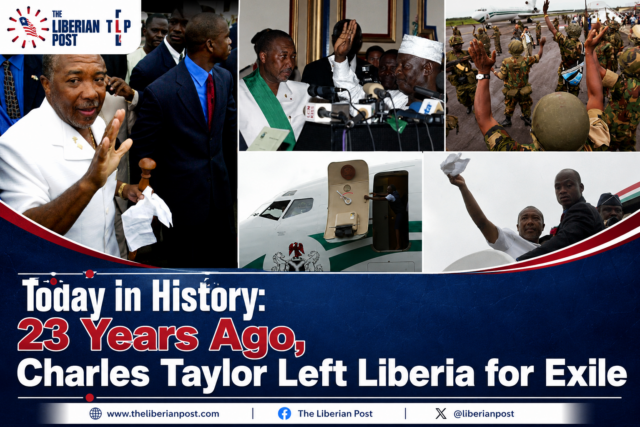
-August 11, 2003: Taylor Resigns, Hands Power to Moses Blah and Boards Nigerian Plane as War-Weary Liberia Enters a New Political Chapter
MONROVIA, Liberia – Twenty-three years ago today, on August 11, 2003, one of the most consequential moments in Liberia’s modern history unfolded as President Charles Ghankay Taylor resigned from office and left the country for exile in Nigeria, bringing an end to his six-year presidency and opening the way for a transitional political process intended to halt Liberia’s devastating civil war.
Taylor’s departure came after months of intense fighting, mounting international pressure and a desperate siege of Monrovia. On that historic Monday, he formally transferred presidential authority to his vice president, Moses Zeh Blah, before boarding a Nigerian government aircraft at Roberts International Airport for exile in Calabar, Nigeria.
The moment marked not simply the departure of a president, but the collapse of a political order that had emerged from Liberia’s first civil war and had become deeply entangled in the second.
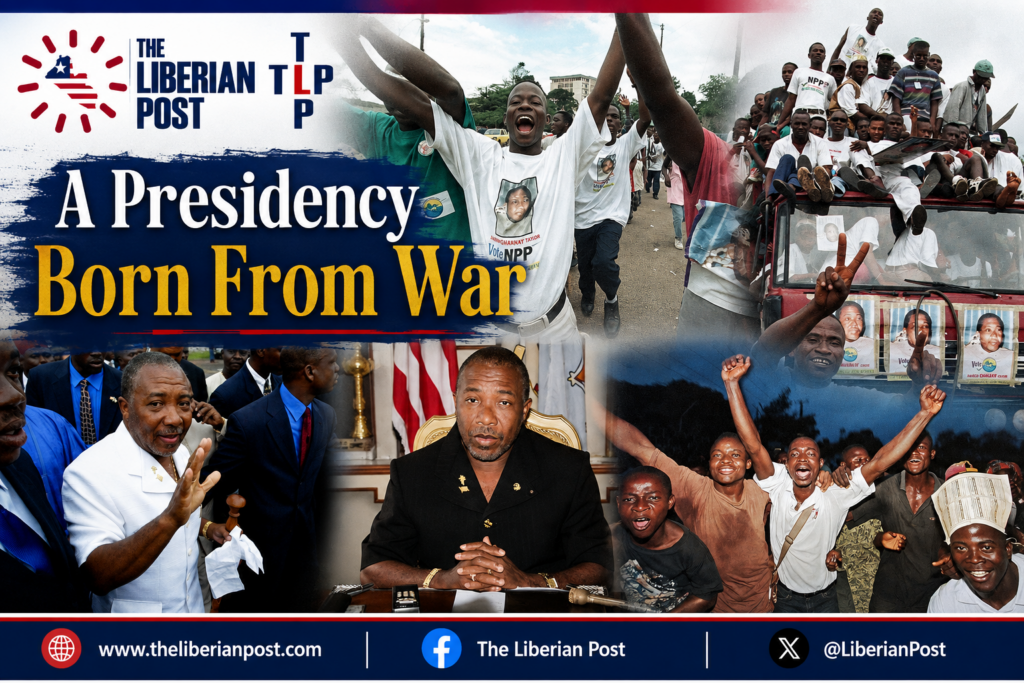
A Presidency Born From War
Taylor came to power after years of armed conflict.
He had led the National Patriotic Front of Liberia (NPFL) in the rebellion that began in December 1989 against the government of President Samuel K. Doe. The conflict devastated Liberia and contributed to years of political instability and regional warfare.
Following a series of peace negotiations and elections, Taylor won the 1997 presidential election, campaigning under the famous slogan, “He killed my ma, he killed my pa, but I will vote for him.”
His election brought a measure of formal political stability after the first civil war, but peace proved fragile.
By 1999, a new rebellion had emerged, eventually developing into the second Liberian civil war. Armed opposition groups challenged Taylor’s government, and fighting spread across large parts of the country.
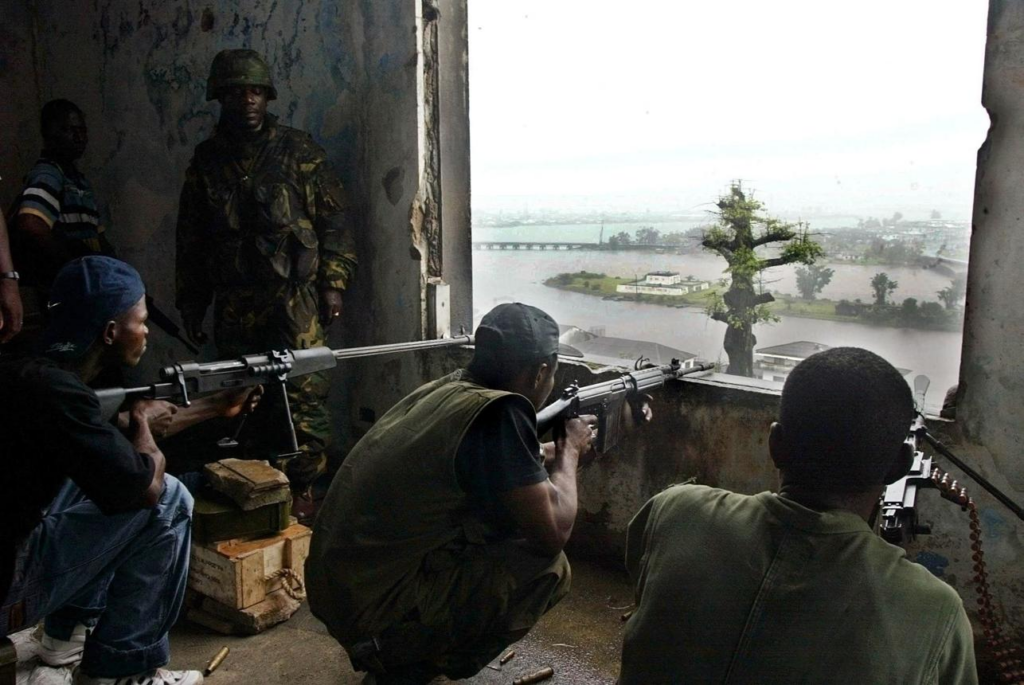
The War Comes to Monrovia
By the middle of 2003, the conflict had reached a critical point.
The rebel group Liberians United for Reconciliation and Democracy (LURD) had advanced toward Monrovia, while another armed movement, the Movement for Democracy in Liberia (MODEL), was active in southeastern Liberia.
The fighting around Monrovia became particularly devastating. Civilians were trapped in the capital as artillery fire, armed clashes and shortages of food and essential supplies intensified the humanitarian crisis.
International pressure on Taylor increased dramatically.
The United States repeatedly called for Taylor to leave Liberia, while regional leaders under the auspices of the Economic Community of West African States (ECOWAS) pushed for a political settlement.
Nigeria’s President Olusegun Obasanjo offered Taylor asylum, creating a possible pathway for the Liberian leader to leave power without an immediate confrontation that could further destabilize the country.
Taylor eventually agreed to resign.
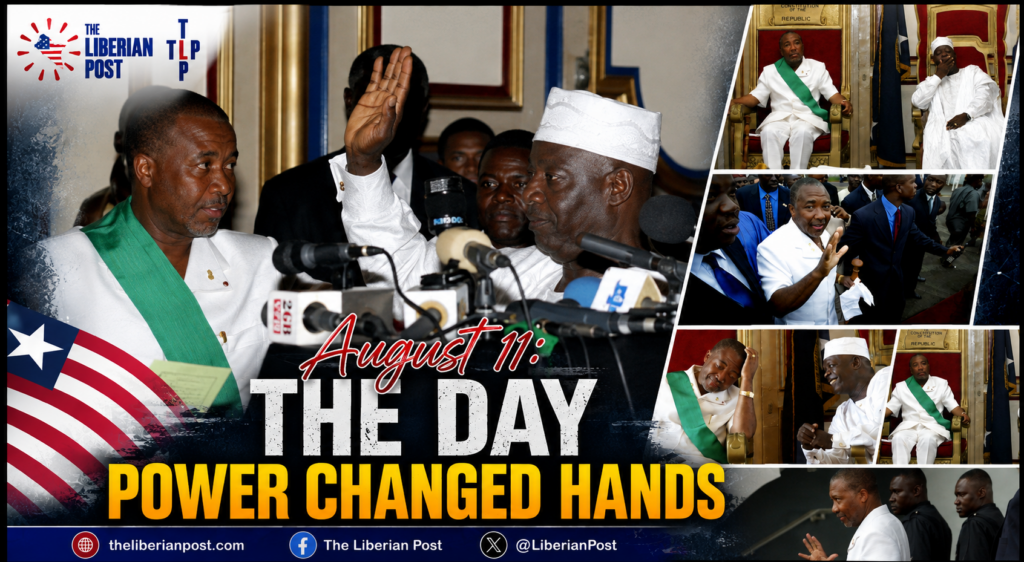
August 11: The Day Power Changed Hands
On August 11, 2003, Taylor formally handed power to Vice President Moses Blah at a ceremony in Monrovia.
The event was witnessed by several African leaders, including South African President Thabo Mbeki, Ghanaian President John Kufuor and Mozambican President Joaquim Chissano, reflecting the regional importance attached to Liberia’s transition.
In his farewell remarks, Taylor presented himself as a leader making a sacrifice for his country’s peace.
He reportedly described himself as a “sacrificial lamb” and told Liberians, “God willing, I’ll be back.”
But his departure was not simply a voluntary retirement from politics. It followed enormous pressure from armed opposition groups, African governments, Western governments and the deteriorating military and humanitarian situation.
The Guardian reported at the time that LURD leaders had pledged to end the fighting if Taylor left Liberia.
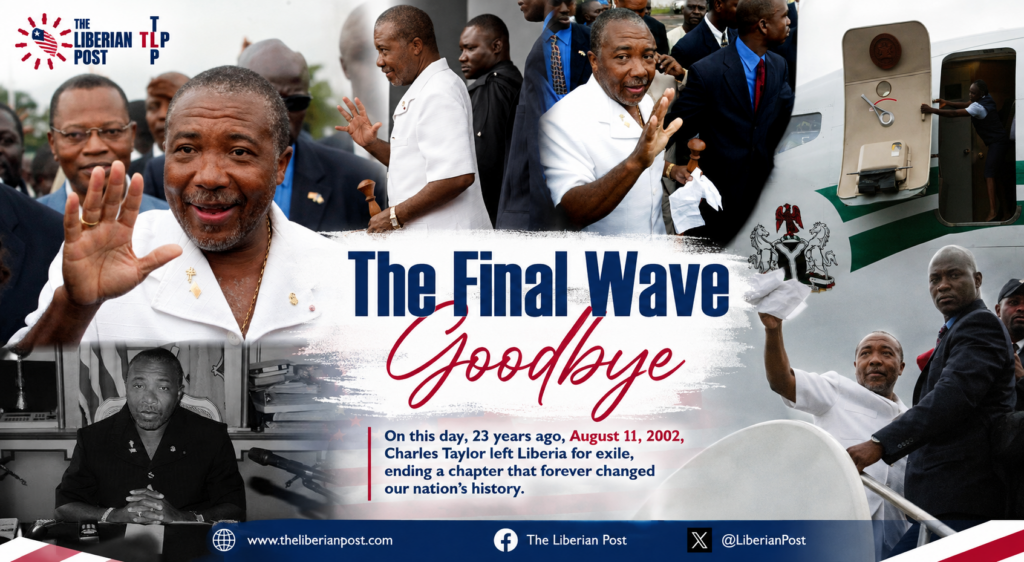
The Final Wave at Robertsfield
Perhaps the most enduring images from that day show Taylor at Roberts International Airport, dressed in white and waving goodbye as he prepared to board the Nigerian aircraft.
Contemporary reporting described him waving a white handkerchief to supporters before departing Liberia for Nigeria.
The historic photographs captured the contradiction of the moment: a former rebel leader who had fought his way to power was now leaving the country amid international pressure, while a population exhausted by years of war hoped his departure would finally bring peace.
Getty Images records the departure as taking place at Roberts Field on August 11, 2003, when Taylor ceded the presidency to Moses Blah and left for exile in Nigeria.
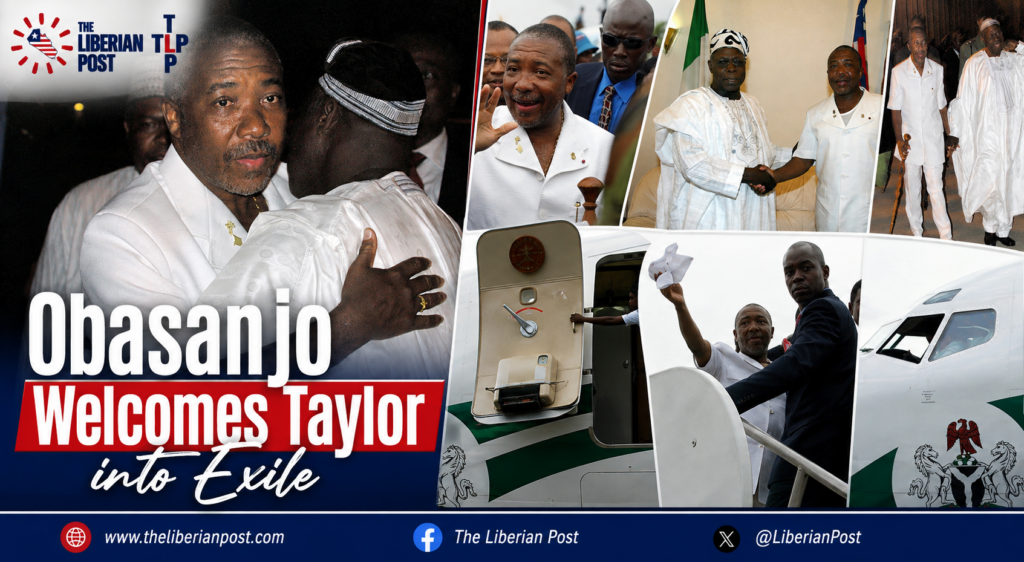
Nigeria Becomes Taylor’s Place of Exile
After leaving Liberia, Taylor settled in Calabar, southeastern Nigeria, under an arrangement negotiated with President Obasanjo.
His exile was intended to remove him from Liberia’s political battlefield and create space for the country’s peace process.
For a time, Taylor remained in Nigeria while Liberia moved toward a transitional arrangement. A transitional government was eventually established in October 2003, paving the way for the eventual election of Ellen Johnson Sirleaf in 2005 as Liberia’s first elected female president.
But Taylor’s exile would prove temporary.
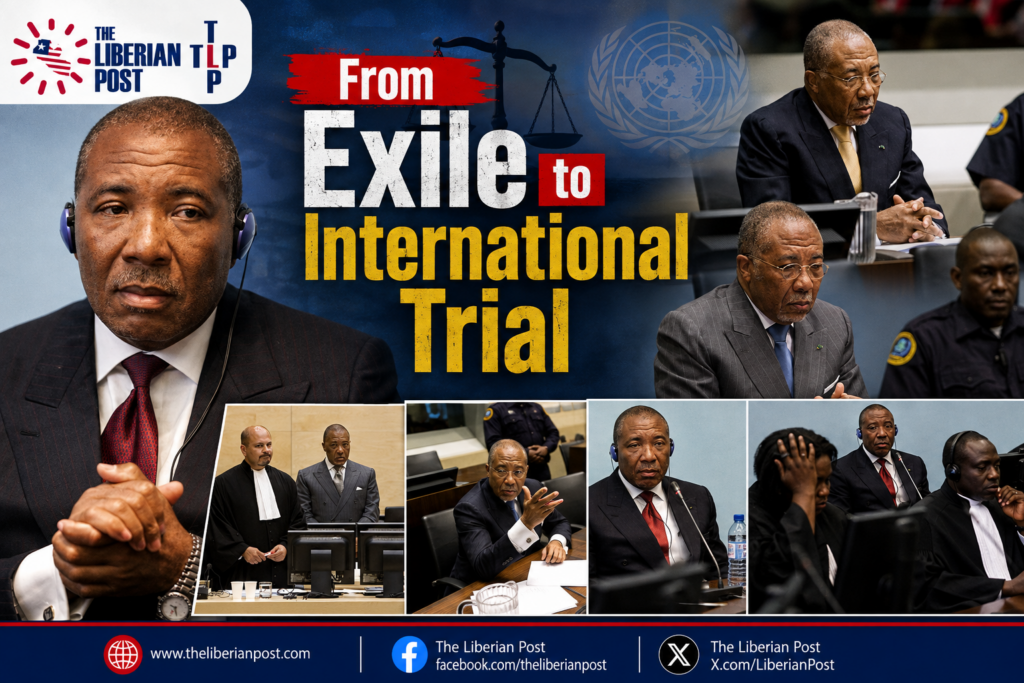
From Exile to International Trial
Taylor’s departure from Liberia did not end the legal controversies surrounding his rule.
The Special Court for Sierra Leone had indicted him in 2003 over allegations arising from his involvement in the Sierra Leone conflict. His eventual transfer to the court followed his departure from Nigeria in 2006.
Taylor was tried in The Hague and, in 2012, was convicted of aiding and abetting war crimes and crimes against humanity committed during Sierra Leone’s civil war. He was sentenced to 50 years in prison.
His conviction made him the first former head of state convicted by an international court since the Nuremberg trials, according to the Special Court proceedings and contemporary reporting.
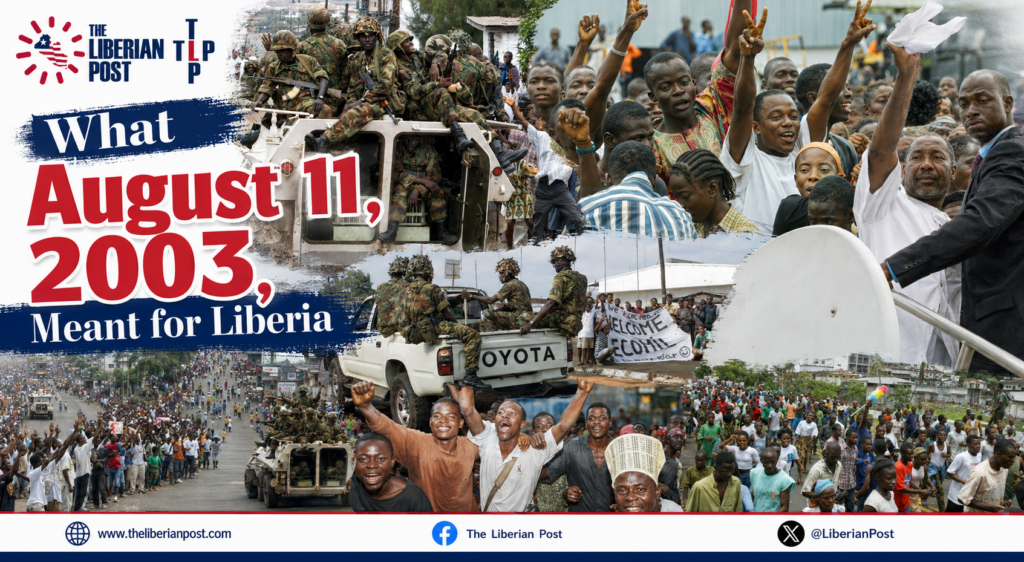
What August 11, 2003 Meant for Liberia
Taylor’s departure did not instantly solve Liberia’s problems.
The country remained devastated by years of conflict. Infrastructure was badly damaged, thousands of people had been killed or displaced, and state institutions had been severely weakened.
But August 11, 2003 became a turning point.
Taylor’s exit created political space for the peace process and helped clear the way for a transitional government, the deployment of international peacekeepers and eventually the 2005 elections.
The United Nations later deployed a major peacekeeping mission, UNMIL, which played a central role in helping stabilize Liberia and support the country’s transition from war to peace.
The transformation that followed was neither immediate nor perfect. Liberia continued to face enormous challenges in rebuilding institutions, restoring public trust and addressing the legacy of the wars.
Yet the day Taylor left remains one of the clearest dividing lines in Liberia’s contemporary history: before August 11, 2003, and after August 11, 2003.
Twenty-Three Years Later
August 11, 2003 is now history, but its lessons remain relevant.
Taylor’s rise and fall demonstrate how political instability, armed conflict, weak institutions and regional insecurity can combine to destroy a country’s social and economic foundations.
His departure also illustrates the complicated role of regional diplomacy in resolving African conflicts. Nigeria’s willingness to receive Taylor, ECOWAS’ peace efforts and the involvement of other African governments were central elements of the transition.
Today, Liberia is a constitutional democracy that has experienced multiple peaceful transfers of presidential power since the war.
But the memory of the years preceding Taylor’s departure remains an important reminder that peace is not simply the absence of war—it requires institutions, accountability, political compromise and a sustained commitment to preventing the return of violent conflict.
Twenty-three years after Taylor boarded that Nigerian aircraft at Roberts International Airport, the images of his final wave remain etched into Liberia’s national memory.
For many Liberians, August 11, 2003 was the day a long and bloody chapter began to close—and the difficult work of rebuilding a peaceful republic truly began.
TODAY IN HISTORY
August 11, 2003 — Charles Ghankay Taylor resigns as President of Liberia and leaves the country for exile in Nigeria. Vice President Moses Blah assumes the presidency.
Historical sources: Contemporary reporting by The Washington Post, The Guardian and Inter Press Service, together with archival photographic records.
Photo note: The historical photographs shown above are archival/editorial images. The most directly relevant August 11, 2003 departure images are held by Getty Images and other archival agencies; licensing may be required for publication.
For breaking news, in-depth analysis, and exclusive reports from Liberia and around the world, follow The Liberian Post on Facebook (https://web.facebook.com/profile.php?id=61576017166570) and X, formerly Twitter (https://x.com/LiberianPost).