MONROVIA — The Rubber Planters Association of Liberia and the Rubber Development Fund Incorporated have honored prominent businessman Upjit Singh Sachdeva—popularly known as Jeety—for his company’s sustained support to Liberia’s rubber industry, particularly smallholder farmers.
The recognition highlights what industry stakeholders described as Jeety Rubber’s consistent market support during a critical period when some major buyers suspended purchases following the government’s introduction of a regulated farm-gate pricing system.
Recognition for “Exceptional Contributions”
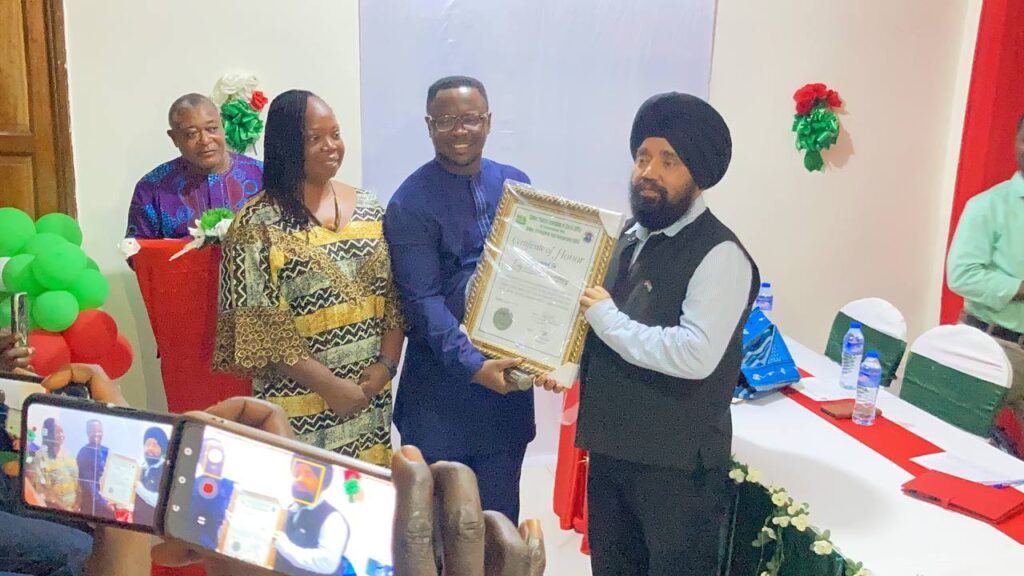
In a citation presented at the ceremony, RPAL President Wilhelmina Mulbah Siaway and RDFI Chairman J. Tokpah Mulbah praised the company’s role in stabilizing the sector.
“This Certificate of Honor is in recognition of your exceptional contributions to Liberia’s rubber sector and your unwavering support for rubber farmers, particularly during critical periods of limited market access,” the citation read.
They added, “Your commitment to sustaining farmer livelihoods and promoting community welfare is highly commendable.”
Support Amid Industry Disruption
Jeety Rubber’s intervention came at a pivotal time in 2025 when the government introduced a regulated pricing regime to address long-standing complaints from farmers over inconsistent and often unfavorable pricing.
Under the system, the government currently sets the price of rubber at US$690 per ton, with farmers receiving approximately US$657 after statutory deductions.
The policy triggered resistance from some buyers, notably Firestone Liberia, which temporarily suspended purchases, citing concerns over cost sustainability.
In contrast, Jeety Rubber maintained its buying operations, providing a crucial market lifeline for smallholder farmers.
Cultural Honor: “Kolleh”
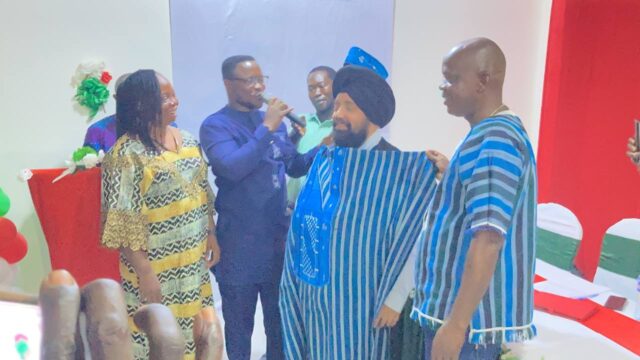
In a symbolic gesture reflecting deep appreciation, the associations robed Mr. Sachdeva in traditional attire and conferred upon him the Liberian name “Kolleh,” meaning “a bright and good man.”
The rare cultural distinction underscored the level of respect and admiration he has earned within farming communities.
Major Player in Rubber Processing
Jeety Rubber operates a US$75 million processing facility in Weala, Margibi County, with a daily demand of between 200 and 250 tons of raw rubber.
The company’s annual consumption ranges from 25,000 to 40,000 tons, with smallholder farmers serving as its primary suppliers—further reinforcing its central role in sustaining rural livelihoods.
Government Push for Increased Production
Also honored at the event was Agriculture Minister Dr. Alexander Nuetah, who used the occasion to call for increased production across the sector.
“The factories are ready. The price regime is fair and transparent. What we now need is production—more tapping, more output, more commitment from every farmer,” Minister Nuetah said.
He noted that Liberia’s rubber output—estimated at about 180,000 tons last year—remains well below the combined processing capacity of existing factories.
Policy on Local Processing Reaffirmed
The Minister also reiterated the government’s stance against the export of unprocessed rubber, referencing Executive Order No. 151, which mandates local processing to boost job creation and value addition.
He warned that selling to informal or unregulated buyers undermines the sector and weakens enforcement of national policy.
Empowering Farmers Through Financing
In addition to maintaining market access, Jeety Rubber has supported farmers through interest-free loans extended to more than 100 growers since 2025.
The financing program supports farm replanting and expansion, with repayment structured through deductions from future rubber sales.
Strengthening a Key Economic Sector
The honoring of Jeety Rubber reflects broader efforts to stabilize and grow Liberia’s rubber industry—one of the country’s most important agricultural sectors.
With increased collaboration between government, private investors, and farmer organizations, stakeholders say the focus now shifts to boosting production and ensuring long-term sustainability.
Follow The Liberian Post on Facebook and X (formerly twitter).