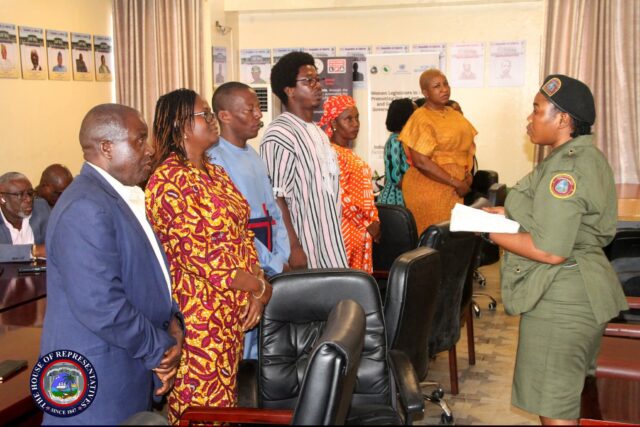
MONROVIA, Liberia — Recent actions by the House of Representatives to summon the Liberia Board for Nursing and Midwifery (LBNM) have ignited a growing national conversation about legislative oversight, institutional independence, and the protection of healthcare standards.
While the Legislature’s oversight role is constitutionally mandated, the circumstances surrounding the LBNM’s appearance before lawmakers have prompted concern among stakeholders, with some questioning whether the move reflects routine accountability or signals mounting pressure tied to interests within the accreditation landscape.
A Key Pillar in Health Sector Regulation
The LBNM is widely regarded as one of Liberia’s most structured and results-driven regulatory institutions. Tasked with overseeing nursing and midwifery education and practice, the Board ensures that training institutions meet rigorous academic, clinical, and infrastructure standards.
Over the years, its enforcement of these benchmarks has contributed to the steady expansion of accredited institutions across the country, while maintaining quality assurance and professional integrity. The Board’s regulatory consistency has also strengthened confidence in Liberia’s healthcare workforce, with graduates increasingly recognized as competent at both national and international levels.

Performance Amid Limited Funding
Observers note that the LBNM operates with relatively limited budgetary support compared to other public institutions. Despite this constraint, it has sustained its operations largely through internally generated revenue, including licensing and accreditation fees.
This model has enabled the Board to deliver strong outcomes with minimal reliance on government funding—an efficiency that has drawn both commendation and scrutiny.
The timing of the Legislature’s intervention, therefore, has raised questions within policy and health circles.
“Why is one of the most effective yet underfunded regulatory bodies facing heightened scrutiny at this moment?” one stakeholder asked, reflecting a broader sentiment among sector observers.
Fears of Undue Influence
At the heart of the debate is concern that any perceived attempt to influence or weaken regulatory enforcement—particularly in the accreditation of health training institutions—could have far-reaching implications.
Nurses and midwives constitute the largest segment of Liberia’s healthcare workforce, making the integrity of their training systems a matter of national importance. Experts warn that any erosion of standards could ultimately compromise patient safety and public trust.
“The independence of regulatory institutions like the LBNM is critical,” a health policy analyst noted. “Standards must be upheld without political or external interference.”
Balancing Oversight and Autonomy
The situation underscores a delicate balance between legitimate legislative oversight and the need to preserve the autonomy of technical regulatory bodies. While transparency and accountability remain essential, stakeholders argue that these processes must not undermine institutions that are demonstrably performing their mandates effectively.
As the issue unfolds, attention is expected to remain fixed on how both the Legislature and the LBNM navigate the process—particularly whether it reinforces institutional credibility or raises further concerns about governance boundaries.
Public Interest at Stake
For many, the matter extends beyond institutional tensions. It touches directly on the integrity of Liberia’s healthcare system and the mechanisms that ensure safe, competent medical care for citizens.
With public scrutiny intensifying, calls are growing for transparency, respect for institutional mandates, and adherence to the rule of law.
The outcome of this episode may well set an important precedent—not only for the LBNM, but for how Liberia manages the intersection of oversight, regulation, and national development priorities.
Follow The Liberian Post on Facebook and X (formerly twitter)