MONROVIA – The Central Bank of Liberia (CBL) has reassured the public that the country’s banking sector remains stable and resilient, with no commercial bank currently in distress, despite ongoing challenges related to non-performing loans (NPLs).
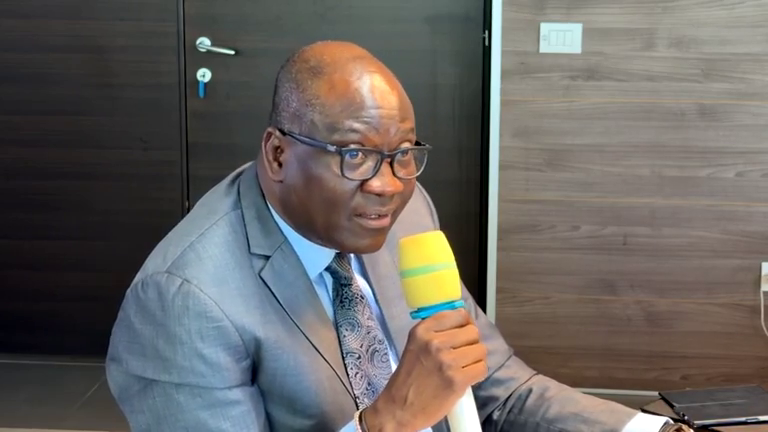
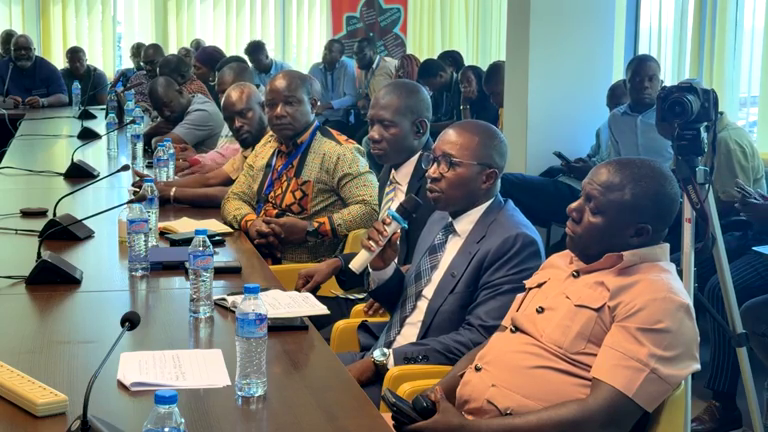
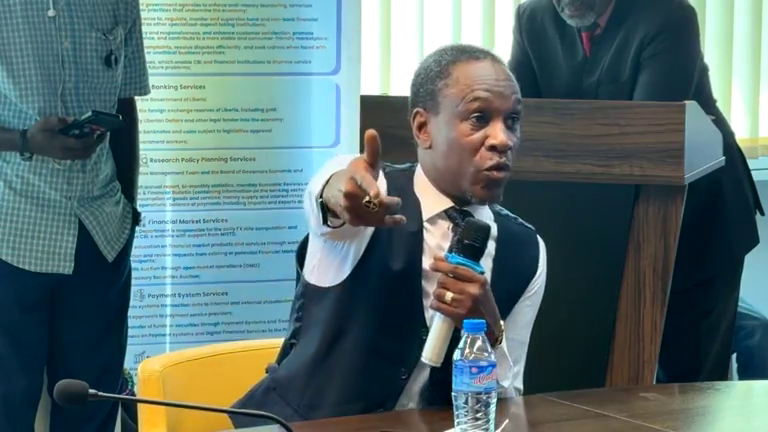
Speaking during an interactive session following the Monetary Policy Committee (MPC) April 2026 Meeting, Executive Governor Henry F. Saamoi addressed concerns raised by banking stakeholders about liquidity constraints and lending hesitancy within the sector.
“The Liberian banking system… is relatively stable,” the Governor emphasized, noting that while challenges exist, they do not amount to institutional distress.
NPLs a Challenge, Not a Crisis
Governor Saamoi acknowledged that high levels of non-performing loans remain a key issue affecting the sector’s ability to extend credit, but stressed that significant progress has been made.
According to him, NPL levels have dropped from about 21 percent in previous years to approximately 13 percent currently—an improvement he described as “significant,” though still requiring sustained intervention.
He explained that the persistence of NPLs has made banks more cautious, limiting their willingness to deploy excess liquidity into the economy.
Banks Holding Excess Liquidity
Providing insight into the sector’s current position, Saamoi disclosed that commercial banks are holding substantial excess reserves at the Central Bank.
He revealed that as of the previous day, (i.e Wednesday, April 29, 2026) banks had over US$106 million in excess reserves beyond their required thresholds—funds that are not being actively used to support economic growth.
“This is not earning assets for the commercial banks… they can do nothing with it,” he said, attributing the situation to risk concerns tied to loan recovery.
Confidence and Recovery Concerns
The Governor stressed that banks are reluctant to lend not because they lack funds, but because of uncertainty around repayment.
“These are depositors’ funds,” he noted, explaining that financial institutions must ensure that loans issued can be recovered in a timely manner.
He warned that without addressing structural issues—particularly loan enforcement and recovery mechanisms—banks will continue to prioritize safety over expansion.
Call for System-Wide Action
Saamoi underscored that resolving the NPL challenge requires a coordinated national effort involving multiple branches of government.
“It needs an all-government approach,” he said, pointing to the roles of the Executive, Legislature, and Judiciary in strengthening the financial ecosystem.
He emphasized that improving loan recovery frameworks and enforcing financial obligations would restore confidence and unlock lending potential within the banking sector.
Reassurance to the Public
Despite the constraints, the CBL Governor was clear in his message: Liberia’s banks are not failing.
Instead, they remain adequately capitalized, liquid, and operational, with the current challenges reflecting structural inefficiencies rather than systemic instability.
The Central Bank says ongoing reforms—including stakeholder engagements and planned interventions—are aimed at strengthening credit systems, improving loan performance, and ensuring that banks can more effectively support economic growth.
Follow The Liberian Post on Facebook and X (formerly twitter)