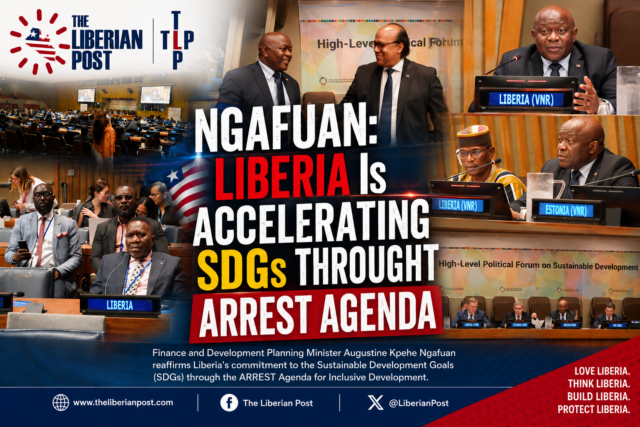
—Finance Minister Highlights Poverty Reduction, Revenue Growth, Infrastructure Expansion, and Human Development Gains, While Calling for Stronger Global Partnerships to Achieve the 2030 Agenda
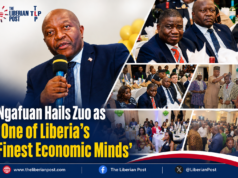
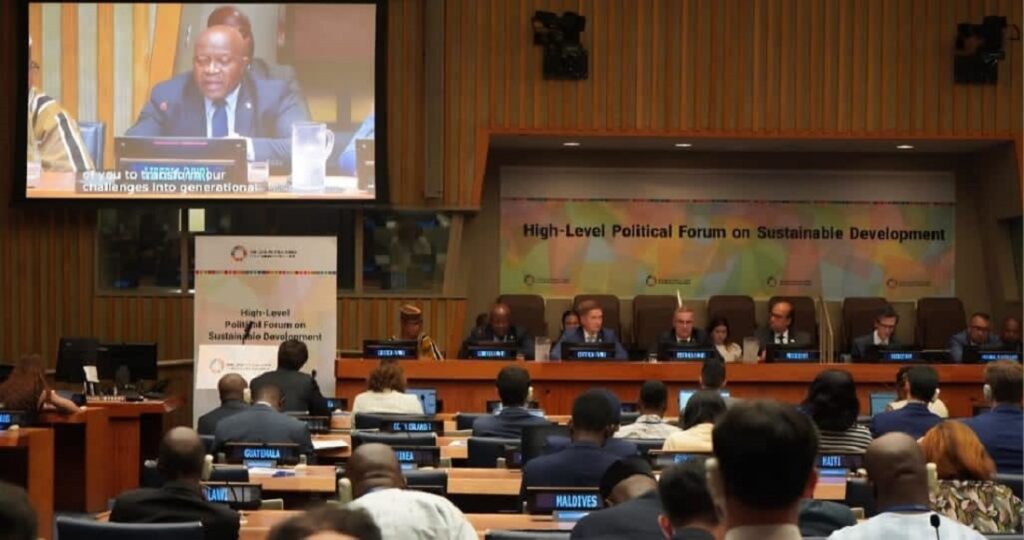
NEW YORK, USA / MONROVIA – Finance and Development Planning Minister Augustine Kpehe Ngafuan has told the United Nations High-Level Political Forum (HLPF) that Liberia is accelerating implementation of the Sustainable Development Goals (SDGs) through the Government’s ARREST Agenda for Inclusive Development, declaring that despite mounting global economic, climate, and financing challenges, the country remains firmly committed to ensuring that no Liberian is left behind.
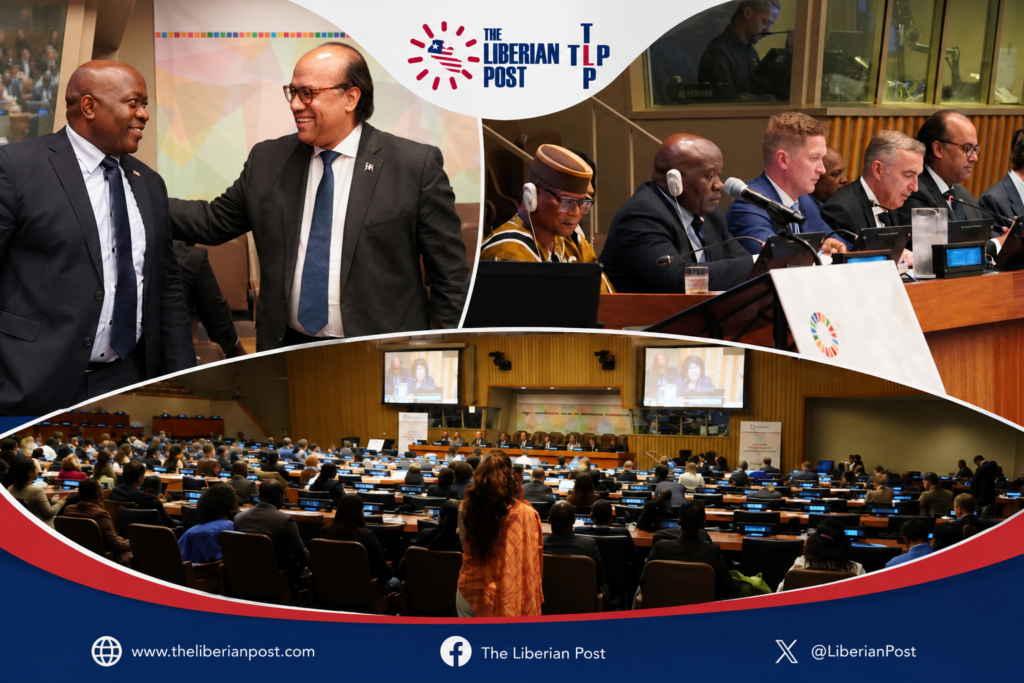
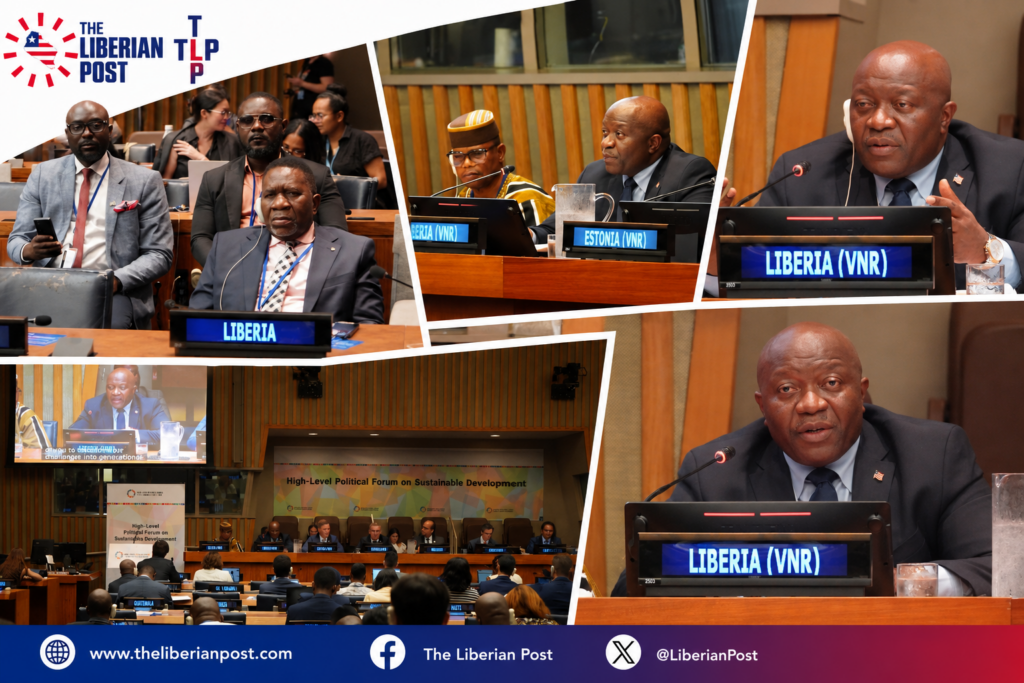
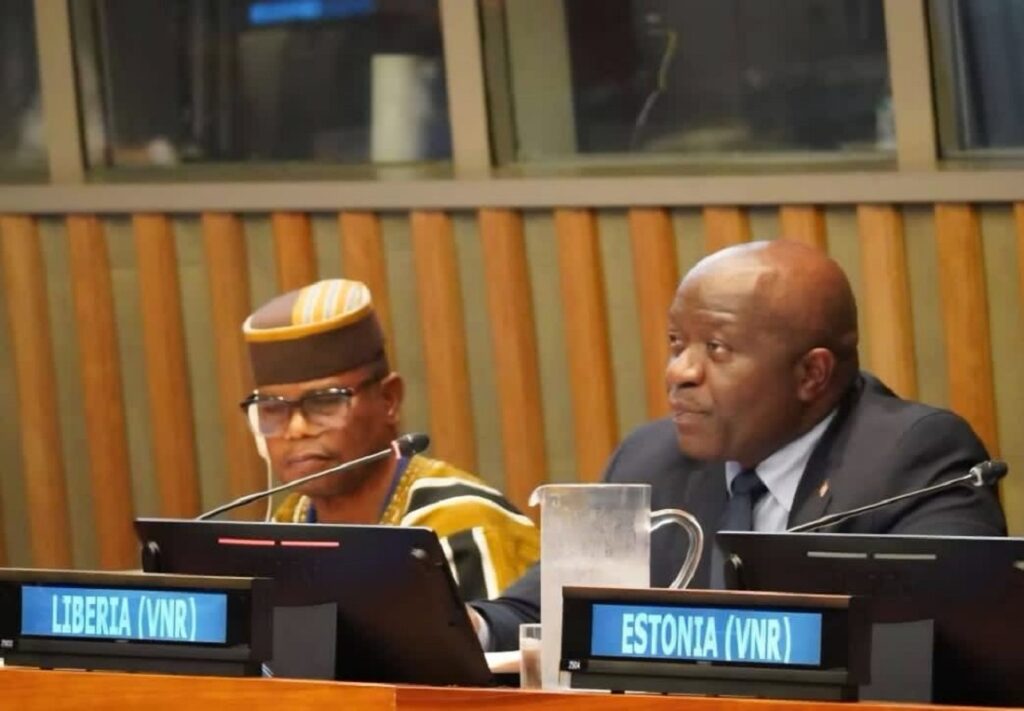
Presenting Liberia’s Third Voluntary National Review (VNR) at the 2026 United Nations High-Level Political Forum on Sustainable Development on Friday, July 10, Minister Ngafuan said Liberia was not merely reporting on its progress but demonstrating how it is translating national policies into measurable development outcomes.
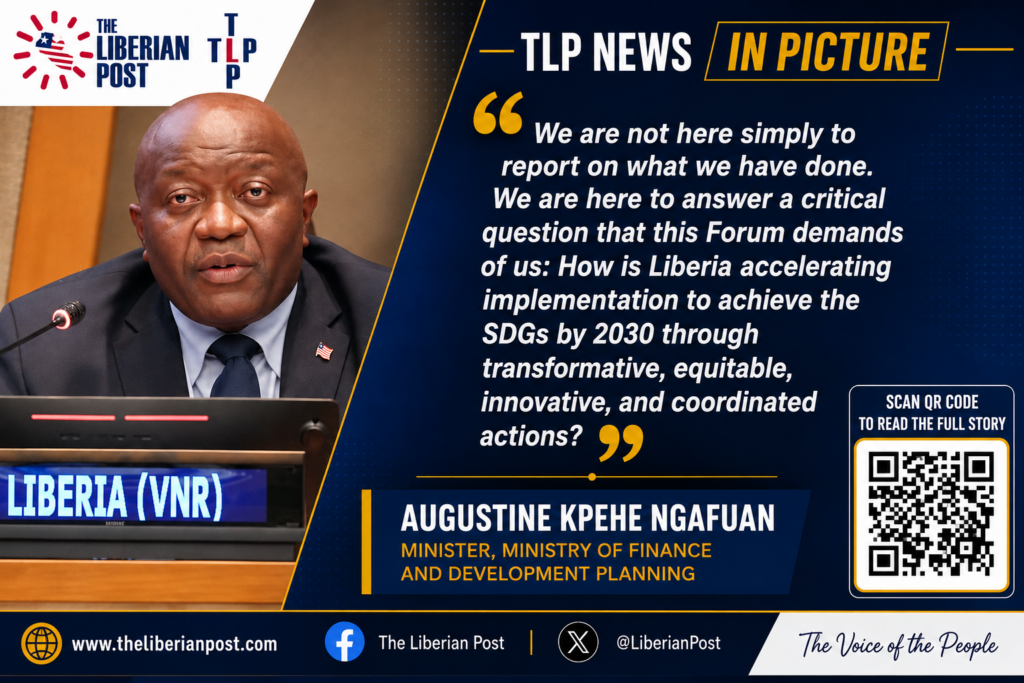
“We are not here simply to report on what we have done. We are here to answer a critical question that this Forum demands of us: How is Liberia accelerating implementation to achieve the SDGs by 2030 through transformative, equitable, innovative, and coordinated actions?” the Minister told delegates.
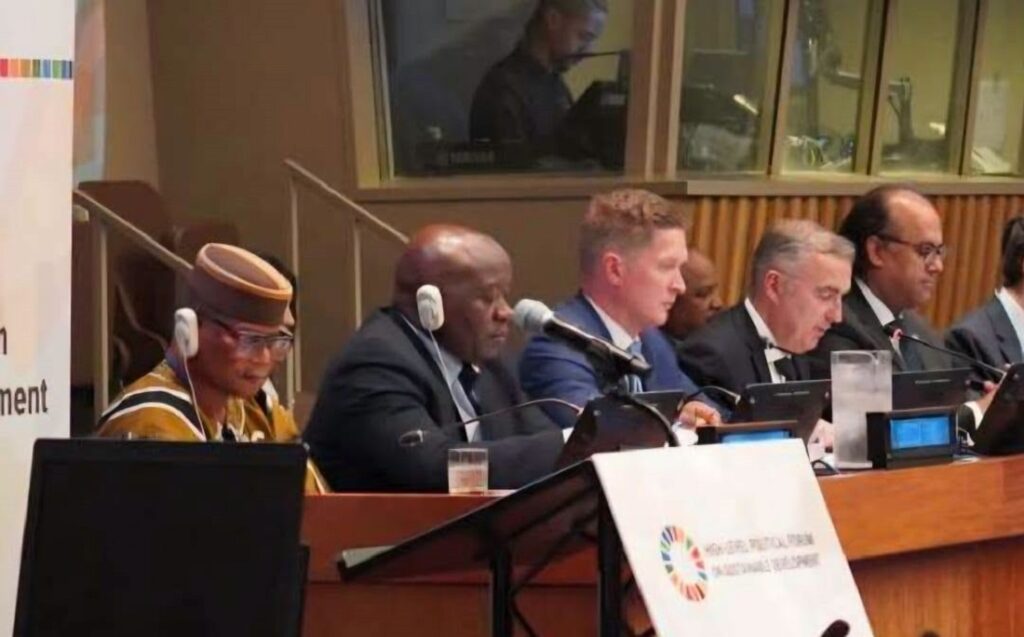
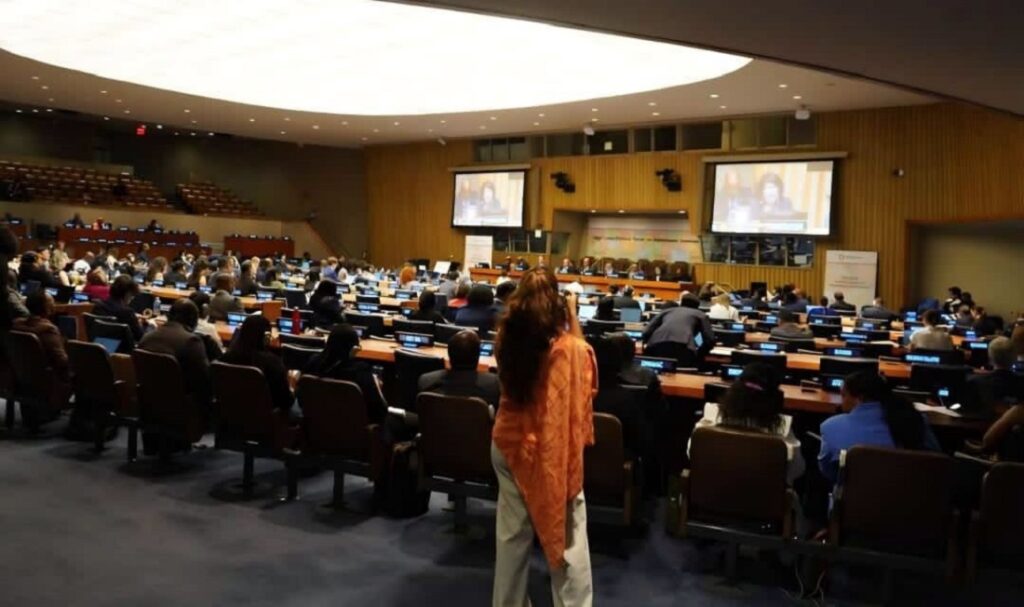
The High-Level Political Forum, convened annually under the auspices of the United Nations Economic and Social Council (ECOSOC), is the UN’s principal platform for reviewing progress toward achieving the 2030 Agenda for Sustainable Development. This year’s forum is being held under the theme: “Transformative, Equitable, Innovative and Coordinated Actions for the 2030 Agenda.”
Liberia joined 35 other countries in presenting their Voluntary National Reviews, which provide an opportunity for governments to assess achievements, identify challenges, and share lessons learned in implementing the Sustainable Development Goals.
ARREST Agenda Driving National Development
At the center of Liberia’s presentation was the Government’s ARREST Agenda for Inclusive Development (AAID) 2025–2029, which Ngafuan described as the country’s bold roadmap for achieving both national development priorities and the SDGs.
The ARREST Agenda focuses on Agriculture, Roads, Rule of Law, Education, Sanitation, and Tourism, and contains 375 development interventions, approximately 83 percent of which are directly aligned with specific Sustainable Development Goal targets.
According to Ngafuan, the close alignment demonstrates Liberia’s commitment to evidence-based planning, measurable results, and accountable governance.
“Our answer is our National Development Plan 2025–2029 for Inclusive Development,” he said. “This is a bold national development roadmap with 375 interventions and 83 percent direct alignment to the Sustainable Development Goals. It is already delivering results.”
Economic Recovery Gains Momentum
The Finance Minister highlighted several indicators demonstrating what he described as Liberia’s growing economic resilience despite a turbulent global environment.
He reported that Liberia’s economy is projected to grow by 5.5 percent in 2026, while inflation has declined to 5.3 percent, down from double-digit levels recorded in 2023.
National poverty has also declined significantly, falling from 34 percent in 2020 to 29.6 percent in 2024.
Ngafuan emphasized that these improvements represent tangible changes in the lives of ordinary Liberians.
“These are not abstract numbers. They represent millions of Liberians whose daily lives are improving,” he said.
Liberia’s Human Development Index (HDI) has also increased to 0.510, which the Minister described as the highest recorded in the country’s post-conflict history.
Health, Education and Agriculture Advancing
Beyond macroeconomic performance, Ngafuan highlighted substantial progress across several sectors critical to achieving the Sustainable Development Goals.
He said maternal mortality continues to decline while Liberia’s disease surveillance system is now capable of detecting outbreaks within 24 to 48 hours, significantly strengthening the country’s public health preparedness.
Community health services, he added, continue to expand to reach vulnerable populations across the country.
In education, school enrollment continues to rise, while expanded Technical and Vocational Education and Training (TVET) programs are equipping thousands of young Liberians with practical skills for employment.
The government is also investing in the targeted recruitment of Science, Technology, Engineering and Mathematics (STEM) teachers to strengthen educational outcomes and better prepare young people for an increasingly technology-driven economy.
Agriculture—one of the six pillars of the ARREST Agenda—also featured prominently in Liberia’s presentation.
According to Ngafuan, the government is boosting agricultural productivity through expanded irrigation, increased agro-processing, and investments aimed at improving food security, raising rural incomes, and reducing undernourishment.
Digital Transformation Expanding Opportunity
Liberia’s digital transformation agenda is also producing measurable results.
The Minister disclosed that mobile money accounts have increased from approximately 1.5 million in 2020 to more than 3.5 million today, dramatically expanding financial inclusion, particularly in rural communities.
He said the expansion has been driven by sector-wide digitization initiatives aligned with the United Nations Global Digital Compact, enabling millions of Liberians to access financial services and broader economic opportunities.
Progress Across Key Sustainable Development Goals
Ngafuan outlined Liberia’s progress on the five Sustainable Development Goals under review during this year’s High-Level Political Forum.
Under SDG 6 (Clean Water and Sanitation), access to improved drinking water has increased to 78.8 percent of the population, while sanitation coverage has improved from 18 percent to 28 percent, supported by investments in climate-resilient water systems, particularly in rural communities.
On SDG 7 (Affordable and Clean Energy), electricity access has increased from 32.7 percent in 2024 to 38 percent, while national generation capacity has expanded to 146 megawatts, driven largely by investments in solar power and other renewable energy solutions.
Regarding SDG 9 (Industry, Innovation and Infrastructure), Liberia has increased its paved road network from approximately 1,300 kilometers in 2023 to about 1,450 kilometers by the end of 2025, while remaining on course to achieve its target of 2,000 kilometers by 2029.
The Minister also reported that 4G telecommunications coverage has expanded from 72 percent in 2024 to 80 percent by the end of 2025, while construction has commenced on Liberia’s first Special Agro-Industrial Processing Zone, which is expected to promote industrialization, add value to agricultural production, and create employment opportunities.
On SDG 11 (Sustainable Cities and Communities), Ngafuan disclosed that the proportion of Liberia’s urban population living in slum communities has declined from 65 percent to 59 percent, with the government targeting a further reduction to 55 percent by the end of 2026 through investments in urban services, local roads, and community upgrading initiatives.
Under SDG 17 (Partnerships for the Goals), Liberia has significantly strengthened domestic resource mobilization.
Government revenue increased from US$606.3 million in 2023 to US$698.6 million in 2024, before exceeding US$840 million in 2025, raising Liberia’s revenue-to-GDP ratio to 15.8 percent.
Ngafuan also noted that decentralized treasury services are now operating across five counties, strengthening fiscal accountability and improving public financial management outside Monrovia.
Global Challenges Continue to Threaten Progress
While celebrating Liberia’s achievements, the Finance Minister acknowledged that the country continues to face formidable external challenges.
Among the most significant, he said, was the abrupt withdrawal of support from one of Liberia’s largest development partners in 2025, which affected school feeding programs, essential medicines, water and sanitation services (WASH), and agricultural initiatives.
He also cited rising global fuel and food prices resulting from the ongoing crisis in the Middle East, increasing debt servicing obligations that continue to divert resources away from education, healthcare, infrastructure, and other priority sectors, as well as Liberia’s growing vulnerability to climate change.
Flooding, coastal erosion, changing rainfall patterns, and other climate-related shocks, he warned, continue to threaten lives, livelihoods, food security, and critical infrastructure while placing additional pressure on already limited public resources.
The Minister further noted that declining Official Development Assistance (ODA) and the gradual scaling down of support by development partners, including Gavi, the Vaccine Alliance, are creating additional financing challenges for developing countries like Liberia.
“Liberia Is Not Retreating”
Despite these challenges, Ngafuan insisted that Liberia remains committed to financing its own development agenda through stronger domestic resource mobilization and institutional reforms.
“Liberia is not retreating. We are taking ownership,” he declared.
He said the government is investing aggressively in tax administration, enforcement, and digital transformation to increase domestic revenues while expanding TVET centers for young people and implementing Liberia’s National Adaptation Plan to strengthen climate resilience.
Ngafuan also emphasized that Liberia’s Third Voluntary National Review was developed through one of the country’s most inclusive consultation processes, with more than 40 percent of consultations led by civil society organizations, women, youth, and persons with disabilities.
Appeal for Stronger International Partnerships
Concluding his presentation, the Finance Minister reaffirmed Liberia’s commitment to accelerating inclusive economic growth, expanding renewable energy, deepening digital governance, strengthening the rule of law, increasing domestic financing, and ensuring that no Liberian is left behind.
However, he cautioned that achieving both the ARREST Agenda and the Sustainable Development Goals by 2030 will require substantially greater international support.
He therefore called for stronger global partnerships, increased private sector investment, innovative financing mechanisms, expanded technology transfer, and enhanced multilateral cooperation to help developing countries accelerate progress toward the 2030 Agenda.
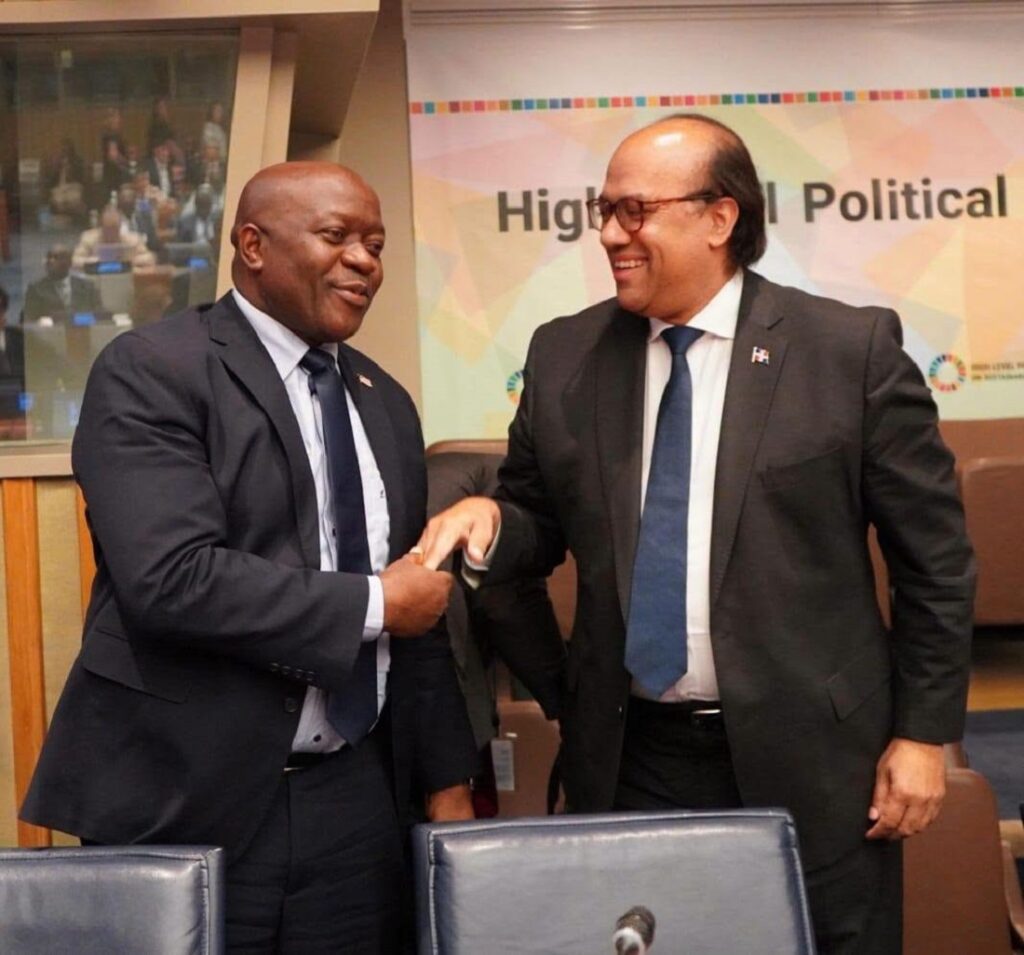
Joining Minister Ngafuan during Liberia’s presentation at the United Nations were Minister of Mines and Energy R. Matenokay Tingban and Minister of Labor Cooper Kruah, reflecting the government’s whole-of-government approach to advancing sustainable and inclusive national development.
For breaking news, exclusive investigations, and in-depth analysis from Liberia and around the world, follow The Liberian Post on Facebook (https://web.facebook.com/profile.php?id=61576017166570) and X, formerly Twitter (https://x.com/LiberianPost).