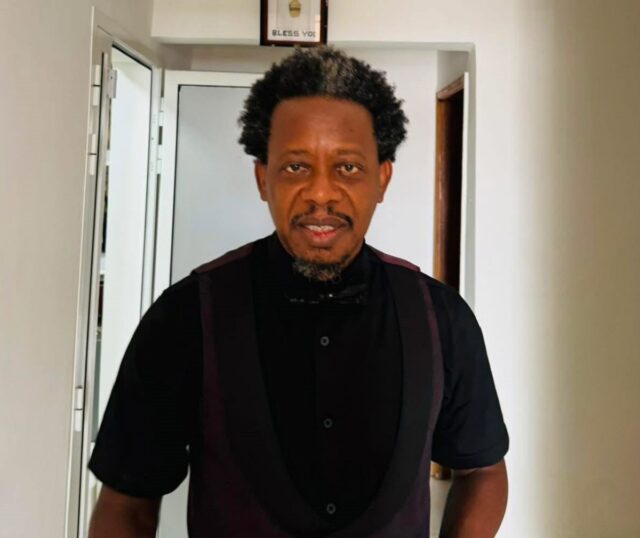
–Former Lawmaker Faces Criticism as Viral Document Linked to Ayodele Controversy Is Discredited; Questions Emerge Over Misinformation and Political Propaganda
MONROVIA, Liberia – Former Montserrado County District #8 Representative Acarous Moses Gray has come under intense public scrutiny after sharing a purported response from Nigeria’s Ministry of Foreign Affairs that has since been widely dismissed as fake, prompting a public apology and retraction from one of Liberia’s largest media platforms, Spoon TV Live.
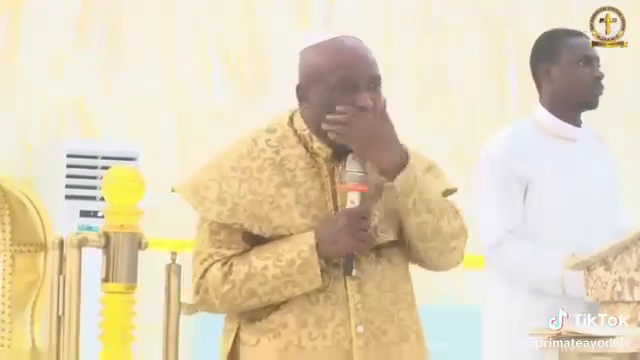
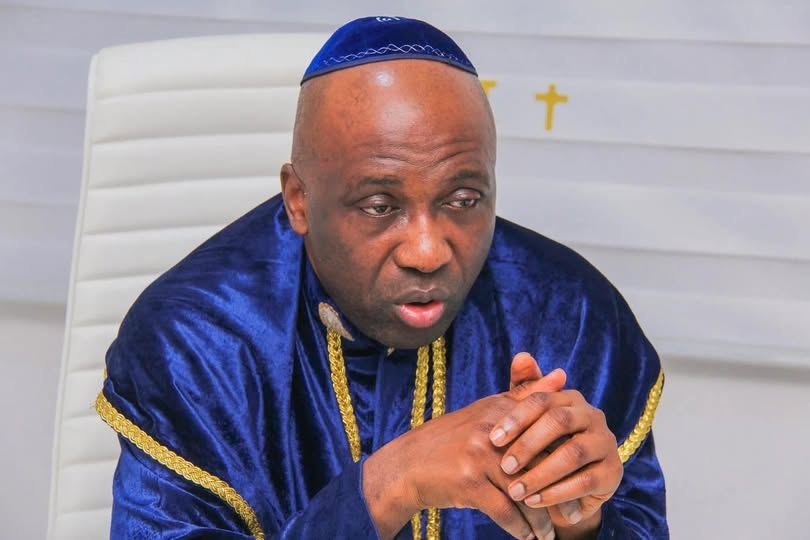
The controversy stems from an ongoing diplomatic and political storm surrounding controversial Nigerian cleric Primate Babatunde Elijah Ayodele, whose repeated prophecies and criticisms of President Joseph Nyuma Boakai and Liberia have generated fierce debate across social media and political circles.
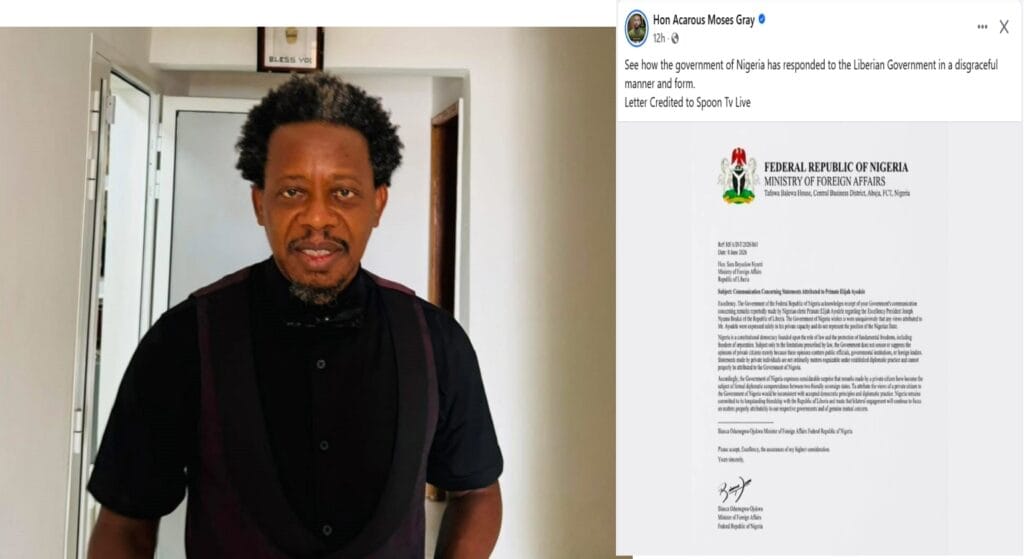
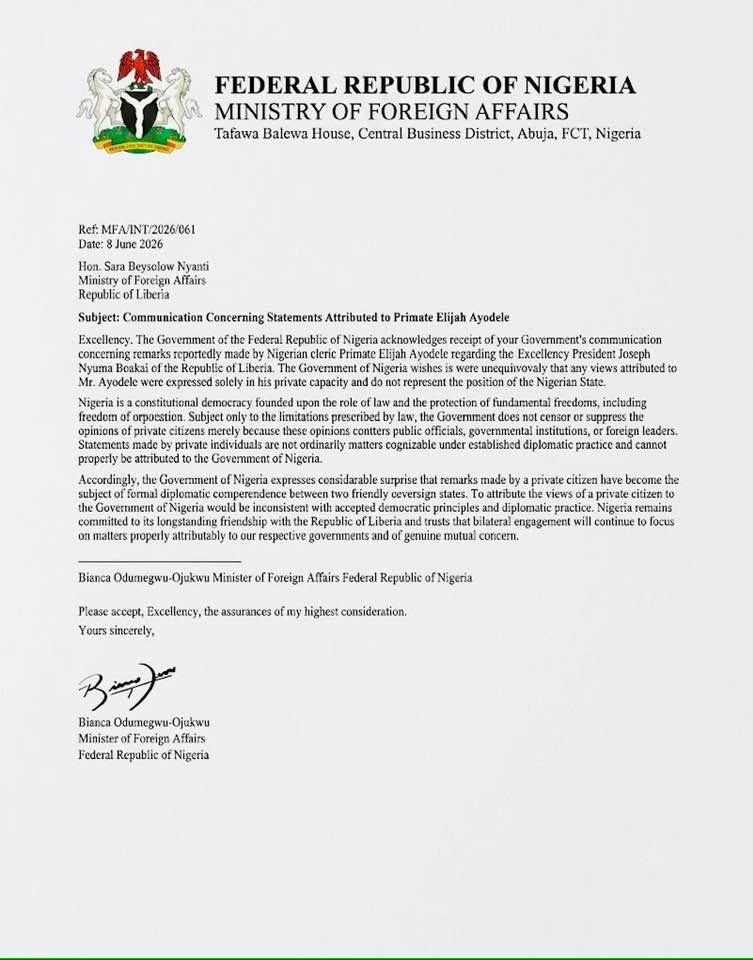
On Monday, June 8th, Gray posted what he claimed was an official communication from the Government of Nigeria responding to a complaint reportedly lodged by the Liberian Government against Ayodele.
“See how the government of Nigeria has responded to the Liberian Government in a disgraceful manner and form,” Gray wrote on his verified Facebook page while sharing the alleged document.
The letter, purportedly bearing the insignia of Nigeria’s Ministry of Foreign Affairs and allegedly signed by Nigeria’s Foreign Minister, quickly gained traction on social media, with supporters and critics of the Boakai administration sharing and debating its contents.
However, questions about the authenticity of the document soon emerged.
Spoon TV Retracts Story, Issues Public Apology
A major turning point came when Spoon TV Live, one of Liberia’s most influential digital media platforms and among the first outlets to circulate the document, publicly withdrew the publication after failing to verify its authenticity.
In a statement posted on its official Facebook page, Spoon Network acknowledged concerns surrounding the document and apologized to its audience for publishing information that could not be independently authenticated.
The network subsequently deleted the post and pledged to uphold professional journalistic standards and fact-checking procedures.
The retraction significantly altered the public narrative, transforming what initially appeared to be a diplomatic exchange into a broader conversation about misinformation, media responsibility, and political propaganda in Liberia’s increasingly polarized digital space.
The development also exposed Gray to criticism from social media users who accused him of amplifying unverified information without conducting due diligence.
Liberia’s Complaint Against Ayodele
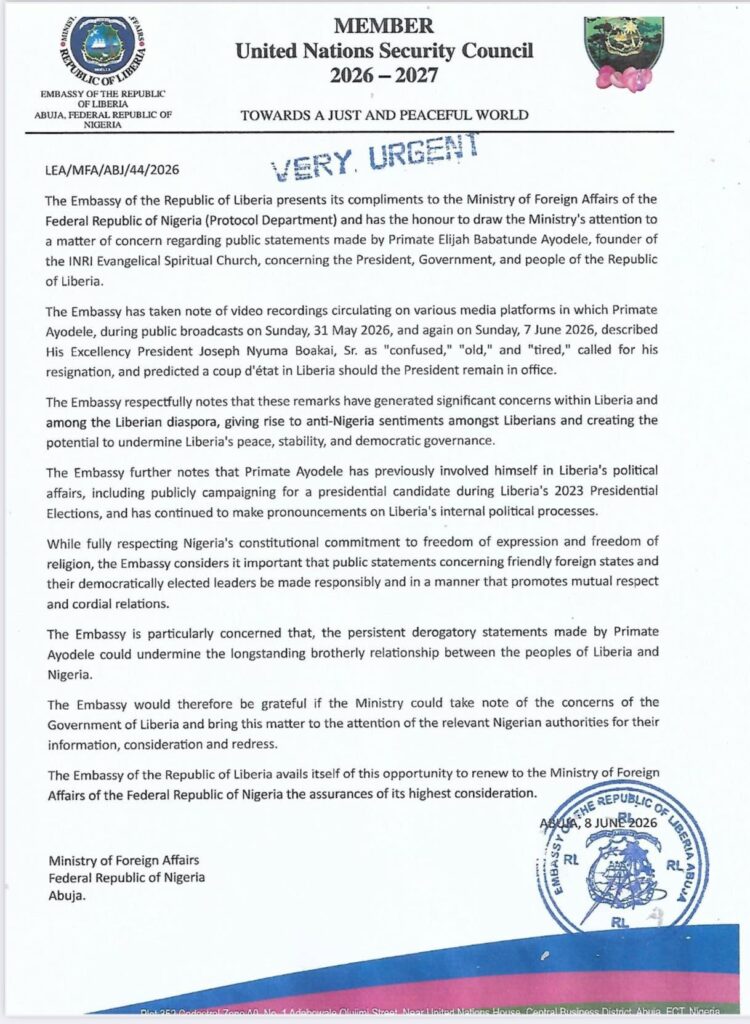
The fake-letter controversy emerged shortly after reports surfaced that the Liberian Embassy in Abuja had formally complained to Nigerian authorities over Ayodele’s repeated comments regarding Liberia and President Boakai.
According to information circulating in diplomatic and media circles, the Liberian Embassy expressed concern that Ayodele’s statements—including predictions of political instability and alleged coup threats—could negatively affect Liberia’s international image and potentially undermine peace and democratic stability.
The embassy reportedly urged Nigerian authorities to review the matter, citing what it described as the cleric’s continued involvement in Liberia’s political affairs.
While neither the Liberian Ministry of Foreign Affairs nor the Nigerian Government has publicly released details of any formal response, no verified evidence has emerged showing that Nigeria officially replied to the complaint in the manner depicted in the now-discredited document.
Ayodele’s Comments Continue to Spark Debate
The controversy is the latest chapter in a long-running relationship between Ayodele and Liberian politics.
Over the years, the Nigerian cleric has issued numerous prophecies concerning Liberia’s elections, governance, economy, and political leaders.
His latest remarks, delivered during a church service in Nigeria, reignited controversy after he described Liberia as a country in confusion and suggested that President Boakai’s leadership was contributing to national uncertainty.
One widely circulated graphic quoted Ayodele as saying:
“Liberia, your President is confused, so the economy of the country is confused, and everything about the country is confused.”
The comments triggered strong reactions from supporters of the Boakai administration, opposition figures, religious leaders, and ordinary Liberians.
While some defended Ayodele’s right to express prophetic opinions, others accused him of unfairly meddling in Liberia’s internal affairs and making politically charged statements under the guise of prophecy.
Political Reactions Intensify
The controversy has also exposed deep political divisions in Liberia.
Several supporters of the ruling Unity Party have accused opposition elements of using Ayodele’s statements as a political weapon against the Boakai administration.
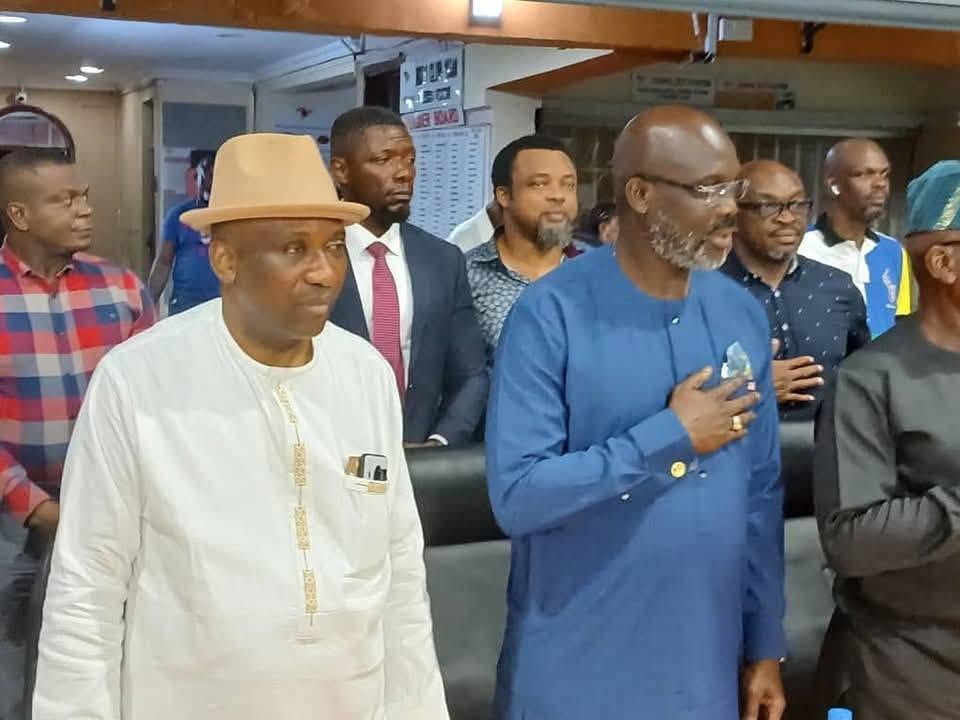
Among the strongest reactions came from prominent Boakai supporter Varney Sackey, who launched a blistering attack on both Ayodele and former President George Weah.
In a lengthy Facebook post, Sackey alleged that the cleric was being used to advance political narratives against the current government and accused former President Weah of associating with what he described as “paid prophecies.”
Sackey’s comments themselves generated debate, with opposition supporters dismissing the allegations as political rhetoric while government supporters echoed his concerns about external influence in Liberia’s political discourse.
Growing Concern Over Misinformation
Media analysts say the incident highlights the growing challenge of misinformation in Liberia, where political content often spreads rapidly through social media before being independently verified.
The episode has renewed calls for greater fact-checking by public figures, media institutions, and social media influencers, particularly when dealing with sensitive diplomatic matters involving foreign governments.
For many observers, the controversy serves as a reminder that in the age of instant communication, false information can travel quickly—sometimes reaching thousands of people before the truth catches up.
As debate over Ayodele’s prophecies continues, the collapse of the purported Nigerian response has shifted attention away from the cleric himself and toward a broader question: how should Liberia’s political actors, media institutions, and citizens navigate an information environment increasingly vulnerable to misinformation and manipulation?
Follow The Liberian Post on Facebook (https://web.facebook.com/profile.php?id=61576017166570) and X, formerly twitter (https://x.com/LiberianPost).