-President Honors Former Lone Star Player and Coach, Says Liberia Must Remember Those Who Built Its Sporting Legacy
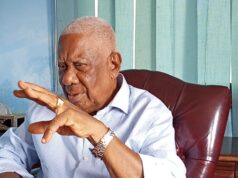
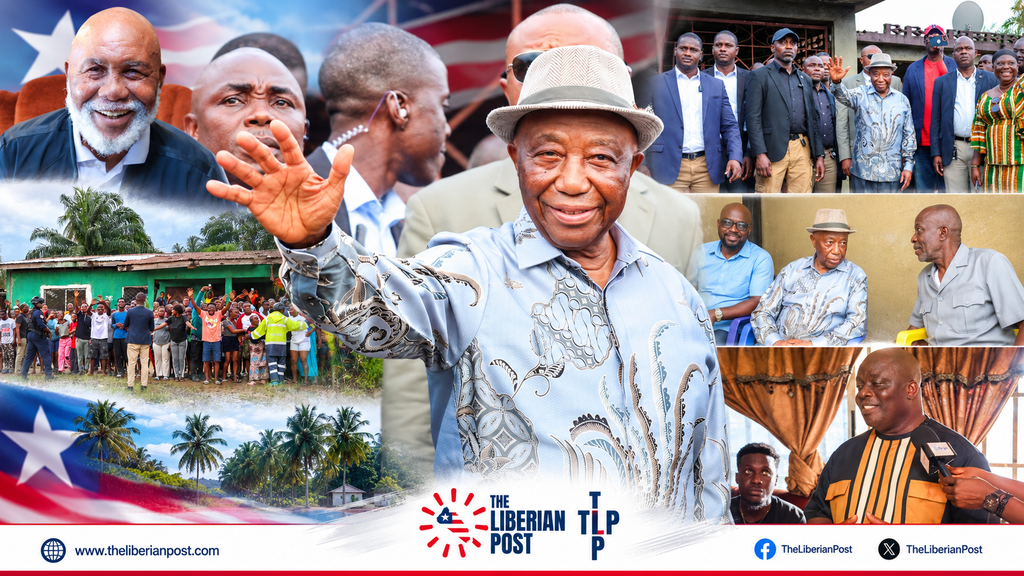
MONROVIA, Liberia — President Joseph Nyuma Boakai has reached out to one of Liberia’s most enduring football figures, paying a personal visit to former Lone Star player and coach Josiah Nils Johnson, popularly known as “JNJ,” and pledging government support to help address some of the challenges facing the aging sporting icon.
President Boakai made the courtesy visit Saturday, September 5, at Johnson’s home in Bardnesville, Gardnersville Township, describing it as an expression of appreciation for a man whose decades of service helped shape the development of football in Liberia.
The visit also carried a broader message from the President: Liberia must not forget the people whose contributions laid the foundation for the country’s sporting history.
“I admire the people who have contributed to the development of sports in Liberia. That is why I am here today to recognize and give back to those who have made contributions to the Liberian sporting community,” President Boakai said.
The President acknowledged that he did not personally grow up as an athlete, explaining that work and other responsibilities dominated his childhood and prevented him from pursuing sports himself.
But, he said, his lack of an athletic background has never diminished his appreciation for sports or his interest in developing Liberia’s next generation of athletes.
Boakai invoked the familiar warning that a country cannot build its future while forgetting its past.
“If you don’t remember the past, there is no way you can get prepared for the future.”
That philosophy, he said, informed his decision to personally visit Johnson and recognize his contribution while the former footballer is still alive.
“We Have Not Forgotten You”
The President delivered an emotional acknowledgment of Johnson’s contribution, particularly the sacrifices made by Liberia’s former sporting generation despite limited financial rewards.
“We have not forgotten you. The Country has not forgotten. We remember your invaluable contributions to this country that you gave without adequate compensation. We appreciate you,” Boakai said.
As part of the visit, the President made a personal contribution toward Johnson’s well-being and pledged to serve as an immediate solution to some of the pressing challenges confronting the veteran sports leader.
The gesture comes against the backdrop of renewed national discussion about how Liberia treats its former athletes and sporting heroes after their active careers have ended.
For Johnson, whose decades in football stretched from the playing field to the national technical bench, the visit was both a personal recognition and an affirmation that his service has not been erased from Liberia’s collective memory.
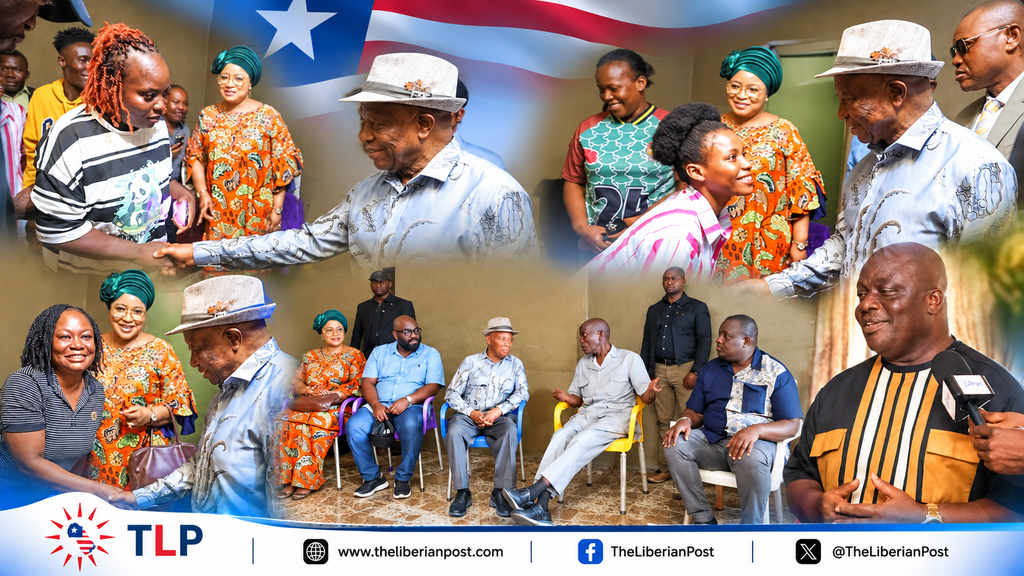
From Player to Coach, JNJ Built a Legacy
Johnson played for Liberia’s national team as a midfielder from 1958 to 1971 before moving into coaching and later serving as head coach of the Lone Star from 1971 to 1979.
His football career was part of a generation that helped establish the foundations of organized football in Liberia.
Johnson’s coaching career produced one of the most celebrated results in Liberian football history.
Under his leadership, Liberia defeated Ghana’s Black Stars 3–1 in Monrovia in the 1979 Six-Nation Tournament, a result that remains an important chapter in the country’s football history.
His contribution extended beyond the national team. Johnson also played a role in the development and promotion of Liberian football at a time when national sporting institutions operated with far fewer resources than those available today.
That history formed the basis of President Boakai’s appeal that Liberia should recognize its sporting pioneers and use their experiences to inspire the next generation.
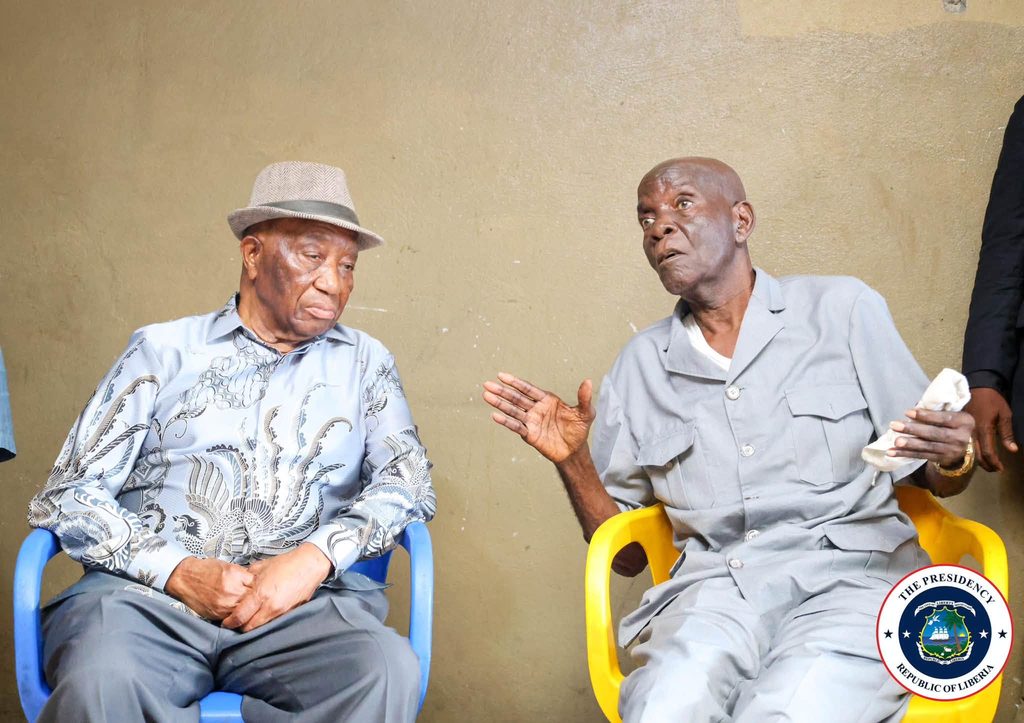
JNJ: “Here Your Flower Is Given You”
Johnson responded to the President’s visit with visible appreciation, saying the gesture would remain part of his family’s history.
“Here your flower is given you. My entire family is appreciative of your visit and your leadership. We are grateful for this visit and it’s going to be remembered throughout my family history.”
The veteran footballer also used the occasion to praise the administration’s development efforts, particularly road projects connecting southeastern Liberia.
Johnson expressed satisfaction that improved road connections are making it easier to travel between Maryland, Sinoe, Grand Bassa and Monrovia.
“People can now leave from Maryland and pass through Sinoe and then to Grand Bassa, onward to Monrovia in about a day. We are grateful.”
His comments connected the personal tribute to a broader issue that has long affected southeastern Liberia: transportation and road connectivity.
For an aging sports icon whose life has been closely connected to the development of the country, the President’s visit therefore became both a moment of personal recognition and an opportunity to acknowledge developments taking place beyond Monrovia.
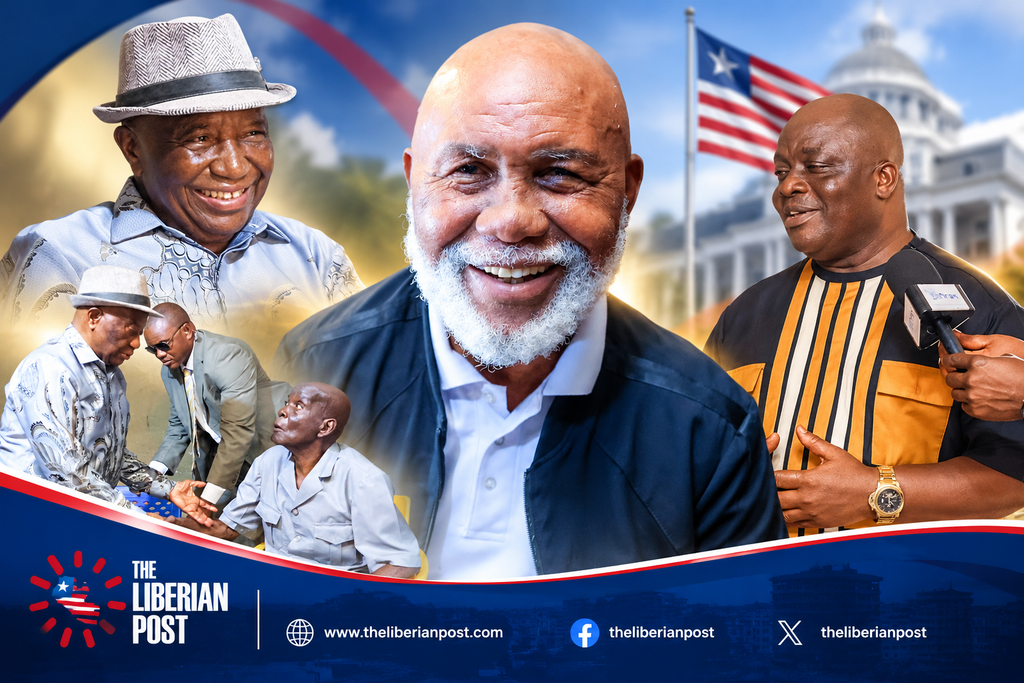
Government Support for Former Lone Star Players
The visit also comes as the government continues a modest support initiative for former national football players.
According to the Executive Mansion, the Boakai Administration, through the Ministry of Youth and Sports, initiated a token sponsorship program for former Lone Star players under the Former Lone Star Players Association during the tenure of then Youth and Sports Minister Cllr. Jerror Cole Bangalu.
Association Chairman and former Lone Star defender Washington Blay said the group is receiving subsidies from the government through the Ministry of Youth and Sports budget.
Blay expressed hope that the support will eventually increase, citing the numerous personal and financial challenges confronting retired national-team players.
The program reflects a broader question confronting Liberia’s sporting sector: how to provide meaningful support to athletes after decades of service to the country.
For many former national players, fame during their active years did not translate into financial security in retirement.
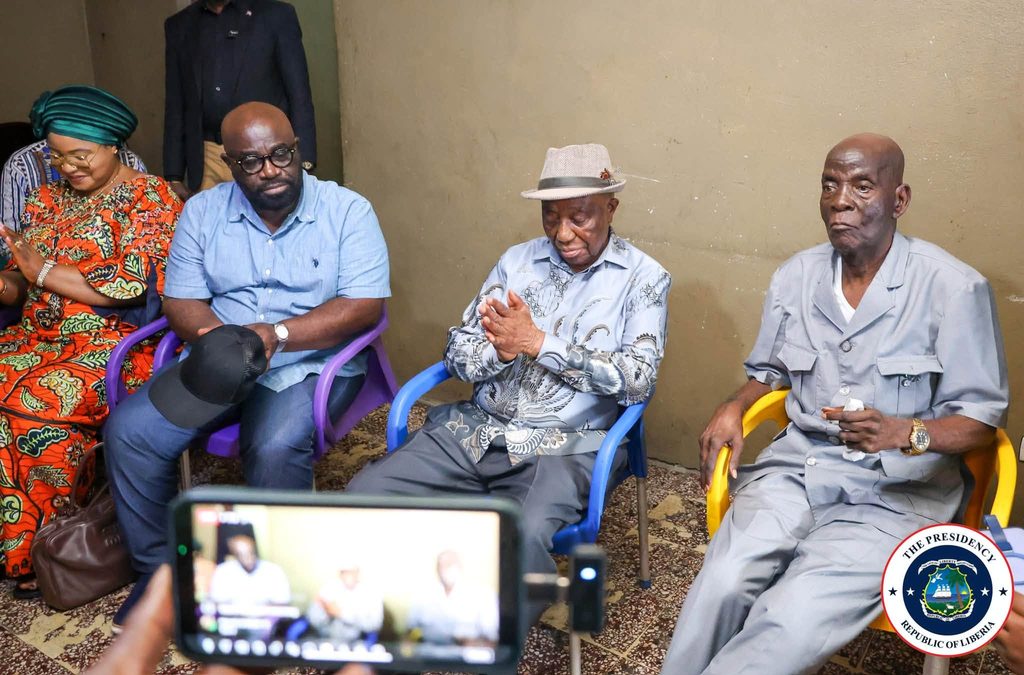
A Forgotten Generation, A Renewed Responsibility
Johnson’s situation highlights the contrast between the glory associated with Liberia’s sporting pioneers and the realities many of them face in old age.
The former Lone Star star devoted more than two decades to playing and coaching, contributing to a national football tradition that continues to influence younger generations.
President Boakai’s visit places that history at the center of the national conversation.
It also comes at a time when Liberia is seeking to rebuild its sporting institutions, develop young athletes and restore greater national pride in the Lone Star and other national teams.
For the President, honoring Johnson was therefore not simply about celebrating an individual.
It was about recognizing a generation.
“We have not forgotten you,” Boakai told Johnson.
For a football legend who spent much of his life serving Liberia from the pitch and the technical bench, the significance of those words may be measured not only by the assistance promised, but by the recognition that his contribution still matters.
And Johnson’s response—“Here your flower is given you”—captured the central message of the encounter: that Liberia’s sporting heroes should receive their flowers while they are still alive to smell them.
For breaking news, in-depth analysis, and exclusive reports from Liberia and around the world, follow The Liberian Post on Facebook (https://web.facebook.com/profile.php?id=61576017166570) and X, formerly Twitter (https://x.com/LiberianPost).