-Catholic Hierarchy Breaks Ranks with Inter-Religious Council as Debate Over Reproductive Rights, Public Health and the Sanctity of Life Intensifies in Liberia
MONROVIA – A rare disagreement has emerged among Liberia’s religious leaders after the Catholic Bishops’ Conference of Liberia (CABICOL) publicly distanced itself from the Inter-Religious Council of Liberia’s endorsement of the proposed Public Health Bill, citing strong objections to provisions dealing with abortion and reproductive health.
The bishops’ position has thrust one of the world’s most contentious moral and public policy debates into the national spotlight, setting the stage for renewed discussions among lawmakers, healthcare professionals, women’s rights advocates, and religious groups over the future of reproductive health legislation in Liberia.
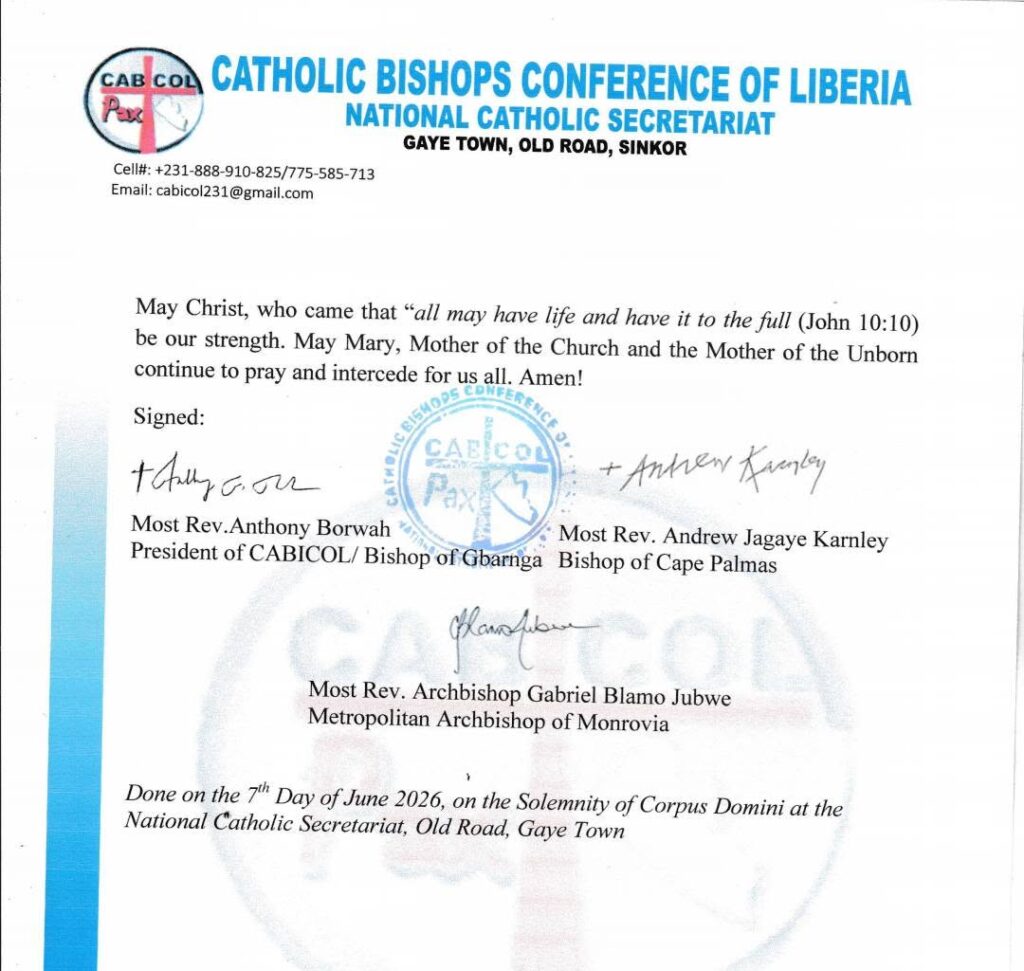
In a statement issued June 7, 2026, the Catholic Bishops reaffirmed their opposition to what they described as “justified abortion” provisions contained in the proposed legislation and called on members of the National Legislature to carefully reconsider those sections before approving the bill.
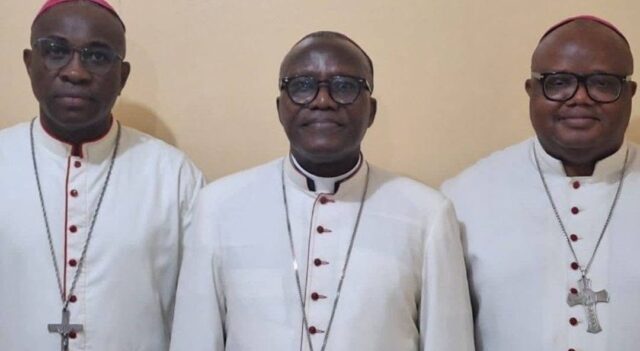
The statement was signed by CABICOL President and Bishop of Gbarnga, Most Rev. Anthony Borwah; Metropolitan Archbishop of Monrovia, Most Rev. Gabriel Blamo Jubwe; and Bishop of Cape Palmas, Most Rev. Andrew Jagaye Karnley.

While emphasizing the Catholic Church’s commitment to peace, justice, reconciliation, and human dignity, the bishops made it clear that they could not support the Public Health Bill in its current form.
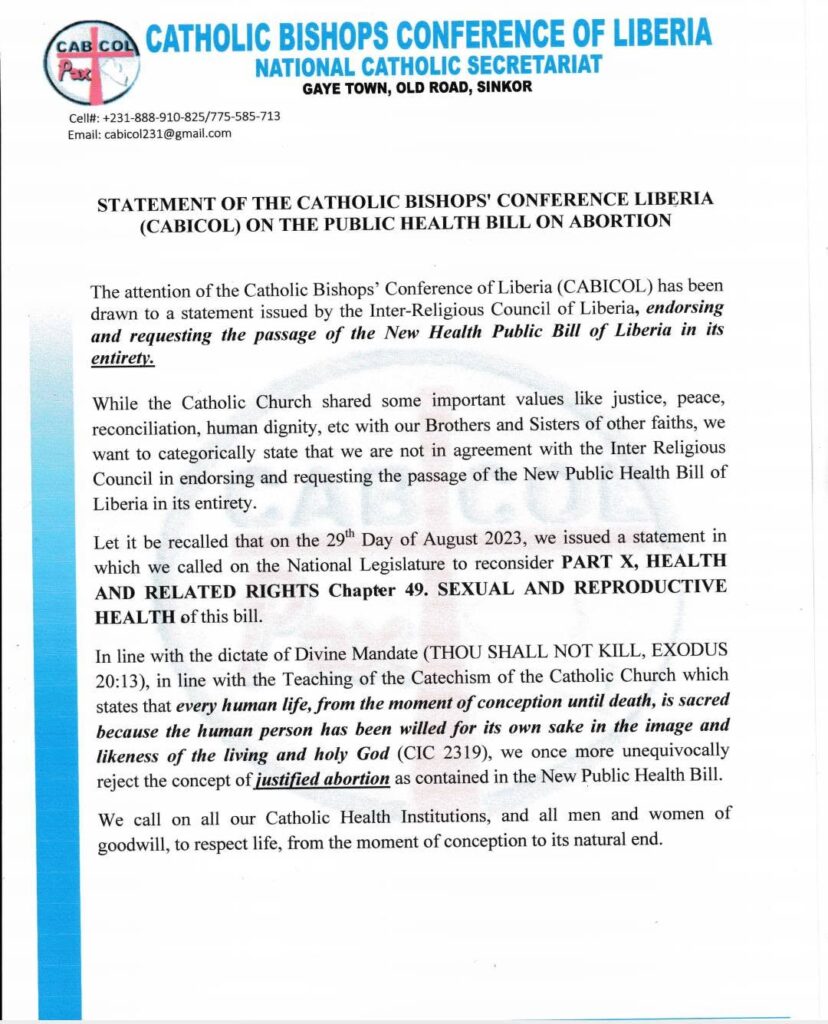
“The Catholic Church shares important values such as justice, peace, reconciliation and human dignity with our brothers and sisters of other faiths,” the bishops stated. “However, we are not in agreement with the Inter-Religious Council in endorsing and requesting the passage of the New Public Health Bill of Liberia in its entirety.”
According to the bishops, their primary concern centers on Part X, Chapter 49 of the proposed legislation, which addresses Sexual and Reproductive Health and contains provisions they believe could permit abortion under certain circumstances.
The Church leaders argued that such provisions are inconsistent with Catholic teachings on the sanctity of human life.
Renewing a Position First Taken in 2023
The latest statement is not the first time Liberia’s Catholic leadership has spoken out against the proposed legislation.
The bishops recalled that in August 2023 they issued a similar appeal urging lawmakers to revisit provisions relating to reproductive health before advancing the bill.
According to CABICOL, its opposition is rooted in both biblical teachings and Catholic doctrine, which hold that human life begins at conception and must be protected until natural death.
Citing the Biblical commandment “Thou Shall Not Kill” and teachings contained in the Catechism of the Catholic Church, the bishops reiterated their rejection of abortion in all forms.
“We once more unequivocally reject the concept of justified abortion as contained in the New Public Health Bill,” the statement declared.
The bishops further called on Catholic institutions, healthcare providers, and members of the faithful to continue promoting and defending what they described as the dignity and sanctity of every human life.
A Rare Religious Divide
The Catholic Church’s position places it at odds with the Inter-Religious Council of Liberia, which reportedly expressed support for the passage of the Public Health Bill and urged lawmakers to approve the legislation.
The differing positions have exposed a rare public divide among some of Liberia’s most influential religious institutions on a major national policy issue.
Historically, Liberia’s religious community has often spoken with one voice on issues of national importance, including peacebuilding, elections, corruption, reconciliation, and governance.
However, abortion and reproductive rights have emerged as areas where deep theological, ethical, and policy differences can surface even among faith-based organizations that share many common values.
Political analysts say the disagreement underscores the complexity of balancing public health objectives with religious convictions in a country where faith plays a central role in public life.
A Global Debate Reaches Liberia
The controversy unfolding in Liberia mirrors debates taking place across the world over abortion, reproductive rights, and maternal healthcare.
Few public policy issues generate as much division as abortion.
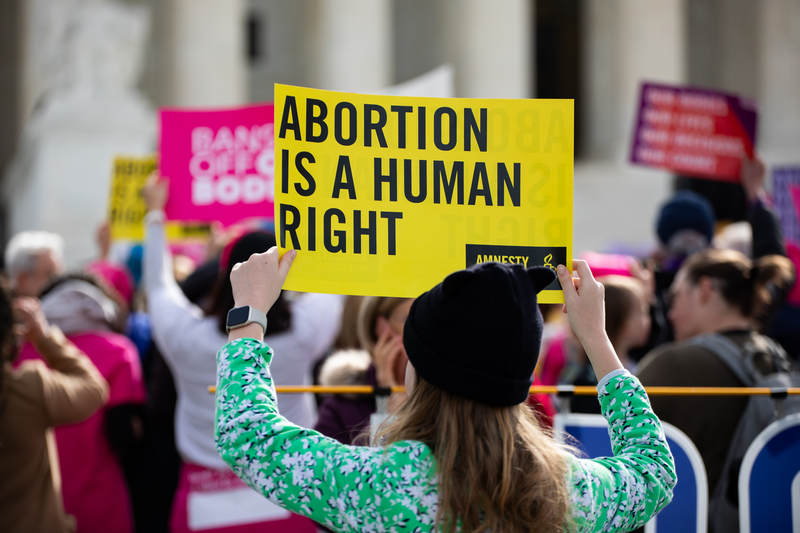
Supporters of abortion rights generally argue that access to reproductive healthcare is essential for protecting women’s health, bodily autonomy, and reproductive freedom. They contend that legal restrictions often drive women toward unsafe procedures that increase the risk of injury or death.
International health organizations have repeatedly warned that unsafe abortions remain a significant contributor to maternal mortality in many developing countries.
On the other side of the debate, religious organizations and pro-life advocates argue that unborn children possess an inherent right to life and that societies have a moral obligation to protect life from conception.
The Catholic Church has remained one of the most influential voices in the global pro-life movement.
Throughout his papacy, Pope Francis consistently opposed abortion while simultaneously calling for greater support for vulnerable mothers, children, and families facing difficult circumstances.
The issue continues to divide governments and societies around the world.
In Africa, abortion laws vary significantly from country to country. Some nations permit abortion only in limited circumstances, such as threats to the life of the mother, rape, or incest, while others have adopted broader reproductive health frameworks.
Legislature Faces Difficult Decision
As lawmakers continue considering the proposed Public Health Bill, the Catholic bishops’ intervention is expected to add momentum to public discussions surrounding the legislation.
The issue comes at a time when Liberia is seeking to strengthen healthcare delivery, reduce maternal mortality, and expand access to medical services, while also navigating deeply held religious and cultural values.
With both religious leaders and healthcare advocates weighing in on the debate, legislators may face increased pressure from multiple sides before reaching a final decision.
Observers say the coming weeks could determine whether the proposed bill advances in its current form, undergoes significant amendments, or faces renewed scrutiny over its reproductive health provisions.
For now, however, one thing is clear: the abortion debate has moved from the margins of policy discussions to the center of national attention, placing lawmakers at the intersection of faith, public health, human rights, and politics.
Follow The Liberian Post on Facebook and X (formerly twitter).