
MONROVIA — A growing debate among Liberia’s emerging economists over the International Monetary Fund’s Resilience and Sustainability Facility (RSF) has spotlighted contrasting views on the country’s economic direction—while also underscoring confidence in the leadership of Finance and Development Planning Minister Augustine Kpehe Ngafuan.
The exchange, involving economists Benedict Yeke Harleyson and Patrick M’Bayo, centers on the IMF’s recently approved support package for Liberia—estimated at over US$260 million—and whether the facility represents a pathway to transformation or a continuation of fiscal dependency.
IMF RSF: A Tool Yet to Be Tested
Harleyson, in a detailed response, argued that criticism of the RSF is premature, stressing that the facility has not yet been deployed and therefore cannot be judged on outcomes.
“You are judging a tool before it has even touched the ground,” he said, likening early criticism to evaluating uncooked food.
He emphasized that economic management must be grounded in real-world conditions rather than theoretical assumptions, pointing to Liberia’s ability to withstand external shocks in recent months.
“The economy absorbed the shock. Salaries were paid. Services continued. Systems held,” Harleyson noted, referencing resilience following disruptions such as the withdrawal of external aid.
According to him, the IMF’s continued engagement signals confidence in Liberia’s economic management framework, particularly under Minister Ngafuan.
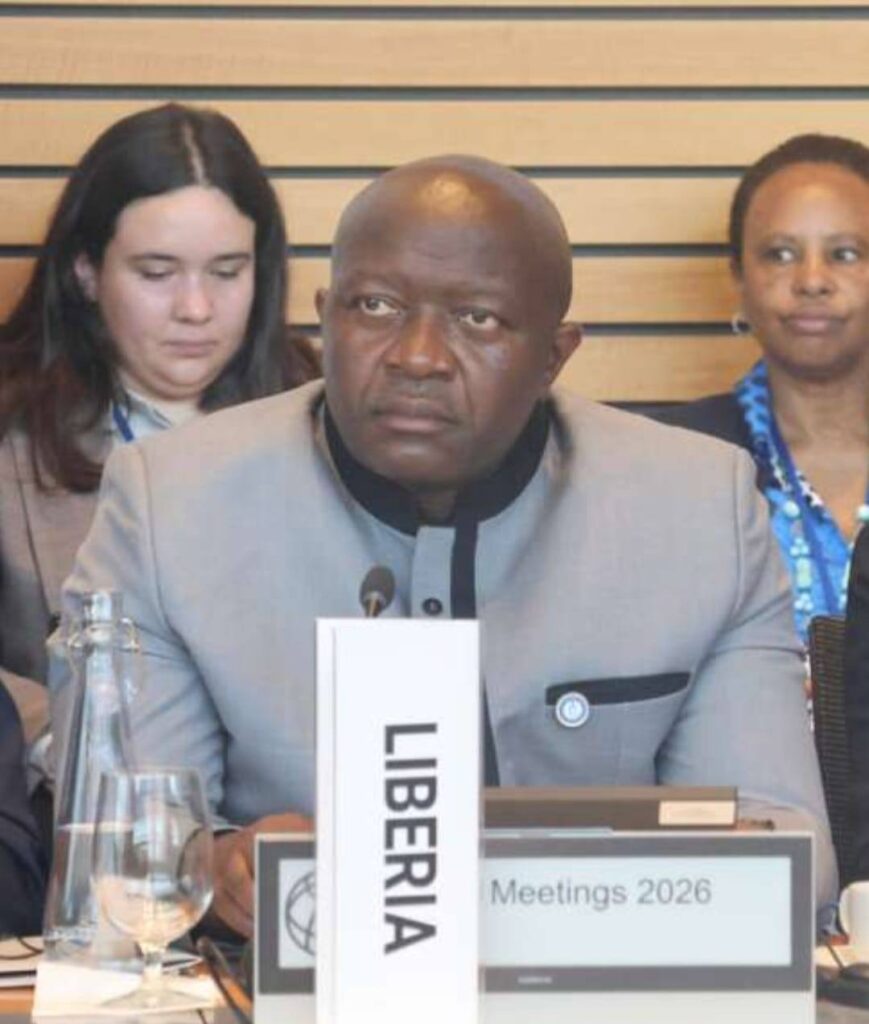
Confidence in Ngafuan’s Leadership
Harleyson’s argument strongly aligns with the view that Liberia’s current economic team has maintained macroeconomic stability while navigating global pressures.
He pointed to improvements in domestic revenue performance and steady growth indicators as evidence that the country is on a gradual but upward trajectory.
“We are undeniably better today than yesterday, and tomorrow will be better than today,” he asserted, framing economic progress as incremental and sustained rather than immediate.
Analysts say such optimism reflects growing confidence among some policy practitioners that Liberia’s engagement with international partners—including the IMF—is being managed with discipline and strategic intent.
Criticism: ‘Process Without Results’
However, economist Patrick M’Bayo offered a sharply contrasting perspective, arguing that the debate should focus not on financing instruments but on tangible outcomes for ordinary Liberians.
“What you present as sophistication is a defense of process without proof of impact,” M’Bayo said, questioning whether IMF-supported programs are translating into job creation, income growth, and poverty reduction.
He warned that Liberia risks falling into a cycle of “fiscal circulation,” where borrowed funds sustain government spending without expanding productive capacity.
“It is liquidity without productivity, and spending without growth,” he argued, describing what he sees as structural weaknesses in the economy.
Broader Context: What the RSF Means
The IMF’s Resilience and Sustainability Facility is designed to support countries in addressing long-term structural challenges, particularly those related to climate resilience, fiscal stability, and sustainable growth.
Countries such as Rwanda, Côte d’Ivoire, and Egypt have also accessed the facility, using it to finance reforms and investments aimed at strengthening economic resilience.
In Liberia’s case, the RSF is expected to complement broader reform efforts, including improvements in public financial management, infrastructure development, and economic diversification.

Debate Reflects Larger Policy Divide
The exchange between the two economists reflects a broader divide in Liberia’s economic discourse:
- One side emphasizes stability, gradual reform, and the importance of managing shocks
- The other calls for structural transformation and measurable improvements in livelihoods
While critics question the pace and impact of reforms, supporters argue that the IMF’s continued engagement is itself a vote of confidence in Liberia’s policy direction.
A Test of Implementation Ahead
Ultimately, both perspectives converge on one critical point: the success of the RSF will depend on how effectively it is implemented.
As Harleyson noted, “You cannot judge the RSF before it is deployed,” while M’Bayo insists that “policy tools are judged by what they produce.”
For Liberia, the challenge now lies in translating financing into tangible economic gains—ensuring that growth is not only recorded in macroeconomic indicators but also felt in households, markets, and communities across the country.
Follow The Liberian Post on Facebook and X (formerly twitter)