The growing controversy surrounding the proposed Diaspora Development Fund Act of 2026 offers diaspora Liberians an important opportunity — not merely to debate remittances and development financing, but to redefine how national decisions are discussed between government, the diaspora, and ordinary citizens.
Unfortunately, the conversation is increasingly becoming polarized.
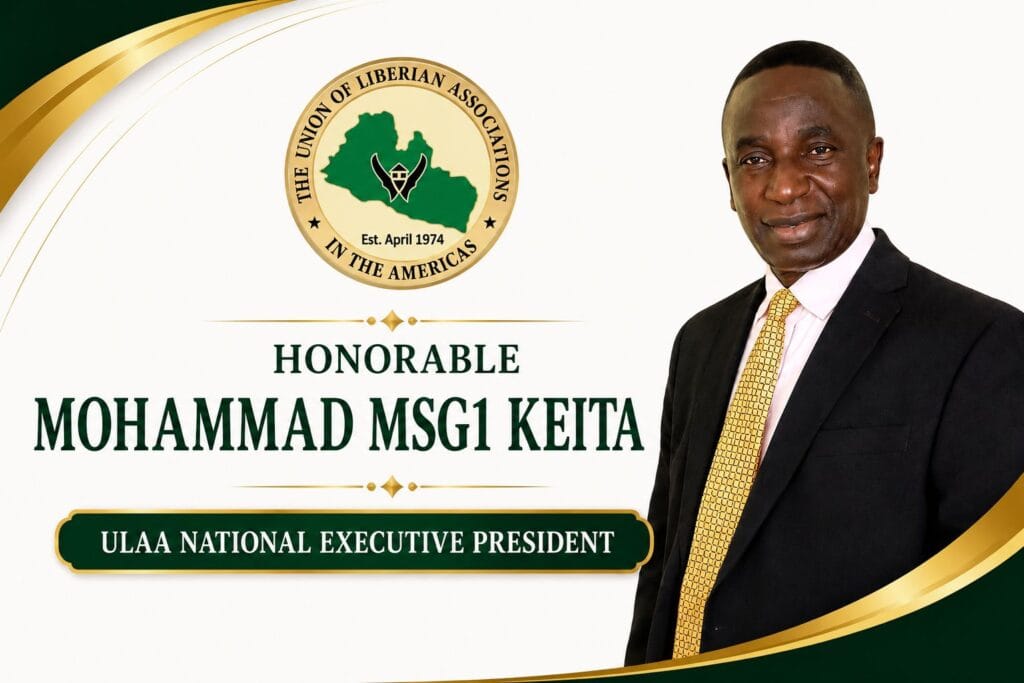
Supporters of the proposal view it as an innovative attempt to mobilize resources for national development at a time when donor support is shrinking and Liberia faces enormous infrastructure and economic challenges. Critics, including the Union of Liberian Associations in the Americas (ULAA), fear the proposal could create governance concerns, place additional burdens on struggling diaspora families, and undermine trust if not handled transparently.
Both sides raise legitimate concerns.
That is precisely why we must avoid turning this national discussion into another political battlefield where opposing voices are treated as enemies rather than stakeholders.
The diaspora is not the opposition. Government is not the enemy. If the debates continue without a good understanding, certainly one important thing loses and it is Liberia.
And those raising concerns about accountability should not automatically be labeled anti-development.
Liberia has suffered for decades because too many national conversations collapse into suspicion, political hostility, and emotional division instead of constructive engagement. Yet the issue of diaspora contributions demands precisely the opposite approach: consultation, patience, transparency, and consensus-building.
The way forward is not confrontation. The way forward is inclusion.
First, the Government of Liberia, the Legislature, and advocates of the proposed fund must immediately broaden consultations. ULAA, diaspora organizations across Europe, Africa, and North America, civil society institutions, economists, banking experts, constitutional lawyers, and community leaders all deserve a meaningful seat at the table.

No national policy affecting millions of dollars in remittances should emerge from limited consultations or unclear structures. Public trust is essential.
Second, any future diaspora development initiative must remain voluntary, transparent, and independently audited. Diaspora Liberians already carry enormous financial responsibilities. They support relatives, pay tuition, fund medical care, build homes, and sustain entire communities. That sacrifice must be respected — not taken for granted.
Third, the debate should also reopen serious national discussions about diaspora voting and representation. Many Liberians abroad feel economically connected to the country but politically excluded from decision-making. Whether Liberia is prepared for diaspora legislative seats or out-of-country voting deserves mature national dialogue rather than dismissal.
Most importantly, all parties must lower the political temperature.
We cannot continue normalizing the politics of insult, accusation, and division every time difficult national issues emerge. Development succeeds only where trust exists. And trust grows only where citizens feel heard, respected, and included.
The ULAA statement should therefore not be viewed as an attack on Liberia’s development ambitions. Rather, it should be treated as part of a broader democratic conversation about governance, accountability, and national ownership.
At its core, this debate is really about one fundamental question: How can Liberians everywhere — at home and abroad — work together to build the country responsibly and fairly?
That answer will not come through political grandstanding or public hostility. It will come through dialogue, compromise, and mutual respect.
The future of our country requires partnership, not polarization.
And in this moment, wisdom must prevail over politics.
Follow The Liberian Post on Facebook and X (formerly twitter).