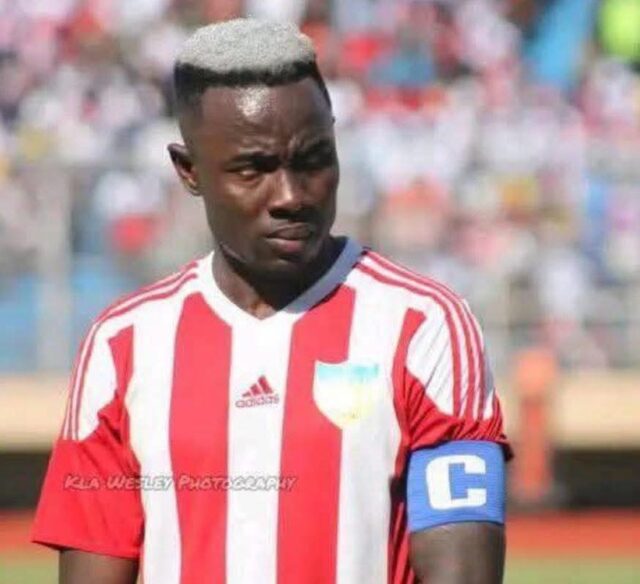
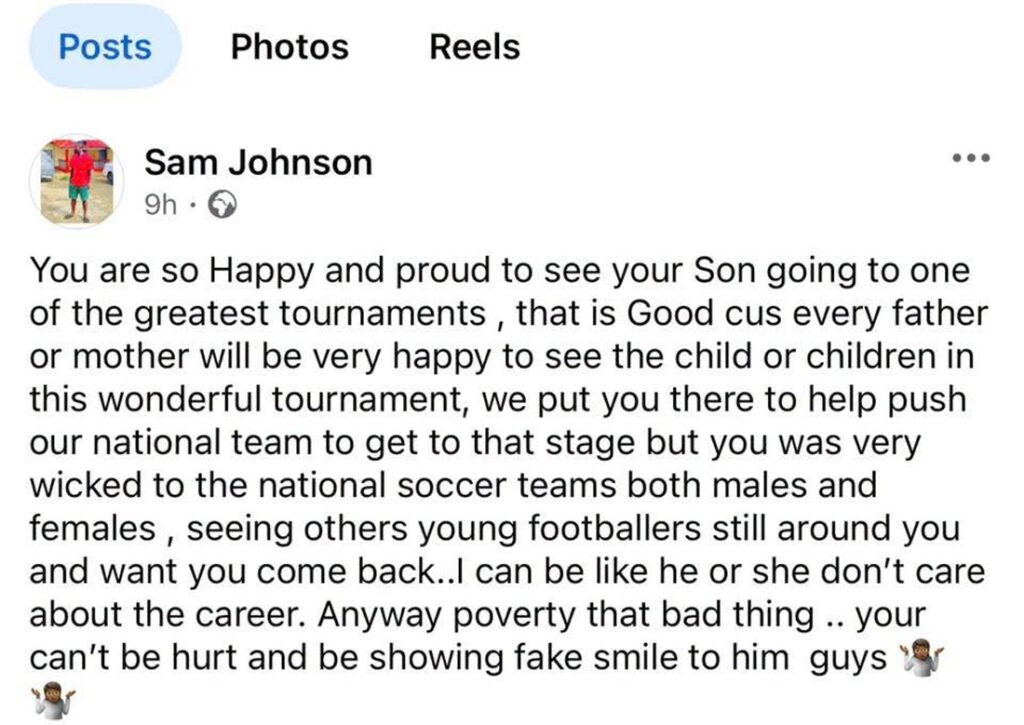
Former Liberia national team captain Sam Johnson has publicly criticized former President George Manneh Weah over what he described as inadequate support for Liberian football during Weah’s time in office.
Johnson’s remarks come amid widespread attention surrounding Weah’s celebration of his son’s participation in one of world football’s biggest tournaments — a moment that has generated pride among many Liberians given the former Ballon d’Or winner’s legendary status in global football.
While acknowledging that every parent would naturally feel proud to witness the success of their child on the international stage, Johnson questioned whether similar energy and commitment were extended toward the broader development of Liberian football and the welfare of local players during Weah’s presidency.
“Every father will be proud to see his son succeed,” Johnson reportedly noted, but argued that many Liberian footballers had expected stronger institutional support for the country’s national teams under a leader who rose from football greatness to the presidency.
The former Lone Star captain expressed disappointment that several talented Liberian players — both male and female — continue to struggle with limited opportunities, poor football infrastructure, and inadequate investment in the country’s sports sector despite Weah’s historic connection to the game.
According to Johnson, many young Liberian footballers looked up to Weah not only as a football icon but also as someone who understood the sacrifices and hardships associated with pursuing a professional football career from Liberia.
His comments have since ignited debate across the country’s football community and on social media, with supporters and critics offering differing views about Weah’s overall contribution to sports development during his six-year administration.
Some football fans argue that the former president made efforts to improve sports infrastructure and increase attention to football, while others believe Liberia failed to fully capitalize on having one of Africa’s greatest football legends in the country’s highest political office.
The debate has also revived broader concerns surrounding the condition of Liberian football, including funding challenges, poor league structures, limited training facilities, and the national team’s continued struggle to qualify for major international tournaments.
Johnson’s criticism now adds to growing public conversations about the future of Liberian football and what more can be done to support young athletes seeking opportunities both at home and abroad.
Follow The Liberian Post on Facebook and X (formerly twitter).