–President Boakai Tells International Community Peace Must Be Built Through National Ownership as Liberia Emerges from Conflict to a Voice on the UN Security Council
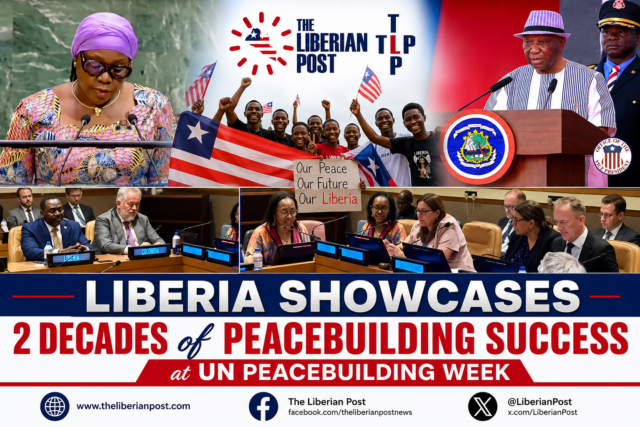
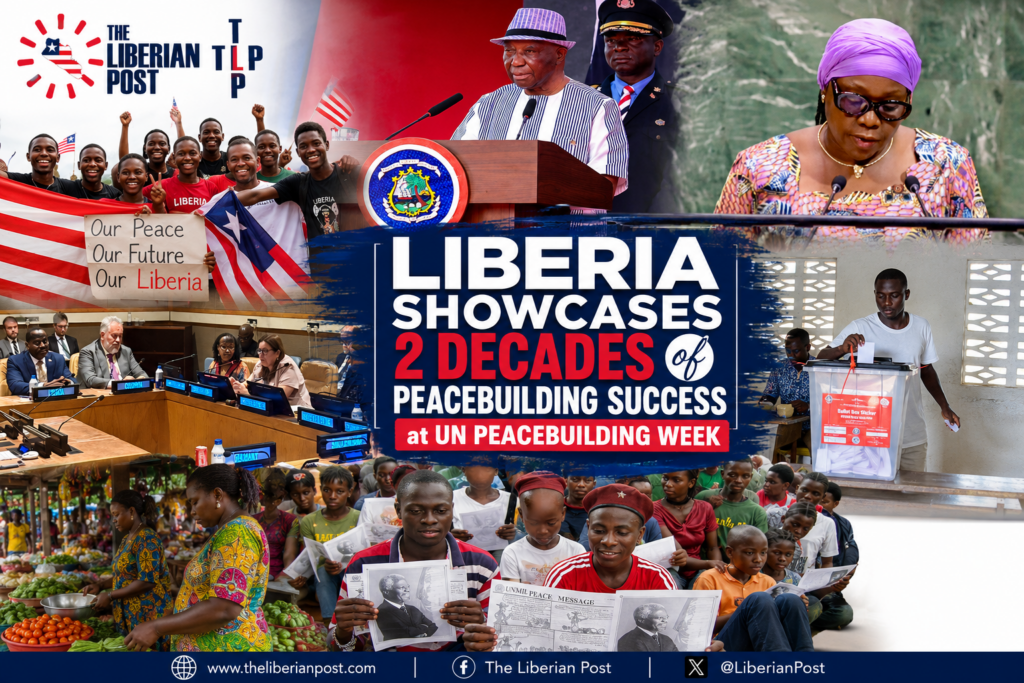
Monrovia, Liberia – Liberia has presented its remarkable transformation from a war-ravaged nation to a respected voice in global peace and security as one of the world’s strongest examples of successful peacebuilding during the United Nations’ inaugural Peacebuilding Week in New York.
Marking the 20th anniversary of the United Nations Peacebuilding Commission (PBC) and the UN Secretary-General’s Peacebuilding Fund (PBF), Liberia used the international platform to highlight how sustained investment in peace, democratic governance, and national ownership has enabled the country to move from hosting one of the UN’s largest peacekeeping missions to serving as a non-permanent member of the United Nations Security Council (UNSC).
President Joseph Nyuma Boakai, who was invited to address the Peacebuilding Commission’s Annual Session at the UN General Assembly Hall on June 25, delivered his message through Foreign Minister Sara Beysolow Nyanti, emphasizing that lasting peace cannot be imposed from outside.
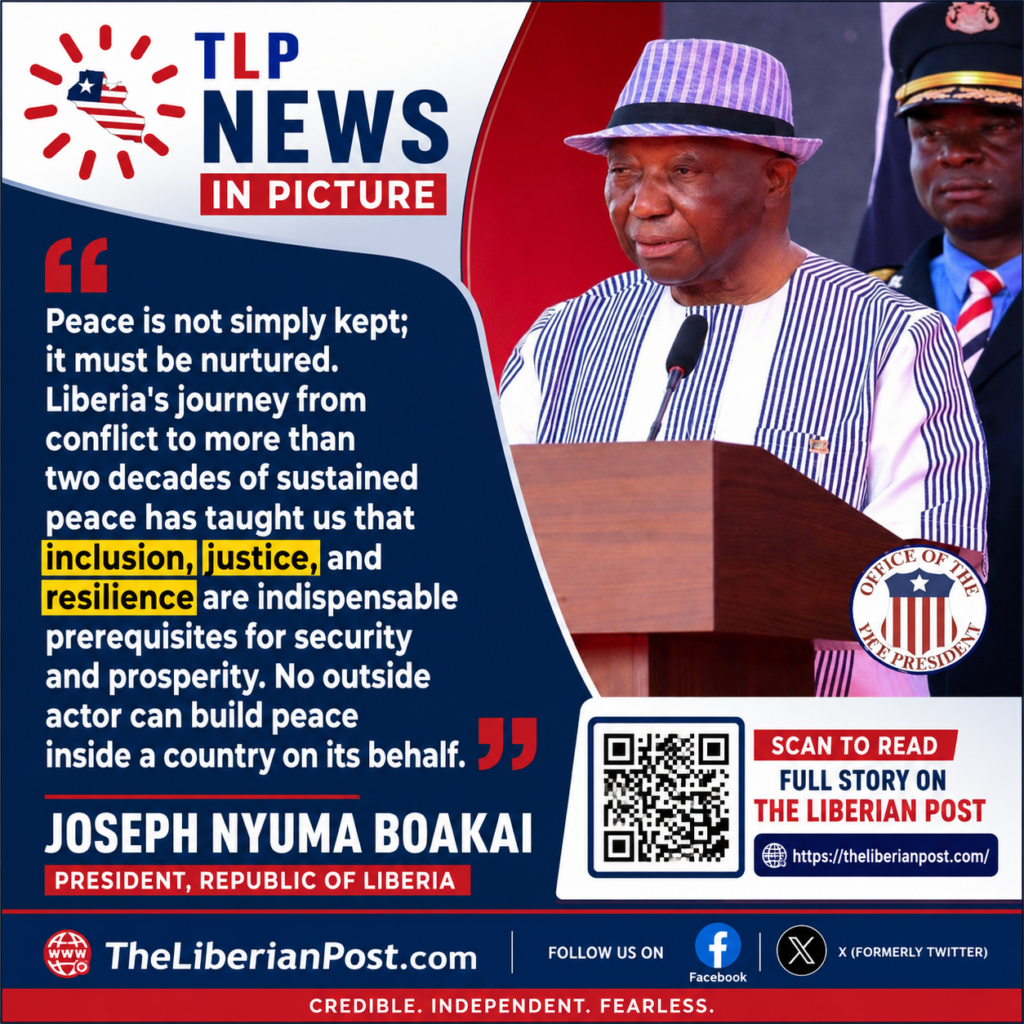
“Peace is not simply kept; it must be nurtured. Liberia’s journey from conflict to more than two decades of sustained peace has taught us that inclusion, justice, and resilience are indispensable prerequisites for security and prosperity,” President Boakai declared in the statement.
He further stressed what has become a central lesson from Liberia’s post-war recovery. “No outside actor can build peace inside a country on its behalf,” the President said.
The six-page publication, authored by United Nations Resident Coordinator Christine N. Umutoni, chronicles Liberia’s transition from a nation devastated by civil war into an emerging global peace actor whose experience now informs international peace and security discussions.
A Journey from Conflict to Global Influence
Liberia’s two civil wars, fought between 1989 and 2003, claimed more than 250,000 lives, displaced hundreds of thousands of people, and destroyed much of the country’s infrastructure and institutions.
Following the signing of the Comprehensive Peace Agreement in Accra in 2003, the country embarked on a long and difficult recovery supported by the United Nations Mission in Liberia (UNMIL), which concluded its mandate in 2018 after helping stabilize the country.
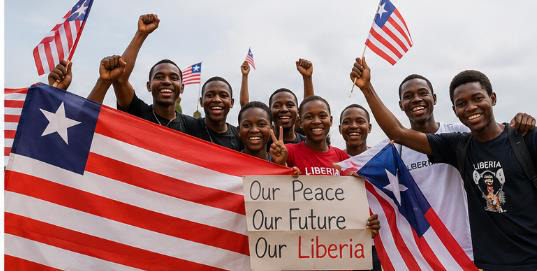
According to the report, Liberia’s success was not solely the product of peacekeeping forces but of deliberate national leadership, institution-building, democratic governance, reconciliation, and sustained international partnership.
Over the past decade, Liberia has successfully conducted peaceful elections, completed democratic transfers of power in 2017 and 2023, strengthened national institutions, and reinforced its human rights architecture—developments that have deepened public confidence in democratic governance.
Those gains culminated in Liberia’s election to the United Nations Security Council for the 2026–2027 term, where the country secured 181 of 187 votes in the UN General Assembly in June 2025, marking its return to the Council after more than six decades.
UN Resident Coordinator Praises Liberia’s Model
UN Resident Coordinator Christine N. Umutoni described Liberia as a compelling illustration of how peacebuilding succeeds when driven by national ownership and respect for human rights.
“Sustainable peace cannot be outsourced. Partners can offer peacekeeping and short-term stabilization; however, human rights must be engraved in the peacebuilding national architecture for peace to be long lasting,” she said.
During Peacebuilding Week, Umutoni also addressed a side event organized by the Swiss Government and the UN team in New York, where she outlined Liberia’s experience in integrating human rights into national peacebuilding and development strategies.
More Than US$100 Million Invested in Peace
The publication credits the UN Peacebuilding Commission and the Peacebuilding Fund with playing complementary roles in Liberia’s recovery.
Since 2010, the Peacebuilding Commission has maintained political attention on Liberia through sustained international engagement, advocacy, and support for reconciliation, governance reforms, gender equality, and social cohesion.
Meanwhile, the Peacebuilding Fund has invested more than US$100 million in Liberia since 2007, with approximately US$20.8 million currently supporting active programmes.
The report notes that these investments have strengthened peaceful elections, expanded women’s participation in governance, empowered young people, resolved land disputes, improved citizen engagement, and reinforced community-based early warning systems that have helped reduce election-related tensions.
Challenges Remain
Despite celebrating Liberia’s achievements, the report cautions that the country’s peace remains a work in progress.
It identifies persistent challenges including youth unemployment, economic vulnerability, gender-based violence, unresolved land disputes, and potential border-related issues as areas requiring continued national and international attention.
The report argues that peacebuilding must remain a long-term commitment rather than a one-time intervention, emphasizing that sustained political engagement, flexible financing, inclusive governance, and strong national ownership remain essential to preserving the gains achieved over the past two decades.
A Message Beyond Liberia
The publication concludes that Liberia’s transformation carries lessons well beyond its borders.
Once synonymous with violent conflict and humanitarian crisis, Liberia now contributes to international peace and security policymaking through its seat on the UN Security Council, demonstrating that countries emerging from conflict can become credible global leaders when supported by sustained peacebuilding investments and determined national leadership.
As the United Nations commemorates two decades of its peacebuilding architecture, Liberia’s experience is presented not merely as a national success story but as evidence that long-term commitment, inclusive governance, respect for human rights, and resilient national institutions can transform fragile states into influential actors on the global stage.
For more Liberian news and analysis, visit The Liberian Post at https://theliberianpost.com. Follow The Liberian Post on Facebook (https://web.facebook.com/profile.php?id=61576017166570) and X, formerly Twitter (https://x.com/LiberianPost).