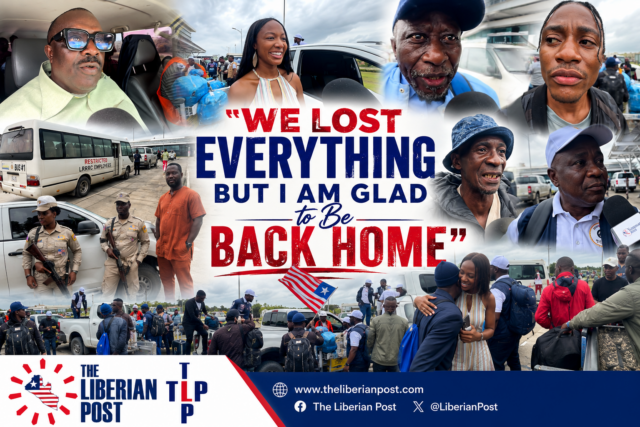
–First Group of Voluntary Returnees Arrive Home as Survivors Recall Burned Businesses, Looted Livelihoods and the Long Journey Back to Safety
MONROVIA, Liberia – For many of the Liberians who stepped off the aircraft at Roberts International Airport (RIA), the tears that flowed were not only for what they had lost, but for what they had regained—a place to call home.
Their businesses were gone. Their homes had been attacked. Years of sacrifice had vanished almost overnight amid a fresh wave of xenophobic violence in South Africa. Yet, despite the pain of leaving behind the lives they had painstakingly built, the returnees said there was one thing no one could take away from them: the comfort of returning to Liberia.
“We lost everything, but I’m glad to be back home,” was the sentiment echoed by many of the returnees as they reunited with relatives following a government-facilitated voluntary repatriation from South Africa.
The first group of returnees arrived in Monrovia under a humanitarian repatriation initiative coordinated by Liberia’s Ministry of Foreign Affairs, the Liberian Embassy in Pretoria and the Liberia Refugee Repatriation and Resettlement Commission (LRRRC), following renewed anti-immigrant violence that has unsettled foreign communities in parts of South Africa.
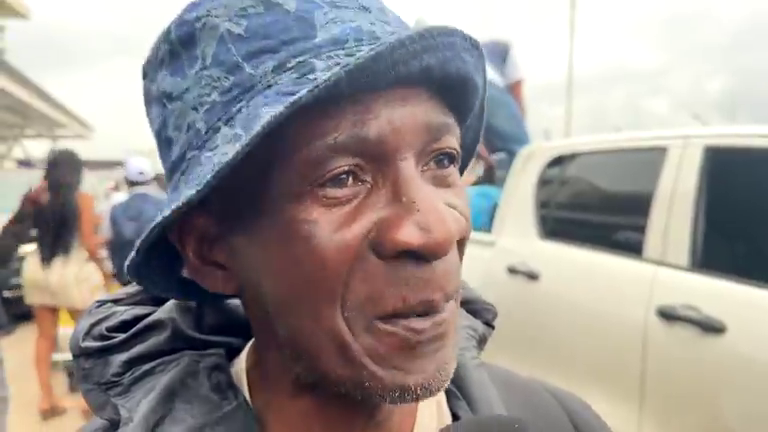
For Bobby Dean, the journey home marked the end of nearly three decades in South Africa.

After living there for approximately 30 years, Dean said he never imagined he would one day be forced to abandon everything he had worked to build.
“I feel happy right now. I feel much better to be back home,” he said moments after arriving.
Recalling the violence, Dean said it swept through his community with devastating consequences.
“It was difficult. We lost things. They burned our houses. I had a salon and it was burned down,” he said, his voice reflecting both sorrow and relief.
Like many Liberians who sought refuge in South Africa during or after Liberia’s civil war, Dean had spent years rebuilding his life through hard work. But within days, that dream was reduced to ashes.
Another returnee, Albert, said the violence also destroyed the business he had spent 16 years establishing.
A fabric artist by profession, Albert operated a boutique in Rosebank, one of Johannesburg’s well-known commercial districts. He initially dismissed reports of attacks on foreign-owned businesses, believing the unrest would not reach him.
Instead, he watched helplessly as looters stripped away everything he owned.
“I’m a fabric artist. I had my boutique in Rosebank. When the attack started, I thought it was a joke. But later it became serious. Those guys walked into my boutique and took everything from me,” he recounted.
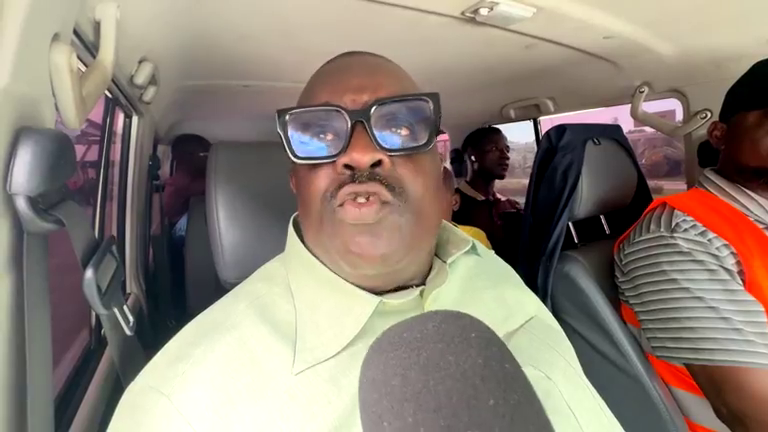
Among those returning was Liberian musician Rasmus, who had traveled to South Africa less than a year ago to study music technology and sound engineering.
He successfully completed his studies but said the worsening security situation overshadowed what should have been one of the happiest moments of his career.
“There are a lot of xenophobes in South Africa. I was there in the heart of what was happening,” he said.
Rasmus explained that he had been living in KwaZulu-Natal, one of the South African provinces that has repeatedly experienced outbreaks of xenophobic violence over the years.
“The part of South Africa where I lived—KwaZulu-Natal—was among the hottest areas for the attacks. That was the most dangerous place to stay,” he said.
Despite everything he endured, Rasmus said he remained thankful that the Liberian Government answered the call of its citizens abroad.
“I never thought this was going to be possible. When we heard the government wanted to buy our tickets, I honestly doubted it. But I’m grateful. There’s nowhere like home,” he said.
A Homecoming Born Out of Crisis
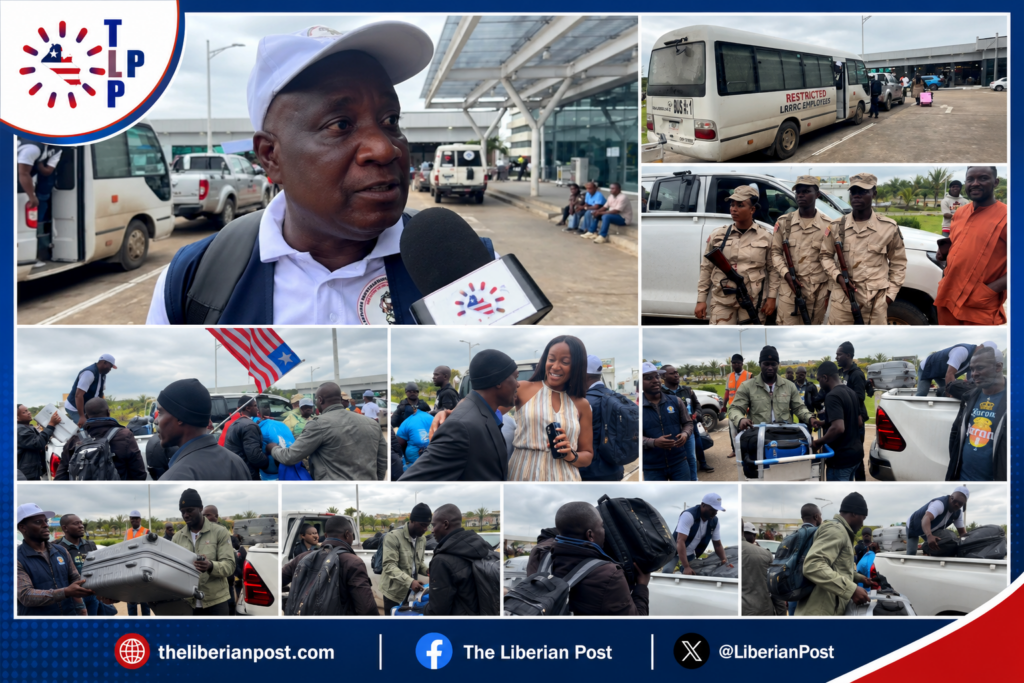
Officials stressed that the repatriation exercise is entirely voluntary.
Representatives of the Liberian community in South Africa explained that the South African Government has not ordered Liberians or other foreign nationals to leave the country. Rather, those returning are individuals who concluded that the deteriorating security environment made it unsafe to remain.
Community leaders estimate that more than 400 Liberians currently reside in South Africa, although only 29 initially registered to participate in the voluntary repatriation program.
Officials say additional returnees are expected to arrive in Liberia in the coming days as arrangements continue for those seeking assistance.
Government Coordinates Safe Return
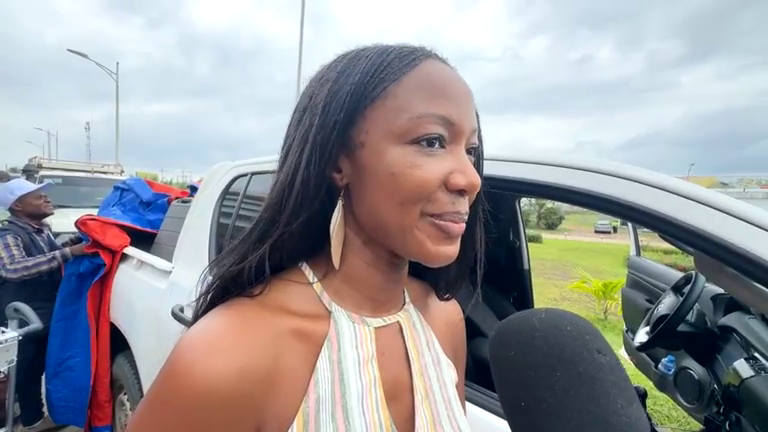
The repatriation operation was jointly coordinated by the Ministry of Foreign Affairs, Liberia’s Embassy in Pretoria and the Liberia Refugee Repatriation and Resettlement Commission.
Cllr. Cole Bangalu, Executive Director of the LRRRC, described the initiative as a humanitarian response aimed at ensuring the safety and welfare of Liberian citizens affected by the unrest.
“It was a joint project,” Bangalu said, commending the Ministry of Foreign Affairs and Liberia’s diplomatic mission in South Africa for working together to facilitate the return of the affected citizens while the Commission managed their reception and temporary accommodation upon arrival.
He said the government remains committed to assisting Liberians facing humanitarian emergencies abroad and will continue to work with relevant partners to facilitate additional voluntary returns where necessary.
Renewed Violence Revives Old Memories
South Africa has experienced recurring outbreaks of xenophobic violence over the past two decades, with immigrants from several African countries often becoming targets during periods of heightened economic tension and anti-immigrant sentiment.
The latest incidents have been reported in parts of Johannesburg, Pretoria, Durban and KwaZulu-Natal, where foreign nationals have reported intimidation, assaults, looting of businesses and forced displacement. South African authorities have repeatedly condemned such attacks and maintained that immigration enforcement is the responsibility of the state, while human rights organizations continue to call for stronger protection of migrant communities.
For many Liberians, the experience reopened painful memories of displacement during Liberia’s own civil wars.
Years after fleeing conflict in search of safety and opportunity, they once again found themselves running for their lives.
This time, however, the journey ended where it began—back in Liberia.
As relatives embraced loved ones outside the arrival terminal at Roberts International Airport, there was sadness over what had been lost, but gratitude for what remained.
“I’m 100 percent proud to be back here,” Rasmus said with a smile. “Liberia is a beautiful country. There’s nowhere like home.”
For more Liberian news and analysis, visit The Liberian Post at https://theliberianpost.com. Follow The Liberian Post on Facebook (https://web.facebook.com/profile.php?id=61576017166570) and X, formerly Twitter (https://x.com/LiberianPost).