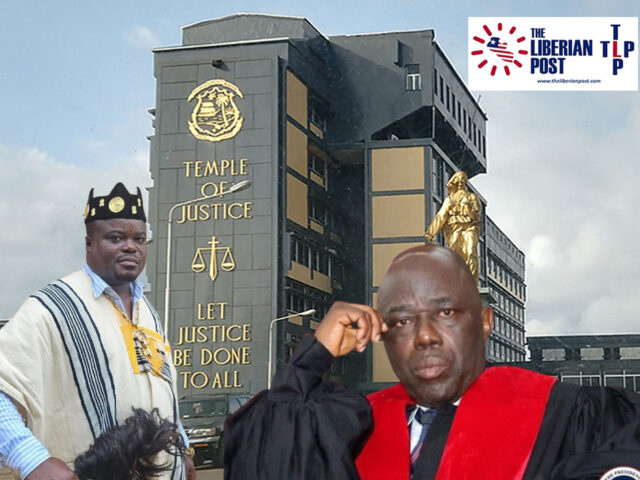
CAPITOL HILL, Monrovia – The Supreme Court of Liberia has sentenced Justin Oldpa Yeazehn, widely known as Prophet Key, to six months’ imprisonment at the Monrovia Central Prison after finding him guilty of criminal contempt for what it described as “egregious, vulgar and derogatory” attacks against the Chief Justice and members of the Bench.
The ruling, delivered on Friday, February 13, 2026, arose from a podcast commentary broadcast live on Facebook in which Prophet Key accused the Chief Justice and Associate Justices of corruption and directed profane and degrading insults at the Court, including offensive remarks about the Chief Justice’s mother.
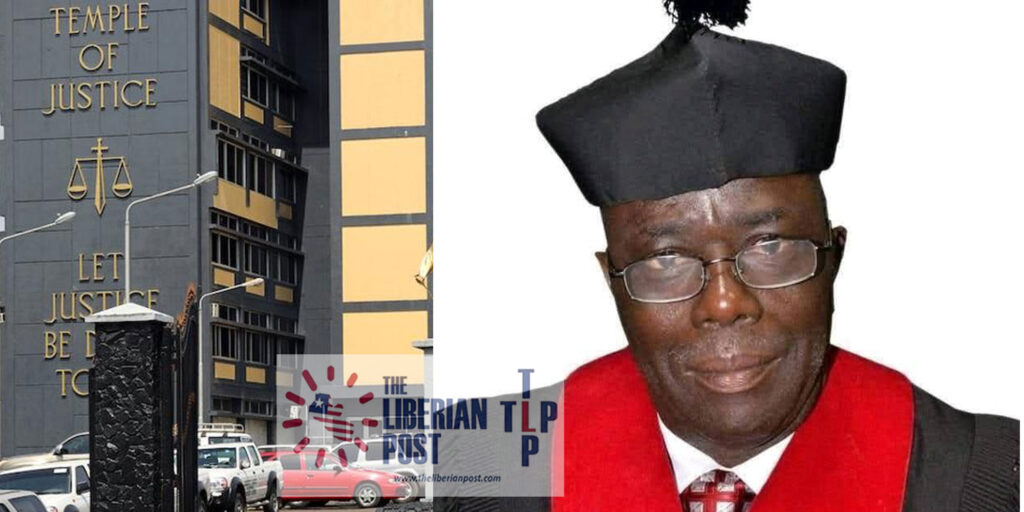
In a unanimous opinion read before the Full Bench at the Temple of Justice, the Court held that while freedom of speech is constitutionally guaranteed under Article 15 of the 1986 Constitution, that right is not absolute and does not extend to vulgar abuse, defamatory accusations, and conduct intended to undermine the dignity and authority of the Judiciary.
The Legal Question
The Court framed two central issues:
- Whether the use of invective, vulgar language, naked abuse of womanhood, and indecent verbal attacks fall within constitutional protection of free speech; and
- Whether Prophet Key’s podcast statements constituted criminal contempt of court.
Citing Articles 14 and 15 of the Constitution, as well as established jurisprudence, the Court emphasized that constitutional freedoms must be exercised in an orderly manner consistent with public safety, morality, and the rights of others.
“The immunity of free speech,” the Court reasoned in substance, “does not license the use of profanities, invectives, or defamatory accusations that demean the Court and obstruct the administration of justice.”
The Justices further stressed that the Republic has a constitutional duty to preserve and promote positive Liberian culture, and that vulgar, abusive language cannot be characterized as a protected expression deserving constitutional shelter.
Appointment of Counsel and Proceedings
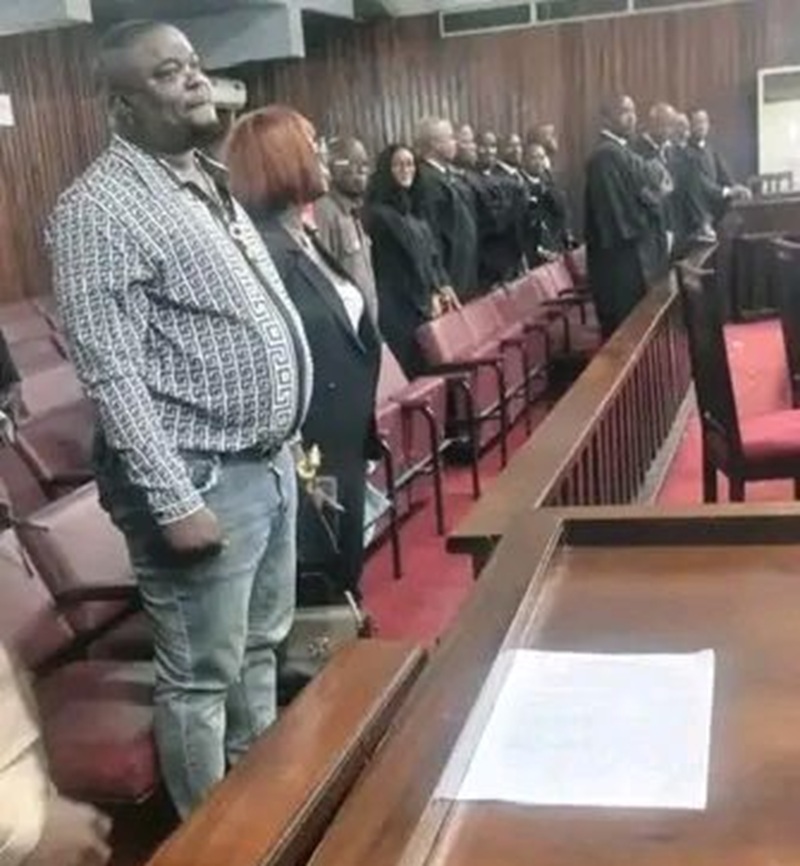
Prophet Key initially appeared before the Court without legal representation, informing the Bench that he could not afford a lawyer. In keeping with constitutional guarantees of due process, the Court directed the Public Defender’s Office to represent him.
Counsel for the contemnor subsequently filed briefs raising arguments centered on free speech protections. Amici curiae also participated, addressing the constitutional scope of expression and its limitations.
The Court, however, concluded that the statements in question went beyond criticism and entered the realm of criminal contempt. It found that the contemnor’s conduct tended to degrade, obstruct, and undermine the administration of justice — the traditional test for contempt.
Although Prophet Key later apologized and expressed remorse during proceedings, the Court declared it was not persuaded that his apology alone erased the seriousness of the offense.

Sentence and Conditions
Having found him guilty of criminal contempt, the Supreme Court imposed a definite and certain sentence of six months’ imprisonment at the Monrovia Central Prison.
In addition, the Court ordered that prior to his release, Prophet Key must:
- Publish a written letter of apology to the Supreme Court and the Liberian people, particularly women, in three widely circulated newspapers for five consecutive days; and
- Execute and file a behavior bond with the Clerk of the Supreme Court, undertaking that he will refrain from further invectives, vulgar language, or profane attacks against the Judiciary or any Liberian.
The Court stated that the term of imprisonment takes immediate effect from the date of rendition of the judgment.
Broader Implications
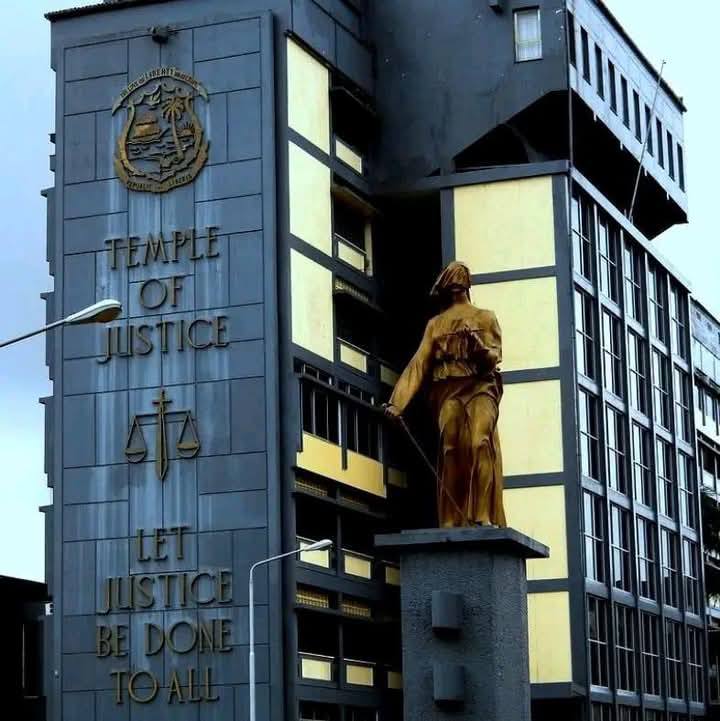
The decision marks one of the most consequential contempt rulings in recent years and sends a strong signal about the Judiciary’s posture toward attacks made on digital platforms.
In its opinion, the Court underscored that criticism of public officials is permissible, but deliberate vulgarity and defamatory accusations aimed at destroying institutional credibility cross the constitutional line.
Legal observers note that the ruling clarifies the boundary between protected speech and punishable contempt in Liberia’s evolving digital media environment.
For Prophet Key — once known primarily for his religious commentary and social media broadcasts — the journey from online rhetoric to prison cell now stands as a cautionary tale.
The Supreme Court concluded its judgment with a reminder that the dignity of the courts is indispensable to the rule of law — and that freedom, while fundamental, carries responsibility. See the Supreme Court’s ruling on Prophet Key
Follow The Liberian Post on Facebook and X (formerly twitter)