-Government Unveils Ambitious Plan to Expand Electricity Access, Reform Mining Sector and Build Energy Workforce
MONROVIA, Liberia – The Liberian Government is pursuing an ambitious overhaul of the country’s electricity sector under a proposed second Millennium Challenge Corporation (MCC) Compact, with plans to expand power generation, strengthen transmission infrastructure, reform sector governance, and develop a skilled workforce capable of sustaining future energy investments.
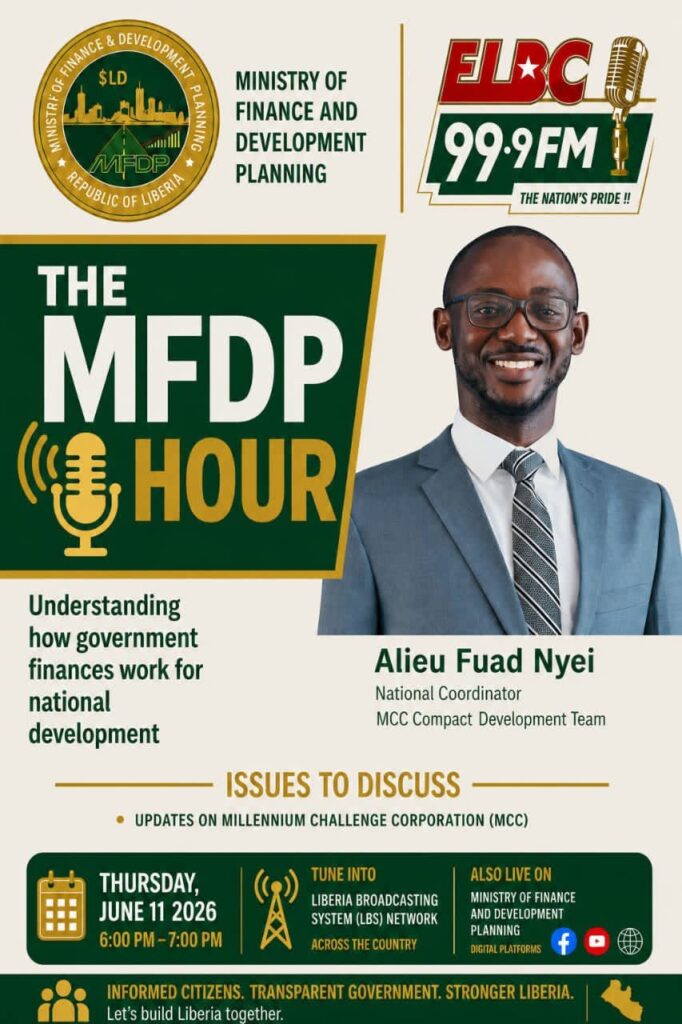
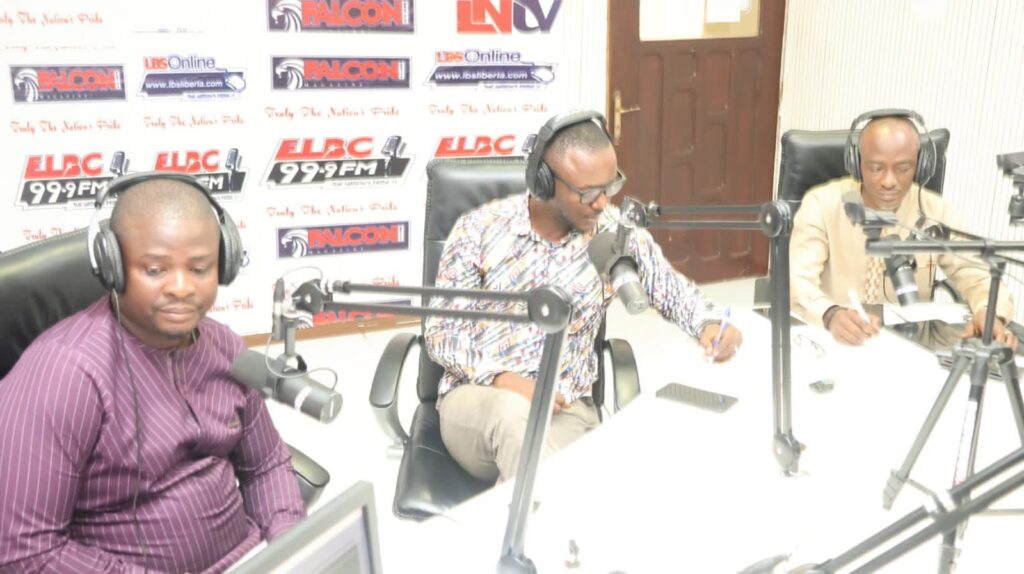
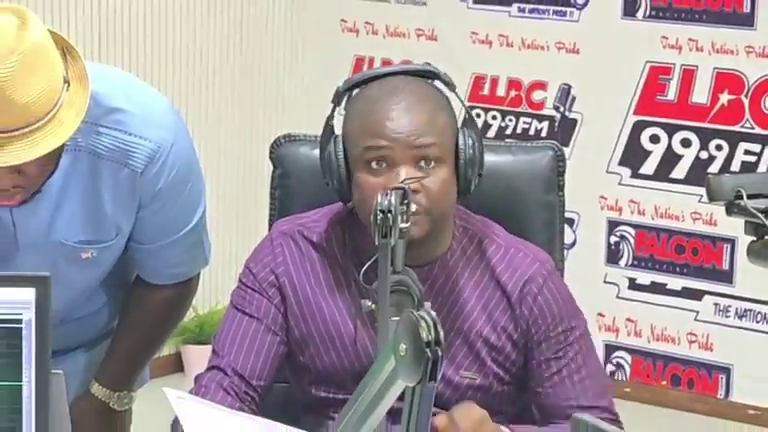
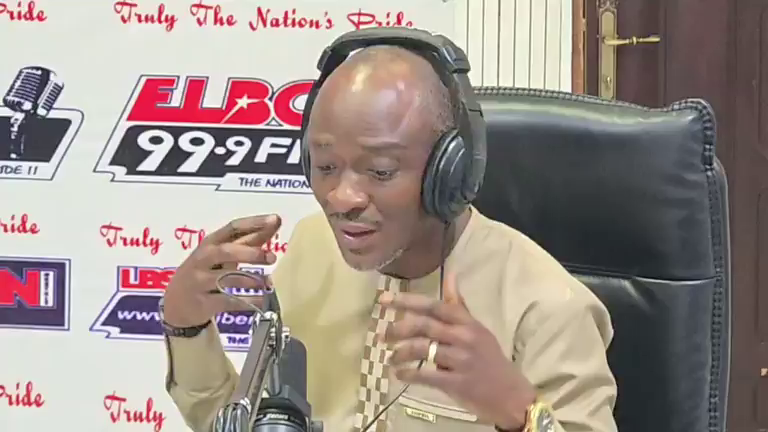
The disclosure was made Thursday during the second edition of the Ministry of Finance and Development Planning’s (MFDP) radio program, MFDP Hour, where officials provided an update on Liberia’s preparations for a second MCC Compact and outlined a roadmap aimed at addressing one of the country’s most persistent barriers to economic growth: inadequate access to reliable electricity.
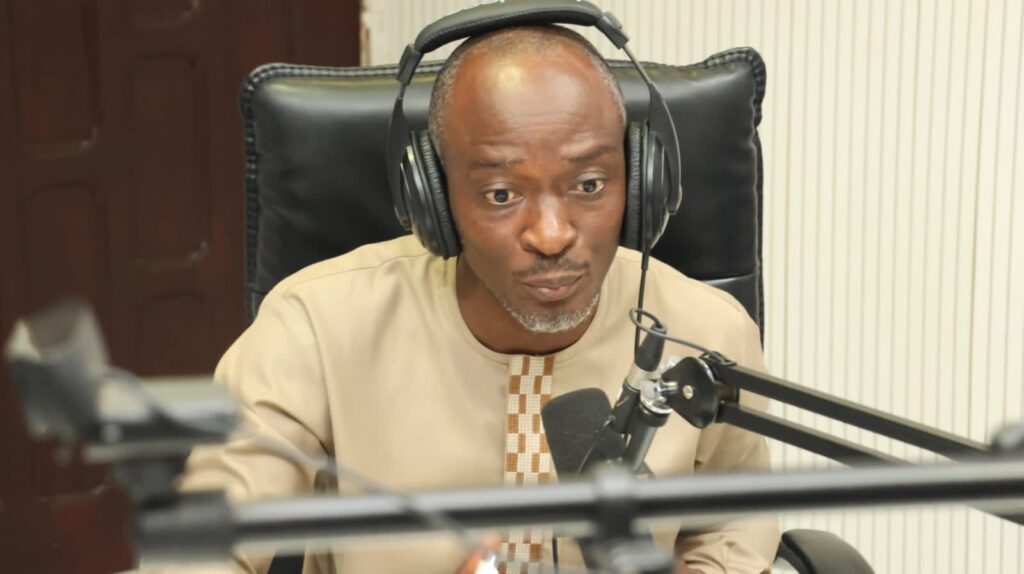
Speaking on the program, Compact Development Team (CDT) National Coordinator Alieu Fuad Nyei described the assignment as a potentially transformative undertaking that could significantly reshape Liberia’s economic future.
“I consider this a legacy assignment because the scale of the problem that we are trying to solve is so massive that if we are successful, the impact will be transformative for the country and its people,” Nyei said.
Electricity Identified as Major Economic Constraint
According to Nyei, Liberia has chosen to focus its proposed second MCC Compact primarily on electricity, which government and development experts have identified as a major binding constraint to economic growth and poverty reduction.
Under the MCC framework, countries are required to identify the key obstacles preventing economic expansion and develop investment strategies capable of addressing those challenges.
For Liberia, the answer was clear.
“We decided that for this Compact, we want to focus our resources and energy on the electricity sector,” Nyei explained.
However, unlike the first MCC Compact, which focused heavily on rehabilitating the Mount Coffee Hydropower Plant, the new proposal seeks to address broader structural challenges affecting the country’s power sector.

Three Strategic Concept Notes Submitted
As part of the compact development process, the government recently submitted three concept notes to President Joseph Nyuma Boakai and subsequently forwarded them to the MCC for consideration.
The first concept note focuses on power generation, transmission infrastructure, and energy sector governance.
The second targets workforce development in the energy sector, while the third addresses mining governance and investment facilitation.
Nyei explained that the proposals were developed following extensive consultations, technical analyses, and root-cause assessments designed to identify the fundamental obstacles limiting electricity access and economic development.
“We are not simply looking at how to put electricity on the streets. We are looking at how electricity can drive critical industries and create the maximum impact on economic growth and poverty reduction,” he said.
Tackling Liberia’s Chronic Power Challenges
A key objective of the proposed compact is to address Liberia’s longstanding problem of seasonal electricity shortages.
Officials noted that while electricity supply generally improves during the rainy season when Mount Coffee operates at higher capacity, power generation remains unstable during the dry season.
Nyei said the government hopes to use MCC support to strengthen Liberia’s base-load generation capacity, ensuring more consistent electricity supply throughout the year.
The proposal also includes major investments in transmission infrastructure, including new transmission lines and upgrades to substations to improve the reliability and reach of the national grid.
The planned investments are expected to support economic corridors, industrial zones, and mining operations, creating opportunities for increased production, job creation, and private sector growth.
Building the Workforce for the Future
Recognizing that infrastructure alone will not guarantee success, the government is also seeking support to develop a new generation of skilled Liberian energy professionals.
The workforce development component of the compact would focus on training technicians, engineers, and other specialists needed to operate, maintain, and expand Liberia’s growing energy infrastructure.
Nyei warned that without targeted investments in human capacity, Liberia risks becoming dependent on foreign expertise to manage critical energy assets.
“You can build all the generating plants and transmission infrastructure, but if you do not have Liberians with the skills to manage those systems, then others will come and fill those positions,” he said.
The initiative therefore seeks to align technical training programs with the future needs of Liberia’s evolving energy sector.
Mining Sector Reforms Also Planned
The third concept note focuses on improving mining governance and strengthening Liberia’s ability to attract responsible investment.
Among the proposed reforms are updates to Liberia’s mining laws and regulatory framework, as well as expanded geological and geophysical surveys aimed at generating more accurate data on the country’s mineral resources.
Officials believe such reforms could improve transparency, strengthen negotiations with investors, and enhance the country’s ability to derive greater benefits from its natural resources.
The initiative is also intended to complement energy investments by supporting industries that rely heavily on reliable electricity.

Lessons from the First Compact
Assistant Minister for Economic Policy Henry D. Z. Yanquoi said the proposed compact builds on lessons learned from Liberia’s first MCC Compact, which helped rehabilitate the Mount Coffee Hydropower Plant and significantly reduced electricity costs.
According to Yanquoi, electricity tariffs fell substantially following the rehabilitation of Mount Coffee, demonstrating the transformative potential of targeted infrastructure investments.
He argued that expanding reliable electricity access would encourage manufacturing, stimulate private investment, support value-added agriculture, and strengthen education and healthcare delivery across the country.
“If you do not have electricity, it becomes difficult to grow industries, develop manufacturing, or create the kind of economy that provides jobs and opportunities for our people,” he said.
Race Against Time
While enthusiasm surrounding the compact remains high, officials acknowledged that significant work remains ahead.
The Compact Development Team is operating under an accelerated timetable, with the government aiming to finalize negotiations and sign the compact by the end of 2027.
The next phase will involve detailed feasibility studies, environmental assessments, engineering analyses, and broader stakeholder consultations to refine the proposed investments.
Nyei emphasized that the process would adopt what he described as a “whole-of-government and whole-of-society approach,” with communities, businesses, civil society groups, and development partners expected to play important roles in shaping the final compact.
“We want Liberians to understand that this is a national project,” he said. “When we engage communities and stakeholders, we want everyone to know that this effort belongs to all Liberians.”
Potentially Transformational Investment
If approved, the second MCC Compact could represent one of the largest and most consequential development investments undertaken during the Boakai administration.
Government officials believe the proposed interventions could significantly improve electricity reliability, expand economic opportunities, strengthen workforce capacity, and create conditions for long-term growth and poverty reduction.
For a country that has struggled for decades with inadequate infrastructure and limited electricity access, the stakes could hardly be higher.
As Liberia advances through the compact development process, officials are hopeful that the proposed investments will not only keep the lights on but also power a new era of economic transformation.
Follow The Liberian Post on Facebook (https://web.facebook.com/profile.php?id=61576017166570) and X, formerly twitter (https://x.com/LiberianPost).