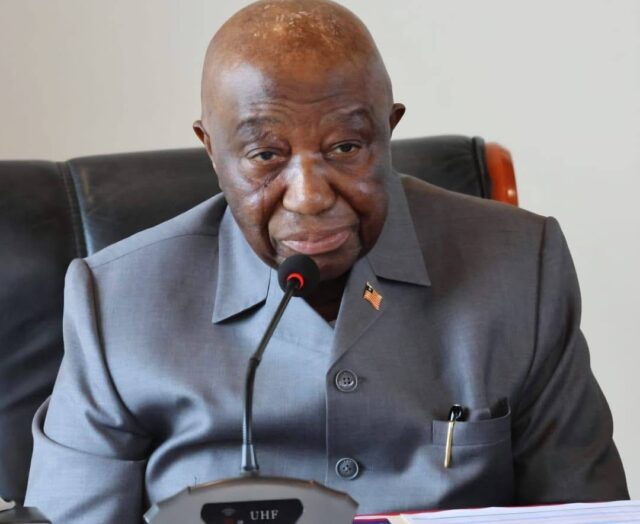
-President Pushes Food Production, Farmer Support and MCC Performance at 21st Cabinet Meeting
MONROVIA, Liberia – President Joseph Nyuma Boakai has renewed his call for agriculture to become the driving force of Liberia’s economic transformation, urging cabinet ministers and government officials to play a more active role in supporting food production, empowering farmers, and reducing the country’s dependence on imported food.
Speaking Thursday during the opening of his administration’s 21st Cabinet Meeting at the Executive Mansion’s Tea House, President Boakai described agriculture as a cornerstone of the government’s ARREST Agenda for Inclusive Development and a critical pathway to economic growth, job creation, poverty reduction, and national food security.
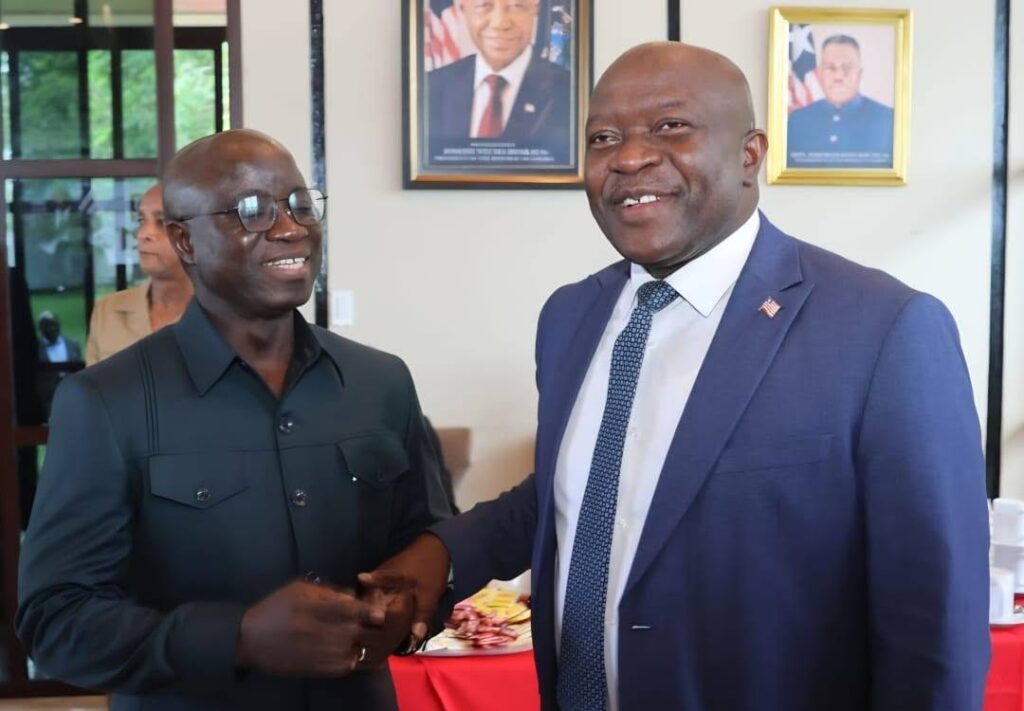
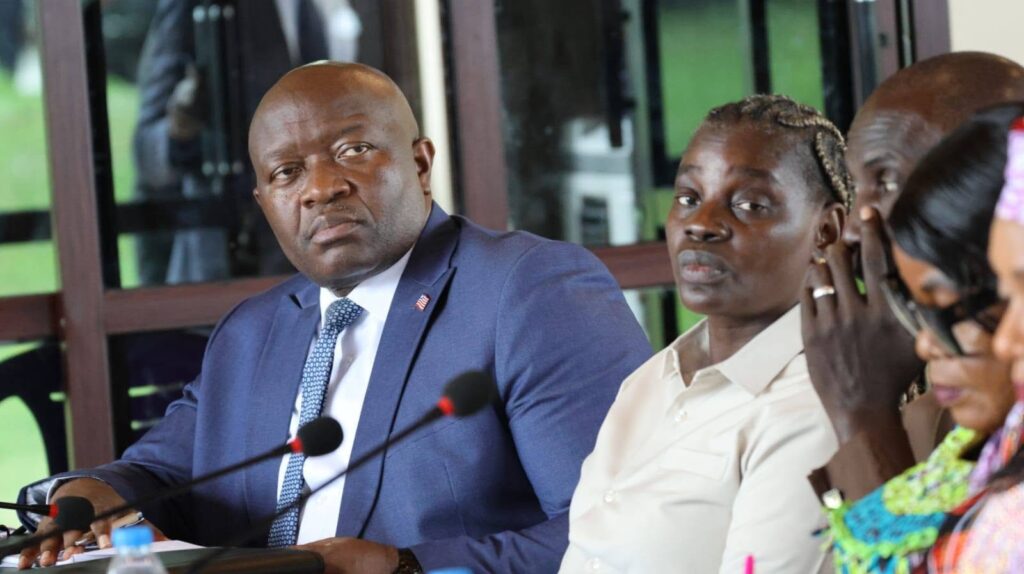
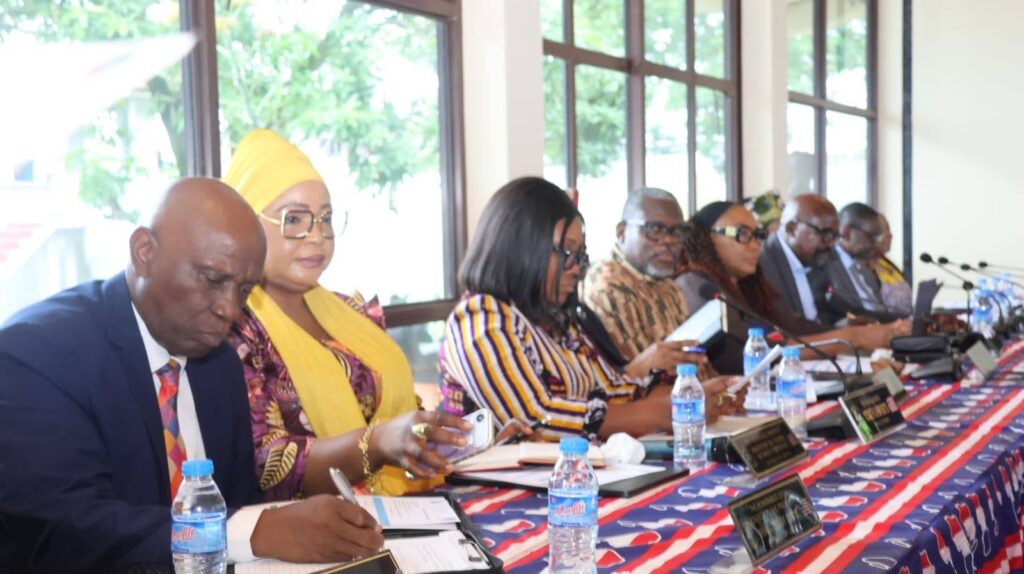
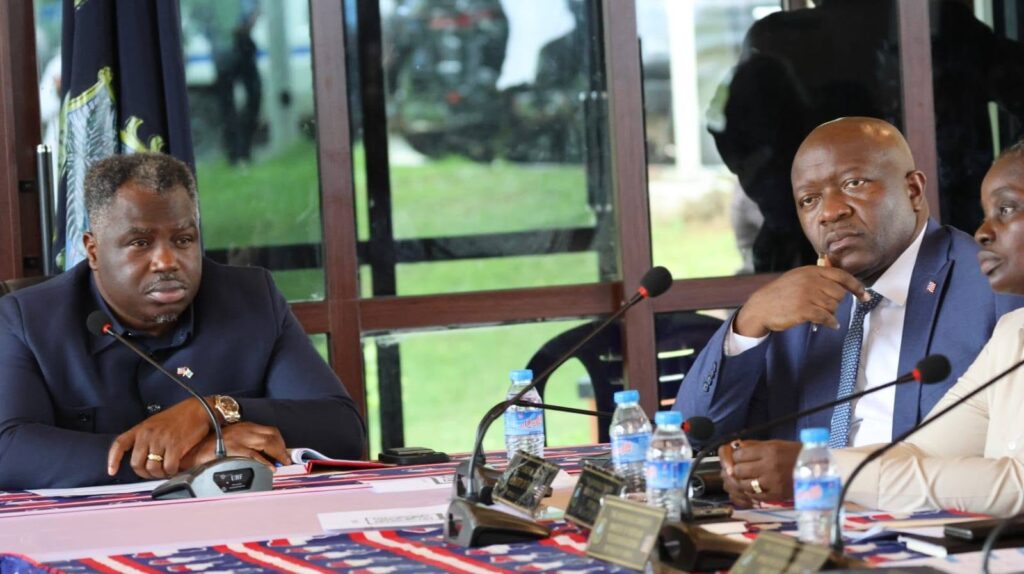
The meeting, which focused primarily on agriculture, brought together cabinet ministers, heads of government agencies, and senior officials to assess progress in the sector and identify strategies for expanding local food production and strengthening agricultural value chains across the country.
“We know what agriculture means to life,” President Boakai told members of his Cabinet. “Agriculture has been a very important source of income for this country, and despite the challenges over the years, we still have the opportunity to move agriculture to the level where it becomes a major source not only of income but also nutrition for our people.”
Agriculture at the Center of Development
The President’s remarks echoed a longstanding position he has maintained throughout his political career—that Liberia cannot achieve sustainable economic development without revitalizing its agricultural sector.
Boakai pointed to encouraging signs that local production can meet domestic demand, citing his experience during the recent Christmas season when he observed that most items included in holiday gift baskets were produced in Liberia.
“I was impressed last Christmas,” he said. “The Christmas baskets that were sent out contained mostly products made in Liberia.”
The President said such developments demonstrate the potential of local agriculture and underscored the need for government support to increase production across the country.
He urged Agriculture Minister Dr. J. Alexander Nuetah to provide Cabinet members with detailed information on production levels, farmer support programs, and opportunities for broader participation in agriculture.
“Every Minister Can Be a Farmer”
In one of the more notable moments of his remarks, President Boakai encouraged Cabinet members themselves to become directly involved in agricultural activities.
He stressed that farming should not be viewed as an occupation reserved only for specialists, arguing that anyone with access to land and proper technical guidance can contribute to food production.
“I would like to see a lot of ministers get involved in agriculture,” he said. “You don’t have to be a farming specialist to do agriculture. All you have to do is have land, and with the technical know-how available through the Ministry of Agriculture, everybody can produce.”
The President highlighted the importance of technical assistance, agricultural equipment, and trained manpower, noting that these are among the key resources needed to help farmers improve productivity and increase output.
He said the government must focus not only on financing agriculture but also on ensuring that farmers have access to the knowledge and expertise required to succeed.
Food Security and Poverty Reduction
Earlier, Cabinet Director General Nathaniel Kwabo emphasized the significance of agriculture in reducing poverty and accelerating development.
Kwabo noted that international development studies have consistently shown that emerging economies that prioritize agriculture often achieve poverty reduction at rates significantly higher than countries relying on other sectors.
He said the Cabinet meeting was intended to examine both progress and challenges in the sector and identify practical solutions for leveraging agriculture to stimulate economic growth.
The Agriculture Ministry was expected to provide updates on production levels, ongoing programs, and obstacles affecting farmers nationwide.
Focus on MCC Scorecard
Beyond agriculture, President Boakai also highlighted the importance of maintaining Liberia’s performance on the Millennium Challenge Corporation (MCC) scorecard.
The President reminded Cabinet members that qualification for a second MCC Compact depends on the collective performance of government institutions and not solely on the actions of any single ministry or agency.
“We are all responsible,” Boakai said, stressing that every government institution has a role to play in ensuring Liberia remains eligible for future MCC support.
Finance and Development Planning Minister Augustine Kpehe Ngafuan was scheduled to brief Cabinet on Liberia’s progress under the MCC scorecard framework and discuss strategies for sustaining the country’s performance.
Liberia was recently selected by the MCC to continue the compact development process, with electricity, workforce development, and mining governance emerging as key sectors under consideration for future investment.
Foreign Affairs Update
The Cabinet also received an update from Foreign Minister Sara Beysolow Nyanti regarding Liberia’s activities and engagement as a non-permanent member of the United Nations Security Council.
Liberia’s election to the Security Council for the 2026–2027 term has been widely regarded as one of the country’s most significant diplomatic achievements in recent years, elevating its profile on international peace and security issues.
Driving the ARREST Agenda
The President’s renewed emphasis on agriculture aligns closely with the ARREST Agenda for Inclusive Development, which identifies agriculture as a key pillar for economic transformation, job creation, and poverty alleviation.
Government officials say increasing domestic food production remains essential to reducing Liberia’s food import bill, strengthening rural livelihoods, and improving national food security.
As deliberations continued behind closed doors, attention remained focused on whether the Cabinet would translate the President’s vision into concrete actions capable of accelerating agricultural growth and positioning the sector as a true engine of Liberia’s economy.
For President Boakai, the message was unmistakable: Liberia’s path to prosperity must begin with its soil.
Follow The Liberian Post on Facebook (https://web.facebook.com/profile.php?id=61576017166570) and X, formerly twitter (https://x.com/LiberianPost).