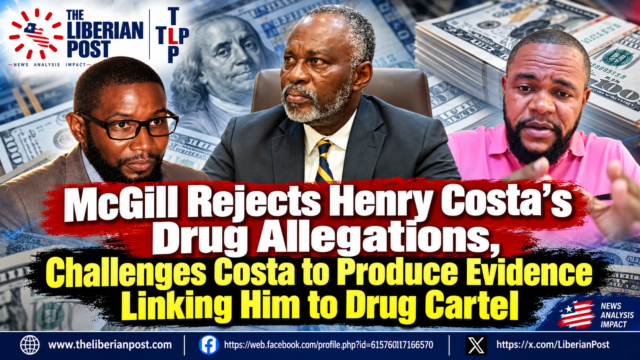
–Senator’s Office Denies Any Financial or Criminal Relationship With Gerald Smith, Warns Further Allegations Could Trigger Legal Action
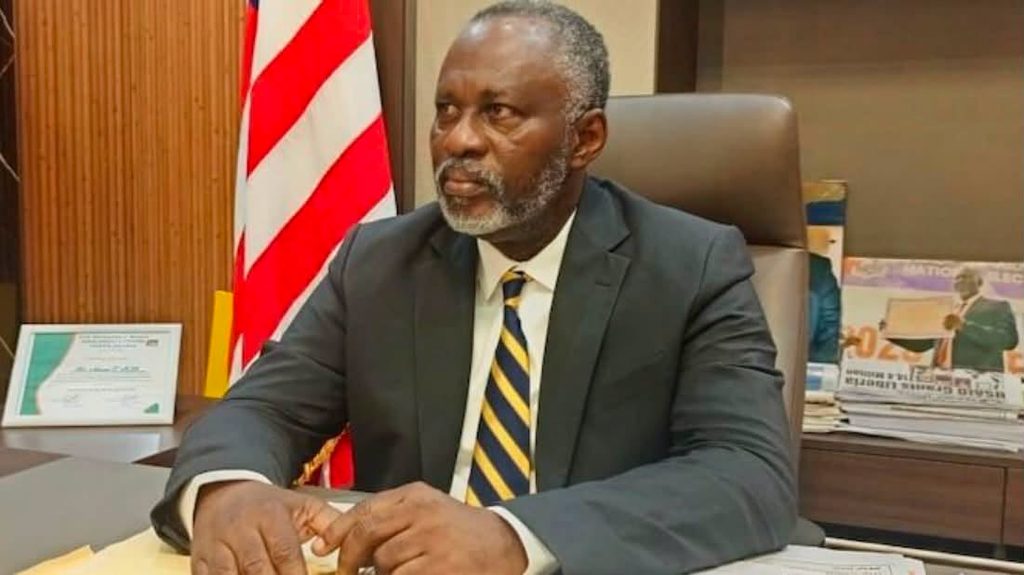
MONROVIA, Liberia — The Office of Margibi County Senator Nathaniel Farlo McGill has rejected allegations made by political commentator Henry Costa seeking to link the senator to an alleged international drug-trafficking network, challenging Costa and anyone else making such claims to produce credible evidence before the appropriate authorities.
In a statement issued Tuesday, September 9, the Senator’s office described the allegations as “false, misleading, malicious, and without any factual basis whatsoever,” while categorically denying that McGill has ever been involved in the drug business or associated with a drug cartel.
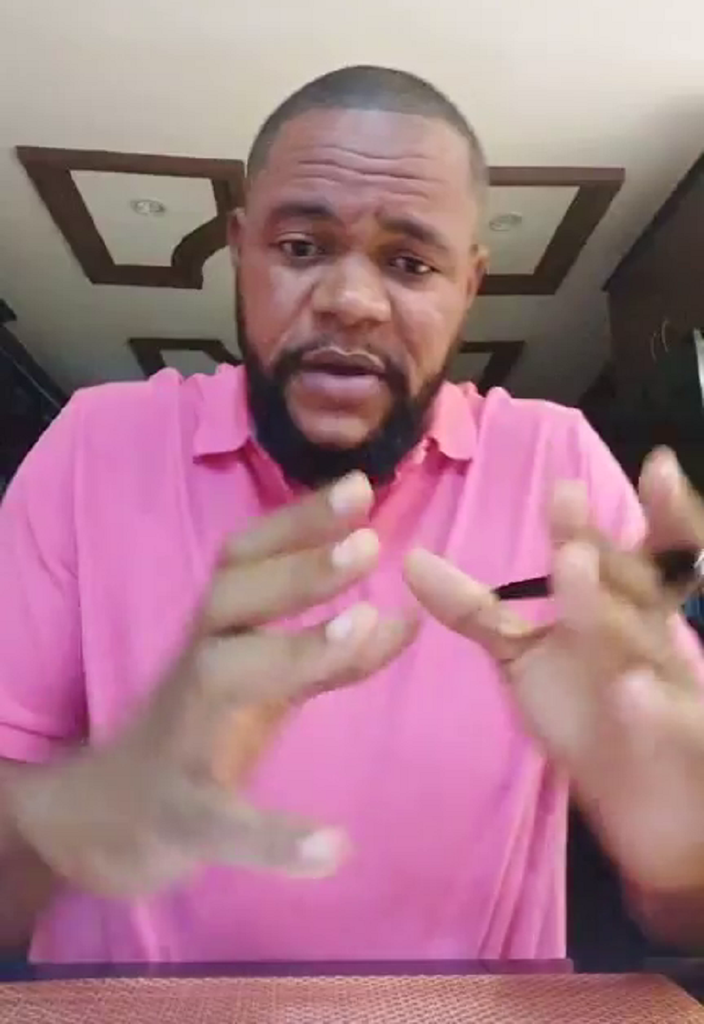
The statement came a day after Costa used his widely followed podcast to discuss Liberia’s expanding narcotics investigation, the alleged sophistication of the trafficking network and what he claimed was information he had gathered since returning to Liberia.
Costa said he had spent days gathering and analyzing information about the country’s drug situation and described what he had learned as “very disturbing.” He repeatedly argued that the alleged trafficking network was sophisticated, well-financed and deeply entrenched.
The comments have now triggered a direct political response from McGill’s office.
McGill Office Denies Any Connection to Gerald Smith
At the center of the Senator’s response is an explicit denial of any financial or criminal relationship between McGill and Gerald Smith, a former Deputy Director of Administration at the National Security Agency who has been mentioned in connection with Liberia’s broader narcotics investigation.
“For the avoidance of doubt, Senator McGill has never received any money from Mr. Gerald Smith or anyone associated with him,” the statement said.
The office acknowledged that McGill knew Smith, but said the relationship was strictly professional.
Smith, according to the statement, served as Deputy Director of the National Security Agency during the period when McGill served as Minister of State.
“In that official capacity, Senator McGill interacted with Mr. Smith as he did with other government officials in the discharge of his responsibilities,” the office said.
The statement then issued a direct challenge to anyone claiming that McGill received money from Smith or had another relationship with him:
“If anyone claims otherwise, let them produce the evidence.”
The Senator’s office also rejected previous attempts, which it attributed to the Unity Party, to associate McGill with the reported US$319 million cocaine seizure.
Despite those claims, the office said, “no credible evidence has been publicly presented establishing any connection between Senator McGill and the alleged drugs.”
Costa Says Liberia Faces a Serious Narcotics Threat
Costa’s Monday broadcast focused heavily on Liberia’s ongoing fight against international drug trafficking.
He said he was not appearing primarily to discuss electoral politics, but to explain what he described as the seriousness of the alleged narcotics operation and the threat it poses to Liberia.
“I have not come here today to talk to you about politics,” Costa said during the broadcast. “I’ve come to you today to speak to you specifically on just how serious this drug situation was. Just how deeply entrenched the cartel was.”
Costa argued that Liberia should be particularly concerned about the possibility of becoming a transit point for international narcotics organizations.
He repeatedly warned against Liberia becoming what he called a “narco state,” arguing that the enormous amounts of money associated with international drug trafficking could corrupt institutions, influence politicians and undermine democratic governance.
His broader argument is consistent with comments he made publicly earlier this month, when he contrasted the Weah and Boakai administrations’ approaches to narcotics enforcement and said international trafficking networks had become increasingly entrenched in Liberia.
Costa Claims Information From Investigation Has Changed His View
Costa also devoted significant attention to former Vice President Jewel Howard-Taylor’s ongoing criminal case.
He said he initially had doubts about the strength of the government’s case when Howard-Taylor was arrested, but claimed those doubts disappeared after he returned to Liberia and gathered information from people familiar with the investigation.
“It is with utmost certainty, absolutely zero doubt that I say to you, my doubts have completely disappeared,” Costa said.
He urged Howard-Taylor to consider a plea agreement, claiming the government possesses extensive evidence against her.
Those statements, however, represent Costa’s characterization of evidence he says he has learned about; they are not themselves proof of the allegations against Howard-Taylor or anyone else.
Howard-Taylor has denied the allegations against her.
Her lawyers recently withdrew a request for a preliminary examination, meaning the case will proceed toward the next stage without the preliminary evidentiary hearing the defense had initially sought. Current reporting indicates prosecutors have presented allegations concerning communications and financial dealings, but Howard-Taylor has not been convicted and the state retains the burden of proving the charges in court.
McGill Drawn Into a Wider Political Debate
Although Costa’s Monday broadcast concentrated extensively on the Howard-Taylor case, his discussion also referenced several individuals whom he claimed were connected to the wider alleged trafficking network.
He repeatedly mentioned Gerald Smith while describing alleged movements of money and interactions involving people he characterized as local operatives of an international cartel.
Costa claimed, among other things, that Smith had transported money and that individuals connected to the alleged network had provided information to investigators.
Those claims have not been independently established by the evidence cited in this article.
Liberian authorities, however, have confirmed that the wider investigation has uncovered what the Justice Ministry previously described as an “organized, sophisticated, complex and well-funded narcotics trafficking network.” Authorities have said the investigation is examining the origin and destination of seized cocaine, financial transactions, logistics and possible domestic and international facilitators.
The government’s investigation followed the seizure of approximately 237.6 kilograms of cocaine at Roberts International Airport in June and the subsequent July seizure of approximately 3,971 kilograms of suspected cocaine in Duazon, Margibi County, valued by authorities at about US$317.68 million.
The US$317 Million Seizure
The July seizure dramatically expanded Liberia’s narcotics investigation.
According to the Justice Ministry, investigators acting on information developed during the investigation searched a property in Duazon on July 21 and recovered approximately 3,971 kilograms of suspected cocaine.
Authorities also recovered items including GPS devices, a drone, Starlink equipment, diving suits and a firearm, which investigators said could help establish how the suspected trafficking operation functioned.
The government said the investigation was examining possible domestic and international networks, logistical arrangements, financial transactions and other forms of facilitation.
It also cautioned the public against prematurely identifying or declaring individuals criminally responsible before charges and evidence are properly established.
That distinction is particularly important as political figures and commentators increasingly debate who may have been connected to the alleged network.
McGill Warns of Legal Action
The Senator’s office said McGill respects freedom of expression and the right of Liberians to criticize public officials.
But it argued that freedom of speech does not extend to knowingly making false, malicious or defamatory allegations.
The office warned that any further allegations linking McGill to drug trafficking or related criminal activity would be met with “appropriate legal action.”
The statement did not announce that a lawsuit had already been filed against Costa over the latest comments.
Instead, it challenged those making the accusations to take them to the appropriate authorities and provide evidence.
The position represents a significant escalation in a politically charged dispute because McGill is not merely denying the allegations; his office is explicitly demanding that they be tested against evidence.
A Politically Charged Drug Investigation
The McGill-Costa confrontation comes as Liberia’s narcotics investigation increasingly intersects with the country’s political landscape.
The government has repeatedly insisted that its anti-drug campaign is not directed at any particular political party or individual and that investigators will follow the evidence wherever it leads.
At the same time, opposition figures and political commentators have questioned whether the investigation is being applied consistently and whether politically prominent individuals are being targeted.
The debate has become particularly intense around the Howard-Taylor prosecution, with Costa calling for the trial to be televised so the public can hear the evidence for itself.
During Monday’s broadcast, Costa conducted an informal poll of his viewers and repeatedly said the overwhelming response favored televising the trial.
He argued that transparency would allow Liberians to determine whether the government’s case is supported by credible evidence.
The demand reflects a broader public debate over transparency, accountability and due process as Liberia confronts what authorities describe as an increasingly sophisticated narcotics threat.
Evidence, Not Political Rhetoric, Will Ultimately Decide
For McGill, however, the immediate issue is narrower: whether anyone can substantiate allegations linking him to the alleged drug network.
His office insists that McGill never received money from Gerald Smith or anyone associated with him and that their relationship was limited to their respective government roles.
It also rejects any connection between McGill and the US$317 million cocaine seizure.
Costa, meanwhile, maintains that Liberia must confront the alleged trafficking network regardless of political affiliation and has positioned himself as an advocate for greater public scrutiny of the government’s evidence.
The competing claims now place the burden of resolution where it ultimately belongs: with credible evidence and the justice system.
Liberia’s narcotics investigation is already examining alleged trafficking operations, financial transactions and possible facilitators. Authorities have said that no person should be shielded from accountability if credible and admissible evidence establishes criminal responsibility.
But the same principle applies in the other direction: allegations made in podcasts, political statements or social media are not convictions.
For Senator McGill, the response is therefore both political and legal—a categorical denial coupled with a challenge to produce evidence.
For Costa, the broader issue is whether Liberia can expose and dismantle the alleged trafficking networks without political interference.
As the investigation moves forward and more cases enter the courts, the credibility of Liberia’s anti-drug campaign will ultimately depend on whether investigators and prosecutors can transform allegations into admissible evidence and convictions where guilt is proven.
Until then, claims linking Senator Nathaniel McGill to drug trafficking remain allegations that he categorically denies.
For breaking news, in-depth analysis, and exclusive reports from Liberia and around the world, follow The Liberian Post on Facebook (https://web.facebook.com/profile.php?id=61576017166570) and X, formerly Twitter (https://x.com/LiberianPost).