To prevent a stock-out and ensure a consistent, reliable supply of male condoms, proactive forecasting and quantification are very crucial. It is against this backdrop that the United Nations Population Fund (UNFPA) provided technical and financial support to the Ministry of Health in August 2025 for the development of its multi-year reproductive, child, maternal and neonatal health commodities quantification plan. This exercise was designed to provide accurate, data-driven projections of the required volume of reproductive health commodities including male condoms for the period spanning 2026 to 2028. Taking into account the average monthly consumption of 594,776 male condoms, coupled with the withdrawal of support from one of Liberia’s significant partners that procured most of the country’s male condoms, it became apparent that Liberia faced the prospect of stock-out of male condoms for 2026.

This is because the male condom supply chain in Liberia was largely supported by the United States Agency for International Development (USAID) which procured over 90 per cent of the country’s male condoms annually prior to January 2025. However, the subsequent closure of USAID’s operations created a substantial gap in the condom supply pipeline.
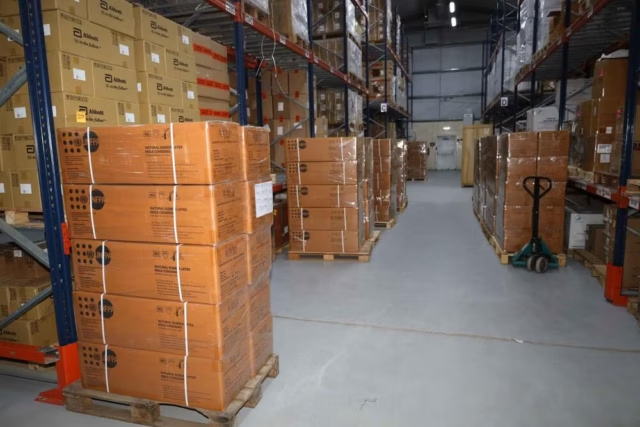
Recognizing that time was a critical factor, UNFPA in collaboration with the Ministry of Health, revised its procurement plan and took urgent steps to secure the procurement of over 6.6 million male condoms in July 2025. The procured condoms arrived in Liberia on 30 March 2026 and they are projected to sustain the country’s needs and distribution network for at least 10 months (covering December 2026), buying crucial time for the government and partners to secure funding for long-term supply and thus averting what would have been a shortage of an essential reproductive health commodity.

Male condoms are one of the most effective and crucial family planning commodities. Their dual function—preventing the transmission of sexually transmitted infections (STIs) and averting unintended pregnancies—underscores the significance of condoms in safeguarding individual and community well-being. By reducing the incidence of unintended pregnancies, the availability of condoms indirectly plays a part in reducing the burden of unsafe abortion, a major contributor to maternal mortality. These facts establish that any shortage of male condoms in a country like Liberia constitutes a public health concern with potentially far-reaching socio-economic consequences.
For UNFPA this intervention is a life-saving measure that underlines its commitment to support the government’s efforts to achieve universal access to modern contraceptives including condoms for all sexually active individuals. UNFPA encourages more domestic financing and commitment from the Government of Liberia as part of the sustainable supply of essential reproductive health commodities, including condoms. Condoms should be accessed either free of charge or at a low, affordable cost to ensure that poverty is not a barrier to protection.