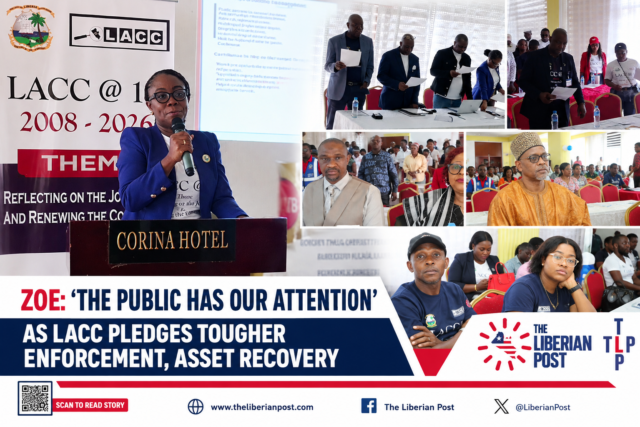
–Anti-Corruption Commission Executive Chairperson Says 18-Year Journey Has Reached a New Phase Focused on Enforcement, Prevention and Public Trust
MONROVIA, Liberia — Executive Chairperson of the Liberia Anti-Corruption Commission (LACC), Cllr. Alexandria Zoe, has declared that the Commission can no longer afford to make excuses for institutional shortcomings, as she pledged a more aggressive push toward enforcement, asset recovery, prevention and rebuilding public confidence in Liberia’s anti-corruption fight.
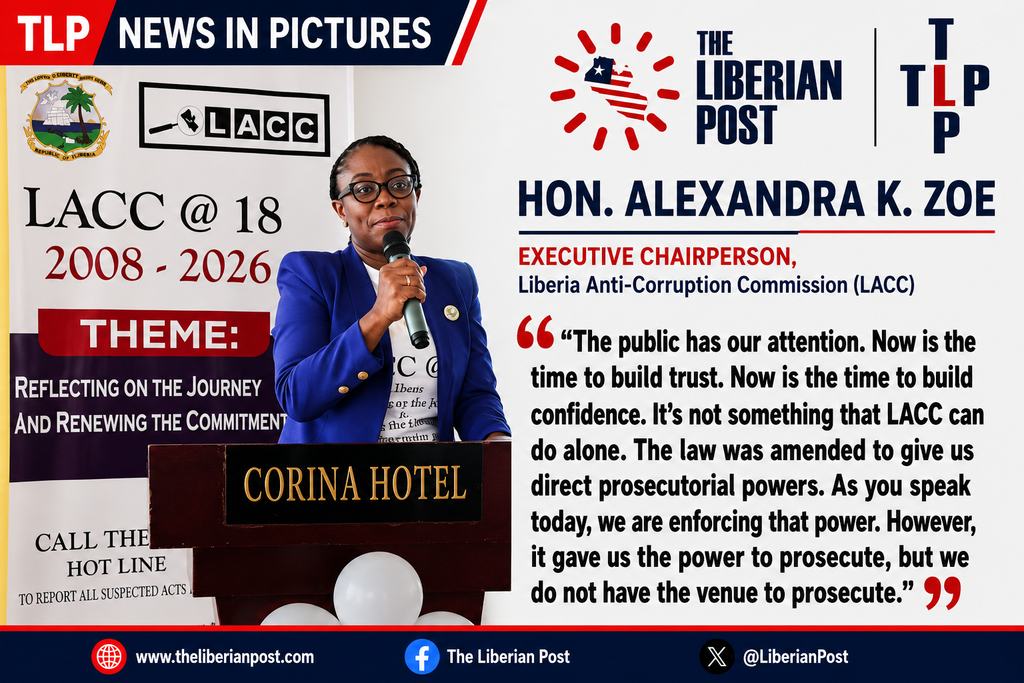
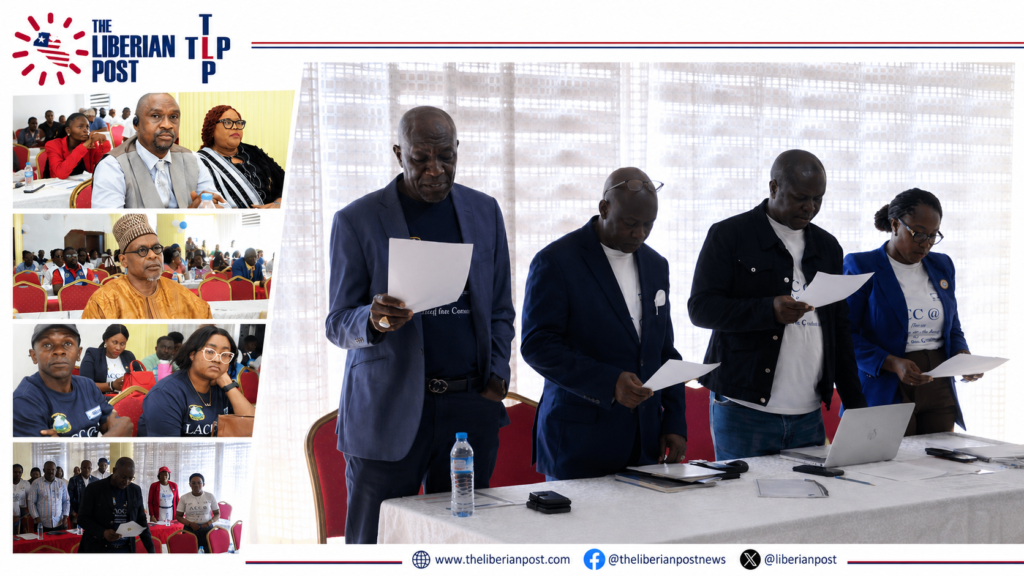
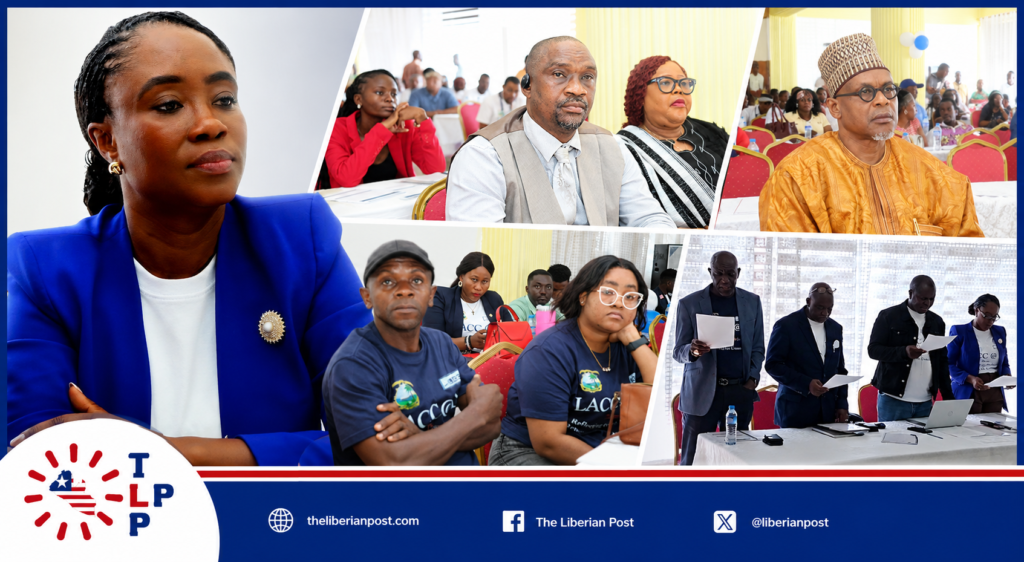
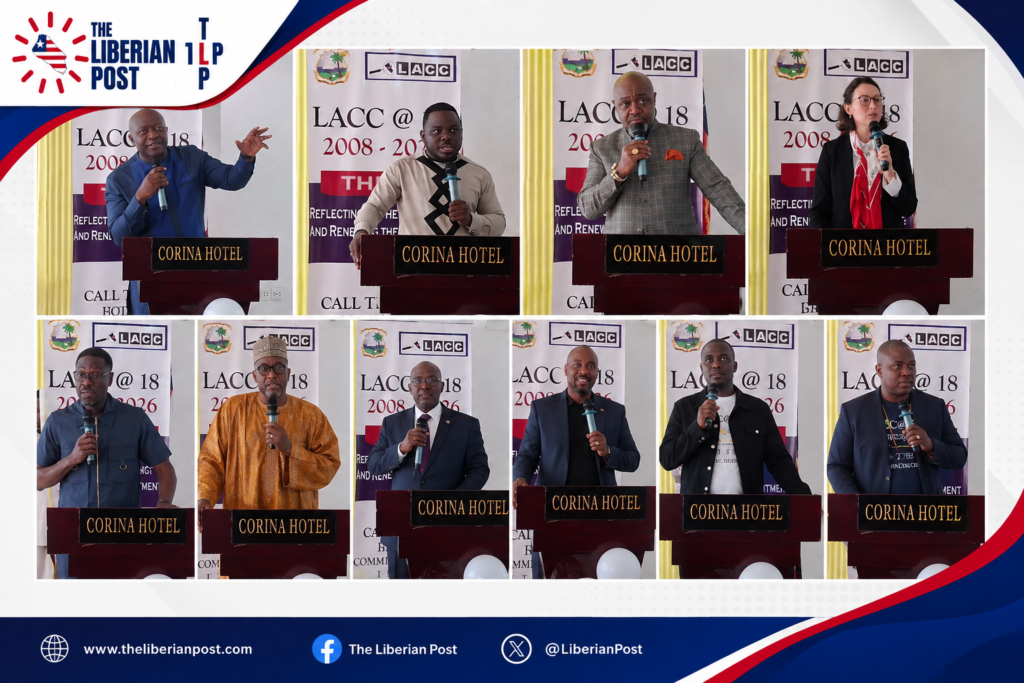
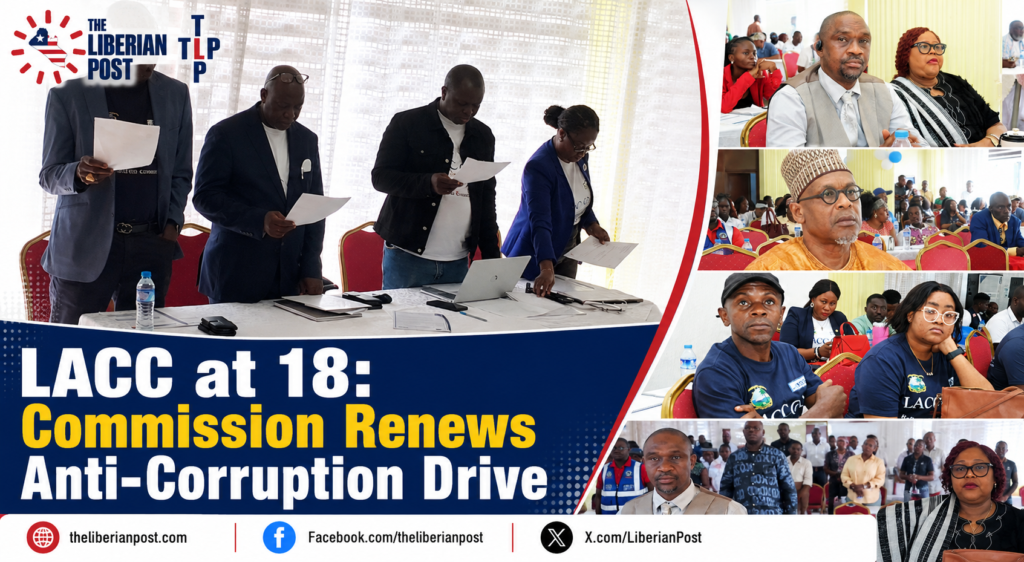
“The public has our attention,” Zoe told an audience of government officials, development partners, civil society representatives, members of the diplomatic community and other stakeholders during the LACC’s 18th anniversary celebration.
“Now is the time to build trust. Now is the time to build confidence,” she added.
Zoe’s remarks offered one of the clearest assessments yet of the Commission’s institutional journey, while outlining what she described as a new phase in its fight against corruption—one that must move beyond awareness and investigations toward stronger enforcement, prosecution, asset recovery and citizen engagement.
She acknowledged that the fight remains difficult but insisted that the LACC cannot win it alone.
“It’s not something that LACC can do alone,” Zoe said, calling on citizens to report suspected corruption and help extend anti-corruption awareness to communities the Commission cannot readily reach.
‘The Fight Against Corruption Is Not Easy’
Zoe said the LACC’s mandate is broad, encompassing investigation, prosecution, prevention, public education, asset declaration and recovery, but stressed that the effectiveness of those responsibilities depends heavily on public participation and institutional support.
She appealed to citizens to become active participants in the fight by reporting suspected wrongdoing and helping spread anti-corruption messages.
According to her, the Commission needs the public not merely as an audience but as an extension of its accountability system.
The appeal comes as the LACC seeks to expand its activities beyond Monrovia and establish a stronger presence in rural Liberia, where the Commission says citizens have repeatedly called for greater access to its services.
From War Legacy to Anti-Corruption Institution
Zoe placed the establishment of the LACC within Liberia’s post-war history, arguing that corruption and the erosion of public trust were among the conditions that contributed to the country’s devastating civil conflict.
She said post-war consultations, including recommendations emerging from the Truth and Reconciliation process, identified the need to create systems capable of preventing corruption from becoming entrenched.
That process eventually led to the development of the National Anti-Corruption Strategy and the establishment of an independent anti-corruption institution.
The LACC was subsequently established in 2008, following the declaration of corruption as a public enemy.
Zoe said the Commission has since evolved from a relatively small institution into an organization with broader legal powers and a significantly expanded workforce.

LACC Wants Specialized Anti-Corruption Court
One of the Commission’s major priorities, according to Zoe, is the establishment of a National Anti-Corruption Court.
She said the LACC now has direct prosecutorial powers under the amended anti-corruption law, but lacks a specialized venue dedicated to handling corruption cases.
“The law was amended to give us direct prosecutorial powers,” Zoe explained. “As you speak today, we are enforcing that power. However, it gave us the power to prosecute, but we do not have the venue to prosecute.”
Zoe said the proposed specialized court would help accelerate corruption trials and, ultimately, improve the recovery of stolen public assets.
She said the Commission intends to intensify its engagement with lawmakers when the Legislature resumes, pushing for passage of the legislation establishing the specialized court.
For Zoe, however, recovery must not end when stolen assets are retrieved.
She said recovered assets must be properly managed and directed toward their intended public purpose so that they do not become vulnerable to corruption again.
“Our goal is to do recovery as we have now matured,” she said, adding that the Commission will simultaneously strengthen prevention to stop new cases from occurring.

3,804 Officials Declared Assets
Zoe highlighted asset declaration as one of the Commission’s major achievements, reporting that 3,804 public officials, elected officials and government employees declared their assets between 2024 and 2025.
She said the Commission has also moved beyond simply collecting declarations and is now actively verifying information provided by public officials.
According to Zoe, 55 asset declarations have been verified, with some cases referred for further investigation after discrepancies or concerns emerged during the verification process.
She said the Commission has deliberately begun with institutions considered high-risk and is working with agencies including the Liberia Revenue Authority (LRA), Financial Intelligence Agency (FIA), banking institutions and the national document-registration authority to verify declared assets.
The exercise has not always been easy.
Zoe said some former government officials reacted negatively when investigators attempted to verify their declarations.
But she emphasized that asset verification is not intended as harassment.
“It’s to be able to verify the assets that you declare, to be able to match it against your income as well as your current assets,” she explained.
She disclosed that the Commission plans to publish an asset-verification report later in the year, including information on cases referred for investigation.
LACC Records 81 Concluded Investigations
Zoe also disclosed that the Commission investigated and concluded 81 cases between 2013 and 2025.
She said the cases produced varying outcomes, with some proceeding to court, some resulting in restitution, some being lost in court, and others remaining subject to further action.
The figures, she said, form part of the Commission’s effort to demonstrate where it has come from while establishing measurable benchmarks for the years ahead.
On prosecution, Zoe said the Commission had recorded 23 indictments over the period referenced in its presentation, while nine corruption-related cases were active before the courts as of the second quarter of 2026.
She said the Commission’s legal strategy is increasingly centered on deterrence through indictments, legal opinions, hearings, appeals and representation in corruption proceedings.

‘We Have the Law’
Zoe argued that Liberia is no longer primarily suffering from a shortage of anti-corruption laws, but from difficulties in implementing and enforcing those laws effectively.
“We have the law,” she said. “The implementation of the law is what we need to focus on now.”
She said this would require stronger coordination among the LACC, the judiciary, executive institutions and the Legislature.
The Commission’s enforcement challenge is compounded by limited resources, she added.
Zoe disclosed that the LACC currently has 87 employees, including only three prosecutors, despite the increasing complexity and volume of corruption investigations.
The Commission also has just over 20 investigators handling a large volume of cases, including more than 100 General Auditing Commission audit reports currently under review for possible investigative action.
Funding Remains Major Constraint
Zoe was candid about the financial difficulties confronting the Commission.
She said although the LACC has experienced some growth in its budgetary allocation since 2024, delays in the release of funds continue to affect operations.

She also disclosed that the Commission had experienced significant limitations in implementing its activities during 2026 because of delayed budgetary support.
“Sometimes we get the money. We get the allotment. But to release the money is a problem,” she said.
Zoe argued that predictable funding is especially important because the LACC investigates and prosecutes individuals and institutions that could potentially influence or undermine its operations.
She therefore renewed the Commission’s call for stronger financial independence and predictable quarterly releases as provided for under its governing law.
The LACC, she said, is working with international partners, including the International Monetary Fund, on reforms aimed at improving the institution’s financing arrangements.
Prevention Over Prosecution
Despite the Commission’s push for stronger enforcement, Zoe said prosecution cannot be the only answer to corruption.
“Prevention is the way,” she emphasized.
She said Liberia must prevent corruption before it occurs rather than rely exclusively on investigations and prosecutions after public resources have already been lost.
The Commission has consequently expanded its work with the Ministry of Education to introduce anti-corruption materials into primary schools.
Zoe said the LACC and its partners have developed anti-corruption textbooks for primary school students, although limited funding has constrained wider publication and distribution.
The Commission also plans to expand those efforts into rural communities.
Rural Liberia Becomes New Frontline
Zoe said the LACC conducted a survey in five counties in 2025 and received strong feedback that the Commission needs to take its awareness and services outside Monrovia.
The Commission has since begun working with partners, including the UNDP, to establish social accountability mechanisms in rural communities.
According to Zoe, social accountability volunteers are helping the LACC gather information and report suspected wrongdoing, contributing to an increase in investigations originating outside the capital.
But she said the current structure remains challenging because investigation teams must sometimes leave Monrovia for extended periods, temporarily slowing investigations in the capital.
The Commission therefore intends to establish regional and county-level services that can conduct not only public education but also investigation and prosecution outside Monrovia.
LACC Turns to Digital Systems
Zoe also identified digitization as an important part of the Commission’s modernization agenda.
She said the LACC is working with the World Bank to digitize its asset-declaration system and strengthen case-management and evidence-management infrastructure.
The Commission hopes to have its asset-declaration system digitized by the second quarter of 2027.
She said stronger digital systems would help address information gaps that currently make asset verification difficult.
Media Called ‘Champions’
Zoe gave an unusually strong endorsement of the Liberian media, describing journalists as important partners in the fight against corruption.
“The media, you are one of the champions of the fight against corruption,” she told journalists at the anniversary gathering.
She said reports published by the media frequently provide leads that subsequently become the basis for LACC investigations.
“I always say 90% of the time when the media reports and we go in and investigate, it is true,” Zoe said.
She urged journalists to continue reporting suspected corruption while also helping the Commission disseminate anti-corruption messages across Liberia.

Public Trust Is the New Test
Zoe acknowledged that public expectations surrounding the LACC are rising.
She said public confidence in the anti-corruption process was stronger in 2024 but that perceptions shifted in 2025 as citizens began demanding more visible prosecutions and asset recovery.
“The public wants to see prosecution and recovery,” she said, while stressing that prevention remains equally important.
She said the Commission must therefore balance public demands for punishment with the constitutional requirement for due process.
At the same time, Zoe said the LACC must become more effective in demonstrating tangible results.
Five Priorities Through 2030
Looking ahead, Zoe outlined five strategic priorities for the Commission’s 2026–2030 strategic plan.
They are to strengthen enforcement, scale up asset declaration, decentralize services, mobilize resources and build public trust.
She said the next phase will require sustained political will, predictable financing, stronger institutional systems, specialized technical capacity and active citizen participation.
For Zoe, the 18th anniversary is therefore not simply an occasion to celebrate the LACC’s past.
It is a call to deliver more.
“We don’t need to be making excuses anymore,” she said.
“The public has our attention.”
And as the Commission enters its next chapter, Zoe’s message was clear: Liberia has the laws and the institutions; the challenge now is to make them work effectively enough to deliver justice, recover public resources, prevent corruption and restore citizens’ trust.
For more information, follow The Liberian Post on Facebook (https://web.facebook.com/profile.php?id=61576017166570) and X, formerly twitter (https://x.com/LiberianPost).