


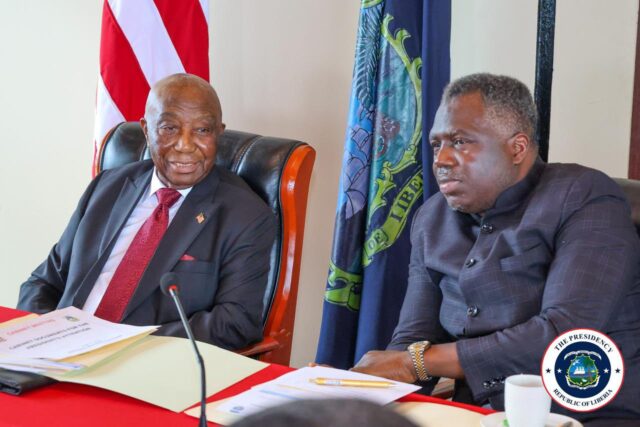
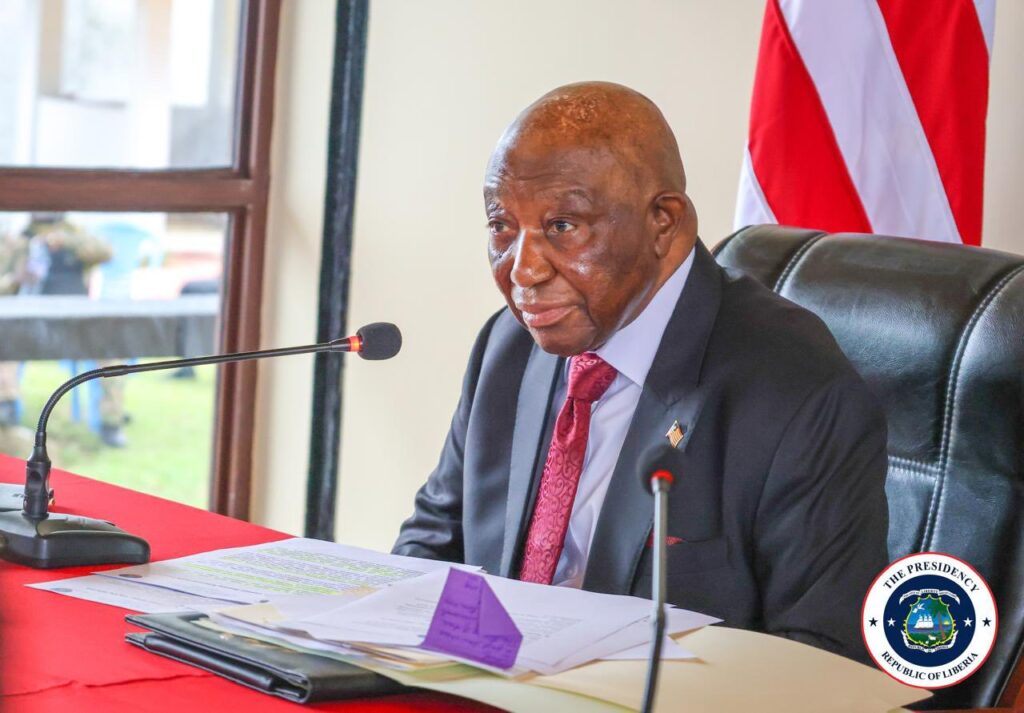
MONROVIA — President Joseph Nyuma Boakai has called on members of his Cabinet to remain focused, results-driven, and accountable as the government intensifies efforts to improve living conditions across Liberia, with renewed emphasis on tackling unregulated construction and modernizing infrastructure.
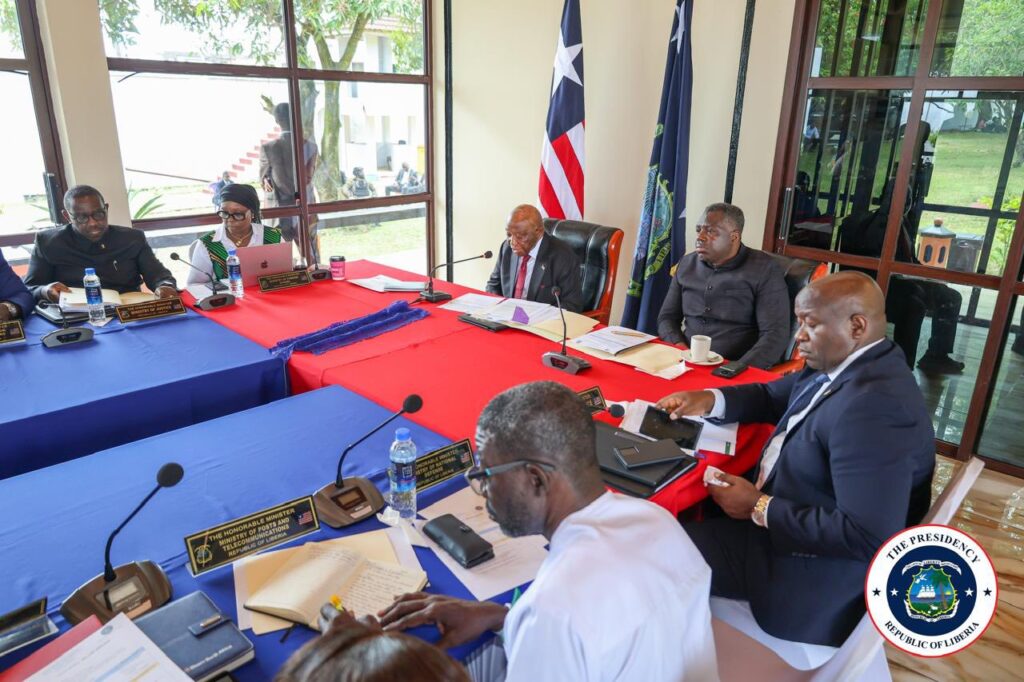
The President made the call Thursday, April 9, during the third Cabinet meeting of its fourth sitting in 2026, held at the Executive Mansion’s Tea House, where deliberations centered on rethinking infrastructure planning and governance.
“We have no apology when we do things that are right for our people. We are here to put the best here for our people,” President Boakai declared.
Infrastructure Reform Takes Center Stage
According to a Cabinet communiqué issued following the meeting, the Ministry of Public Works presented findings from the 2026 National Infrastructure Conference, highlighting the urgent need to regulate construction and address growing urban disorder.
Officials pointed to persistent challenges, including zoning violations, congestion, construction in alleyways, and the rapid spread of unplanned commercial structures—factors that continue to undermine orderly development and slow Liberia’s modernization agenda.
The Ministry also introduced a proposed Infrastructure Policy Roadmap (2026–2029), outlining phased strategies to strengthen infrastructure planning, governance, and implementation nationwide.
Push to Reorder Monrovia
Central to the discussions was the government’s “Reordering Greater Monrovia” initiative, now being formalized as the Greater Monrovia Urban Redevelopment Program (GMURP)—a flagship intervention aimed at restoring urban order and guiding sustainable growth.
President Boakai raised alarm over the capital’s rapid population expansion—from about 350,000 after the civil crisis to over one million residents today—which has placed immense pressure on essential services such as water, electricity, healthcare, and education.
He further observed that the proliferation of building material stores across the city is a visible indicator of unregulated construction, contributing to traffic congestion, obstruction of major roads, and environmental degradation.
The President has since directed the Ministry of Public Works to take swift action to address the situation.
Strengthening Regulations and Institutions
Cabinet is expected to review and potentially endorse several key proposals in the coming days, including:
- Adoption of the National Infrastructure Conference Report and Policy Roadmap as a national framework
- Approval of a compendium of regulations to enforce zoning compliance and construction standards
- Institutional reforms, including the restructuring or creation of agencies responsible for roads, infrastructure, water, and environmental management
- Strategies to mobilize financing through development partners and public-private partnerships
The Cabinet also agreed to institutionalize the National Infrastructure Conference as a triennial event, ensuring continuous policy review and coordination.
Enforcement and Public Responsibility
President Boakai reiterated that while government must lead enforcement efforts, citizens also have a responsibility to comply with planning laws.
He tasked authorities to clamp down on illegal construction practices, warning that unchecked development continues to exacerbate sanitation challenges and public health risks.
Policy Shift on Tourism Fees
In a separate development, the President announced the immediate suspension of recently introduced tourism-related fees by the Liberia National Tourism Authority, pending further consultations.
He emphasized that all policy decisions must be carefully evaluated to ensure fairness and practicality.
Culture and Community Engagement
The President also praised organizers of the Gbassajamba Festival in Robertsport, Grand Cape Mount County, describing it as a positive example of how cultural initiatives can strengthen national identity and stimulate local economies.
Call for Results
Closing the meeting, President Boakai urged Cabinet members to prioritize measurable outcomes over rhetoric, stressing the importance of coordination across ministries.
He called for stronger collaboration in key sectors, including education, communications, agriculture, and internal affairs, to ensure effective service delivery.
“Let our work reflect real impact,” the President emphasized, cautioning against distractions that could derail national progress.
The Cabinet’s latest deliberations signal a decisive shift toward stricter regulation, coordinated planning, and bold reforms aimed at transforming Liberia’s infrastructure landscape and accelerating national development.
Follow The Liberian Post on Facebook and X (formerly twitter)





Thanks for the new stuff you have disclosed in your article. One thing I would like to discuss is that FSBO human relationships are built after a while. By bringing out yourself to owners the first end of the week their FSBO is actually announced, prior to a masses start calling on Thursday, you build a good network. By mailing them tools, educational products, free reports, and forms, you become a good ally. If you take a personal desire for them in addition to their situation, you create a solid link that, on most occasions, pays off if the owners opt with a real estate agent they know in addition to trust — preferably you.
Comments are closed.