-Social Media Dispute Revives Painful Questions About Liberia’s Past
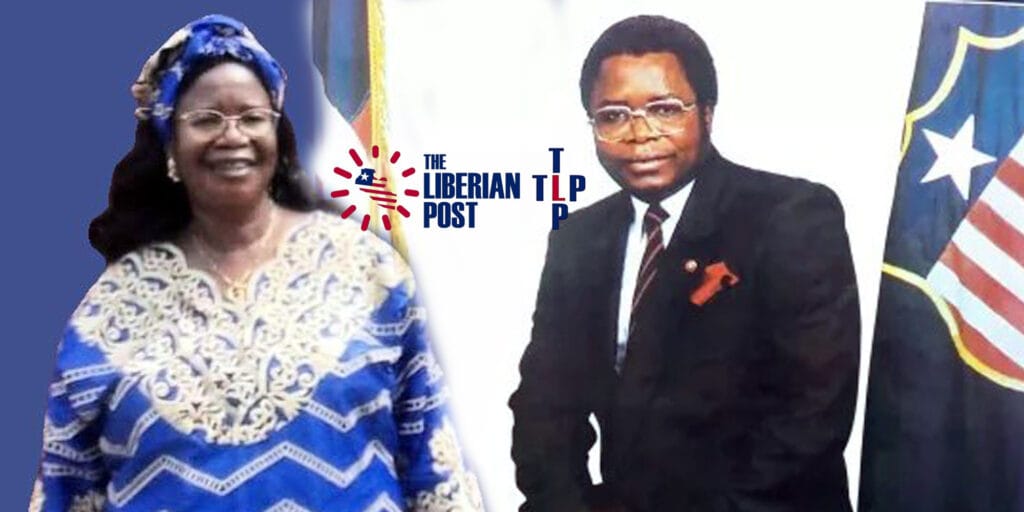
MONROVIA — A fresh and emotionally charged dispute tied to Liberia’s civil war history erupted over the weekend after Christiana Taylor, niece of former President Charles Taylor, publicly rejected claims by Veronica Doe that former President Samuel Kanyon Doe protected Charles Taylor’s mother during the early stages of Liberia’s brutal civil conflict.
The sharp exchange, which unfolded on social media Saturday, May 23, 2026, has reignited painful national conversations surrounding Liberia’s civil war atrocities, contested wartime narratives, and the unresolved emotional wounds still carried by families connected to Liberia’s former leaders and combatants.
Christiana Taylor’s response came few hours after Veronica Doe shared a widely circulated personal account describing how her father, Samuel Doe, allegedly sheltered Louise Yassa Zoe Taylor — Charles Taylor’s mother — inside the Executive Mansion during the early period of the rebellion launched by Taylor’s National Patriotic Front of Liberia (NPFL) in December 1989.

In her earlier recollection, Veronica Doe claimed that as a child she questioned her father over the phone about why he would protect the mother of a man leading an armed rebellion against his government.
According to Veronica, Doe responded by telling her: “A mother gives life, but she does not sit inside the mind of a grown man.”
The story generated widespread reactions online, with some Liberians viewing it as a rare display of humanity amid the violence of the war.
Christiana Taylor Rejects Mansion Story
But Christiana Taylor strongly disputed the account, accusing Veronica Doe of attempting to “rewrite history” and spreading falsehoods involving her late grandmother.
“No, my grandmother was never given refuge by Doe,” Christiana said in a lengthy and emotionally charged social media video.
Instead, she alleged that soldiers loyal to Samuel Doe forcibly removed her grandmother from Arthington — a settlement in rural Montserrado County historically associated with Americo-Liberian families — and later placed her on national television to read what she described as a pre-written appeal urging Charles Taylor to surrender.
“If my grandmother had ever entered that damn mansion with Doe, she would have been on the barbecue stick,” Christiana declared in one of the most controversial remarks from the video.
She further accused Veronica Doe of showing little empathy for victims of Liberia’s civil war and repeatedly reopening painful national wounds through social media commentary.
“You have absolutely no respect for the dead,” Christiana said. “You have zero empathy.”
Arthington and Liberia’s Expanding Civil War
Arthington, where Christiana said her grandmother lived during the conflict, became one of several strategic rural communities affected as Liberia’s civil war spread from Nimba County toward Monrovia in 1990.
The settlement, located northwest of Monrovia along the St. Paul River, became increasingly vulnerable during the rapid advances of Taylor’s NPFL rebels and the violent counter-operations carried out by the Armed Forces of Liberia (AFL) loyal to Samuel Doe.
As fighting escalated, civilians across Montserrado County fled toward churches, embassies, schools, and temporary refugee centers in search of safety from advancing rebel forces and government troops alike.
Liberia’s first civil war officially began on December 24, 1989, after Charles Taylor and NPFL fighters crossed into Liberia from neighboring Côte d’Ivoire to launch an armed rebellion against Doe’s government.
The conflict quickly evolved into one of West Africa’s bloodiest wars, leaving an estimated 250,000 people dead and displacing hundreds of thousands more over nearly 14 years of intermittent violence.

The Lutheran Church Massacre Revisited
Perhaps the most emotionally explosive portion of Christiana Taylor’s statement involved the notorious St. Peter’s Lutheran Church massacre — one of Liberia’s darkest wartime atrocities.
“The reason why a lot of people lost their lives in the Lutheran Church,” she alleged, “was because there was one target — my grandfather.”
According to Christiana, her grandfather, Judge Neilson Taylor — who was also Charles Taylor’s father — was among civilians seeking refuge at the church compound before being killed during the massacre.
The St. Peter’s Lutheran Church massacre occurred on July 29, 1990, when heavily armed soldiers affiliated with Doe’s Armed Forces of Liberia stormed the church compound in Monrovia’s Sinkor area, where approximately 2,000 civilians, mostly ethnic Gio and Mano residents, had sought refuge from the fighting.
International human rights organizations later documented the massacre as one of the deadliest atrocities of Liberia’s civil war.
Reports estimated that between 600 and 1,000 civilians were killed overnight.
The massacre became one of the defining symbols of Liberia’s wartime brutality and was later extensively documented by Liberia’s Truth and Reconciliation Commission.

Calls for Silence, Reflection, and Empathy
Throughout her remarks, Christiana Taylor argued that many families connected to Liberia’s former presidents and wartime actors have consciously avoided publicly reliving historical grievances.
“You don’t hear the Tolberts talking. You don’t hear the Tubmans talking. You don’t hear the Taylors coming out talking a lot,” she stated.
She accused Veronica Doe of continuously reopening painful national divisions instead of promoting reconciliation and empathy for all victims of the war.
“What you should be doing,” Christiana said, “is apologizing to the Liberian people and anybody else that have been hurt directly or indirectly by this senseless war.”
The remarks have since sparked intense debate across Liberian social media platforms, with some users defending Veronica Doe’s right to recount personal memories involving her father, while others sided with Christiana Taylor’s appeal for restraint and sensitivity toward wartime victims.

A Nation Still Haunted by War
Beyond the personal confrontation, the dispute has once again exposed how deeply unresolved Liberia’s wartime trauma remains more than two decades after the guns fell silent.
Successive governments and reconciliation efforts have struggled to fully address questions surrounding accountability, historical memory, and justice for victims of the civil war.
Although Liberia’s Truth and Reconciliation Commission (TRC) documented widespread atrocities committed by nearly all major factions and political actors, many of its key recommendations — including the establishment of a war crimes court — were never or are yet to be implemented.
As a result, debates surrounding responsibility, victimhood, and competing historical narratives continue to resurface publicly, especially among younger generations using social media to revisit Liberia’s painful past.
For many Liberians, the latest confrontation between descendants and relatives of former wartime leaders serves as a painful reminder that while the war officially ended years ago, the emotional battles over memory, grief, blame, and reconciliation remain far from settled.
Follow The Liberian Post on Facebook and X (formerly twitter).