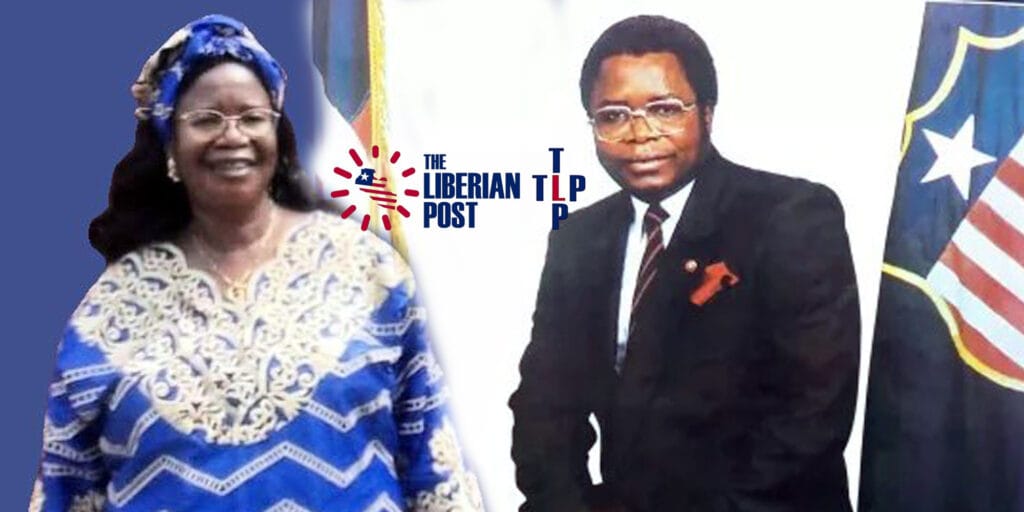
The emotional public confrontation between Veronica Doe and Christiana Taylor is far more than a social media quarrel between two women connected to Liberia’s painful civil war history.
It is a mirror reflecting a nation still struggling to reconcile with its past.
Behind the anger, accusations, grief, and conflicting memories lies a deeper national truth: Liberia’s civil war may have officially ended in 2003, but emotionally, psychologically, and morally, the country is still carrying the wounds of that conflict.
The exchange reopened painful memories involving former President Samuel Kanyon Doe, former President Charles Taylor, the Lutheran Church massacre, wartime atrocities, revenge killings, and the suffering of innocent civilians trapped between competing armed factions.
For some Liberians, Veronica Doe’s story represented an attempt to show a human side of her father during the war. For others, Christiana Taylor’s response reflected the unresolved pain carried by families who lost loved ones during one of the darkest periods in Liberia’s history.

Both women, in different ways, were speaking from inherited trauma.
And that is precisely why we Liberians must approach these conversations carefully — not with hatred, denial, or selective memory — but with reconciliation, accountability, and empathy.
The Danger of Selective Memory
One of the greatest dangers in post-war societies is selective remembrance.
Every faction remembers its own suffering. Every family remembers its own pain. Every political group highlights the crimes committed against them while minimizing or ignoring the suffering of others.
But Liberia’s tragedy was not one-sided.
The civil war destroyed families across every tribe, county, religion, and political background. Doe supporters suffered. Taylor supporters suffered. Gio/Mano families suffered. Krahn families suffered. Mandingos suffered. Civilians suffered most.

Entire villages disappeared. Children became orphans. Women were violated.
Bodies were dumped into rivers and mass graves.
Thousands never even received proper burials.
That is why reconciliation cannot be built upon historical manipulation or emotional competition over who suffered more. True reconciliation begins when a nation collectively acknowledges that all innocent victims mattered.
Liberia cannot heal by romanticizing any war figure while ignoring the suffering connected to their actions or administrations.
Reconciliation Without Accountability Is Fragile
At the same time, reconciliation without accountability becomes empty political theater.
For years, Liberia struggled with a dangerous silence surrounding wartime atrocities. The country often promoted “peace” while avoiding honest national confrontation with the horrors of the war.
But genuine peace requires moral courage.
It requires truth. It requires accountability.

This is why recent efforts under the administration of President Joseph Nyuma Boakai deserve national recognition.
The Boakai administration has begun taking symbolic and institutional steps aimed at confronting Liberia’s painful history more honestly.
Among the most significant reconciliation gestures was the dignified reburial of former President Samuel Doe and former First Lady Nancy Doe — a moment many Liberians viewed as long overdue national recognition of a tragic chapter in Liberia’s history.
The administration also supported national remembrance efforts connected to former President William R. Tolbert Jr. and several government officials who were publicly executed on the Barclay Training Center beach following the 1980 coup.
For decades, those wounds remained politically sensitive and emotionally unresolved.
These symbolic acts matter because reconciliation requires acknowledging the humanity of even those who died amid political conflict.
But symbolism alone is not enough.
The Boakai administration has also moved toward implementation of one of Liberia’s most debated post-war justice mechanisms — the proposed War and Economic Crimes Court.

The effort follows longstanding recommendations by Liberia’s Truth and Reconciliation Commission, which documented widespread atrocities committed by multiple factions and political actors during the civil wars.
For years, many victims believed Liberia avoided accountability because powerful wartime figures remained politically influential.
Now, the conversation appears slowly shifting.
Whether the process ultimately succeeds or fails, the national willingness to finally discuss justice seriously is itself historically significant.
Empathy Is the Missing Ingredient
But perhaps the most important lesson from the Taylor-Doe exchange is the urgent need for empathy.
We, Liberians, must stop treating wartime pain as political ammunition.
The suffering of one family does not cancel the suffering of another.
The death of one victim does not make another victim less important.
The children and relatives of former leaders did not create the war themselves, yet many still carry emotional scars, inherited grief, public judgment, and unresolved trauma tied to the actions of their parents and relatives.
That reality requires compassion, not mockery.
Liberia must learn to discuss its history honestly without dehumanizing one another.
The country’s future cannot be built upon permanent hatred, tribal revenge, or endless political bitterness.
Nations that survive traumatic conflicts do so by combining memory with responsibility, truth with reconciliation, and justice with empathy.
Rwanda understood this after genocide. South Africa understood this after apartheid.
Liberia and Liberians must now decide whether it truly wants healing or merely temporary silence.
Because silence is not reconciliation. Avoidance is not peace. And selective justice is not national healing.
The Taylor-Doe confrontation should therefore not simply become another viral social media battle.
Instead, it should remind every Liberian that the war is not fully over until the nation learns how to collectively mourn, collectively acknowledge wrongdoing, and collectively embrace a future bigger than the divisions of the past.
Only then can this nation genuinely move forward.
Follow The Liberian Post on Facebook and X (formerly twitter).