BY DANIEL H. SMITH
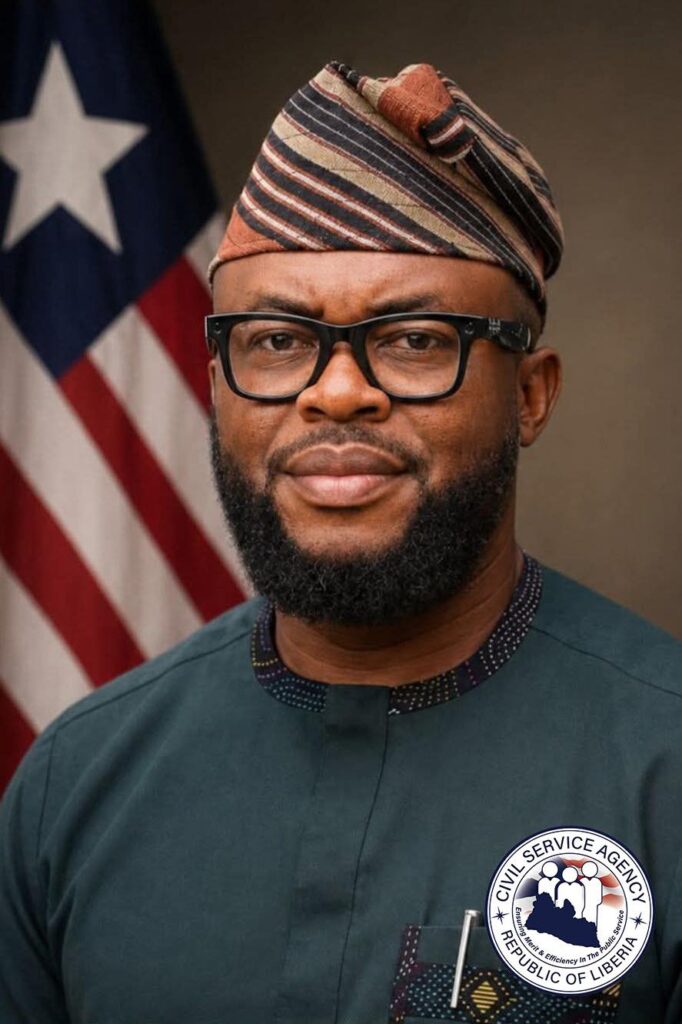
This analysis examines Dr. Josiah F. Joekai, Jr.’s public response to Senator Amara Konneh’s allegations concerning his attendance at a NIMBO political event. It does not take sides in the broader political dispute between the two officials, nor does it make judgments about either man’s character or motives. Its sole concern is legal and institutional: whether the arguments Dr. Joekai advances in his own defense are sound, and whether his conduct as Director General of the Civil Service Agency (CSA) is consistent with the legal obligations of his office.
The analysis proceeds in five parts. First, it examines the central logical problem with Dr. Joekai’s defense: the claim that the head of a regulatory institution is not bound by the ethical standards he enforces on others. Second, it scrutinizes his invocation of the day of the week as a legal defense. Third, it assesses whether his NIMBO attendance constitutes prohibited political activity under the National Code of Conduct. Fourth, it evaluates the legal sufficiency of his distinction between supporting candidates and formal party membership. Fifth, it addresses the broader institutional question of accountability and transparency.
I. The Institutional Contradiction: Enforcing Standards One Does Not Follow
The most fundamental problem in Dr. Joekai’s response is structural rather than factual. His defense rests, in significant part, on the premise that as a political appointee serving at the pleasure of the President, certain civil service conduct standards do not bind him in the manner they bind tenured civil servants. Whatever legal merit this distinction may carry in narrow technical terms, it is deeply corrosive when invoked by the head of the institution mandated to enforce those very standards.
The Civil Service Agency does not merely administer paperwork. It is the custodian of the ethical architecture of Liberia’s public service. Its mandate includes enforcing codes of conduct, disciplining officials who violate standards of neutrality and professionalism, and ensuring that the public service operates free from partisan interference. When the Director General of this institution publicly argues that he personally occupies a zone of lesser accountability, the damage is not only to his own credibility; it is to the credibility of every standard the CSA seeks to uphold.
The principle at work here is not partisan or political.
It is a foundational rule of institutional integrity: the authority of an enforcement body derives, in large part, from the demonstrated willingness of its leadership to be bound by the same norms it applies to others. A judiciary whose chief justice openly disregards procedural rules cannot command public confidence in judicial proceedings. A financial regulator whose director engages in insider trading cannot credibly pursue market integrity. In the same way, a Civil Service Agency whose director general claims personal exemption from conduct standards cannot command the respect of the public servants it regulates.
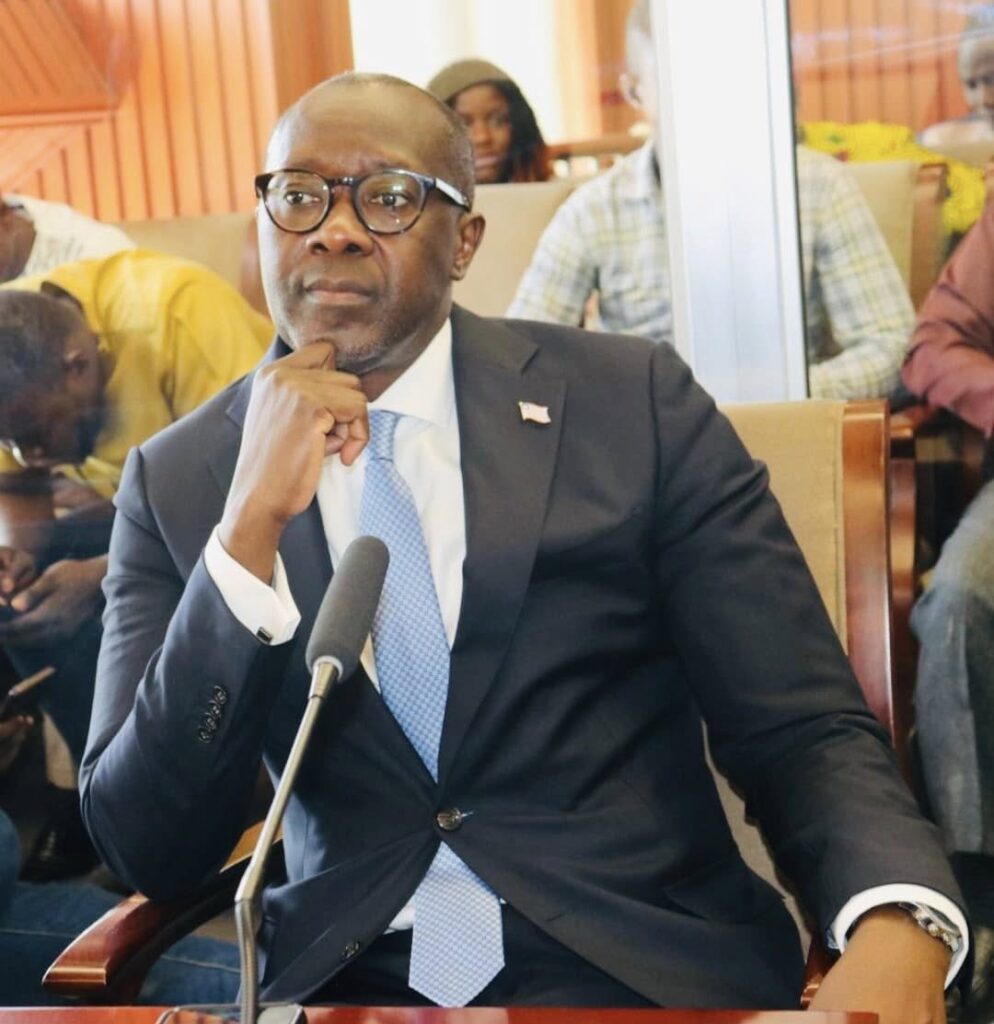
It is worth noting that the comparison to tenured civil servants drawn by Senator Konneh and dismissed by Dr. Joekai as a mischaracterization actually understates the case. Political appointees such as the Director General wield greater institutional power than ordinary civil servants, not less. They set policy, direct enforcement, and exercise discretionary authority over thousands of public employees. If accountability standards track the exercise of power and public trust, then the case for subjecting senior appointees to heightened scrutiny is stronger, not weaker, than the case for scrutinizing tenured staff.
II. The Day of the Week Defense
Dr. Joekai’s repeated emphasis on the fact that the NIMBO event occurred on a Sunday deserves careful legal examination, because the implication of his argument is that the calendar provides relevant legal cover — has no basis in Liberian law.
The National Code of Conduct for Public Officials does not contain provisions limiting its application to weekdays, business hours, or official government events. Statutory obligations attached to public office are continuous in nature. A public official holds that office with all of its associated duties, prohibitions, and ethical constraints every day of the week, not only during working hours. This is not a novel or controversial legal proposition: it is the standard rule applied to public officials across democratic systems. Judges are prohibited from accepting gifts on weekends. Ministers may not misappropriate public funds on public holidays. The temporal context of a prohibited act does not transform its character.
To be clear, the question is not whether Dr. Joekai is entitled to personal time, or whether he may attend social or religious events as a private individual on weekends. Of course he may. The question is whether, at the specific event in question, he was acting as a private citizen or as a public official present in an official capacity at a politically charged event.
Given that he attended wearing branded NIMBO T-shirt at an organized political mobilization event — and that his attendance was publicized — the characterization of his presence as purely private is difficult to sustain. A government official’s public visibility and institutional identity do not disappear when the calendar turns to Sunday.
III. What Is NIMBO, and What Does Attendance Signify?
Central to assessing Dr. Joekai’s conduct is an accurate understanding of what NIMBO is. NIMBO is not a civic association, community service organization, or nonpartisan forum. It is a political movement established under the auspices of the Deputy Speaker of the Legislature, organized with the explicit purpose of building popular support for the re-election of President Joseph Nyuma Boakai in the 2029 election. Its events are not neutral gatherings; they are mobilization activities oriented toward a specific electoral outcome.
This characterization matters because it determines which provision of the Code of Conduct applies to Dr. Joekai’s attendance. Part V, Section 5.1 of the National Code of Conduct for Public Officials prohibits presidential appointees from, among other things: engaging in political activities, serving on campaign teams for political parties or candidates, and canvassing for elective office. The prohibition is not limited to formal campaign offices or registered party events — it extends to political activities and canvassing in their ordinary meaning.
Attending a political mobilization event in branded movement apparel is, on any reasonable reading of that language, participation in a political activity. The apparel matters because it transforms passive attendance into visible, public endorsement. An official who attends a rally in civilian clothes might argue incidental presence. An official who attends wearing the movement’s branded shirt has made a statement — one visible to all present, and, in the age of social media, visible far beyond the event itself.
It is also worth noting that Dr. Joekai himself publicly referenced Part V, Section 5.1 of the Code of Conduct in a December 2024 post — made after he had signed both a performance contract and the Code of Conduct with the President on behalf of the CSA. He is therefore not in a position to claim unfamiliarity with the provision or uncertainty about its scope.
IV. The Party Membership Distinction
Dr. Joekai advances what appears to be his primary legal defense that supporting a candidate during an election does not constitute formal political party membership, and that the Code of Conduct’s prohibitions are directed at formal party membership rather than at electoral support activities.
This distinction does not hold on a plain reading of the statute. The Code of Conduct prohibits political activities, canvassing for elective office, and serving on campaign teams. These provisions are meaningfully broader than a prohibition on formal party membership. A person can engage in political canvassing without holding a party card. A person can serve on a campaign team without being registered as a party member. The drafters of the Code of Conduct clearly understood this, which is why they chose language extending to activities rather than limiting the prohibition to status.
Furthermore, the purpose of the Code of Conduct’s political neutrality provisions is not simply to prevent officials from holding party cards. It is to protect the integrity and perceived neutrality of the public service. An official who publicly participates in a movement explicitly organized around the re-election of the incumbent president undermines that neutrality whether or not he has signed a party membership form. The harm the law seeks to prevent — the erosion of public confidence in an impartial civil service — occurs in either case.
The correct legal test under the Code of Conduct is therefore not whether Dr. Joekai holds formal party membership, but whether his conduct constitutes political activity or canvassing within the meaning of the statute. By that standard, the analysis in Section IV above applies directly: visible, public participation in a political mobilization event wearing its branded apparel satisfies the definition of political activity under any ordinary construction of the term.
V. The MCC Disciplinary Allegations: Transparency and Assertion
Senator Konneh’s allegation that Monrovia City Corporation employees were disciplined for reasons connected to political activity — rather than the stated grounds of misconduct and unprofessionalism — raises a separate but related question about institutional accountability.
Dr. Joekai denies the allegation outright, asserting that the disciplinary actions were taken solely on legitimate grounds. That may well be true. But a bare denial, however forceful, cannot substitute for transparent evidence in a democracy. The difficulty here is structural: the official who asserts that the proceedings were legitimate is the same official who directed them. Self-certification of one’s own institutional decisions is not sufficient when those decisions are in dispute.
The appropriate response to allegations of politically motivated disciplinary action is not a public denial but transparent evidence: the documented grounds for each action, the process followed, any procedural safeguards observed, and a demonstration that the standards applied were consistent with those applied in comparable cases. If Dr. Joekai’s conduct of those proceedings was entirely proper, that evidence should be readily available. The public interest is served by its disclosure, not by its withholding.
VI. Legislative Oversight and the Limits of Victimhood Framing
Dr. Joekai’s response characterizes Senator Konneh’s conduct as a pattern of hostility and personal attack. This framing warrants examination, because it rests on a mischaracterization of the legislative role in a constitutional democracy.
The power of legislative oversight including the authority to publicly scrutinize the conduct of executive branch officials is not a courtesy extended to those officials at the legislature’s discretion. It is a structural feature of separated powers, designed precisely to enable the legislature to hold the executive accountable. Senators who raise questions about the conduct of political appointees are performing a constitutional function, not engaging in personal attacks.
This is not to say that legislative criticism is always accurate, fair, or conducted in good faith. It may not be. But the test for whether an official should respond substantively to legislative scrutiny is not the tone or motivation of the scrutiny; it is whether the underlying factual and legal questions raised are legitimate. The legal questions raised in this instance is whether Dr. Joekai violated the Code of Conduct, and whether disciplinary proceedings at the MCC were conducted properly — are plainly legitimate. They deserve a substantive legal response, not a characterization of the questioner’s motives.
VII. Accountability as Institutional Necessity
The arguments advanced by Dr. Joekai in his public response do not withstand factual scrutiny. The day-of-the-week defense has no basis in Liberian law. The party membership distinction is narrower than the statute requires. The characterization of NIMBO as a non-political gathering is inconsistent with its publicly stated purpose. The assertion that political appointees occupy a zone of lesser accountability than tenured civil servants, when advanced by the head of the Civil Service Agency itself, undermines the institutional authority of the office he leads.
None of this requires a finding that Dr. Joekai is a person of bad character, or that his broader record in office is without merit. It requires only the straightforward application of the legal standards that the National Code of Conduct establishes for all presidential appointees.
The integrity of Liberia’s civil service depends not on the perfection of its officials, but on their willingness to be held to clear, publicly established standards — and, when those standards are violated, to acknowledge the violation and submit to accountability. An institution whose leaders exempt themselves from its rules loses the moral authority to apply those rules to others. The Civil Service Agency is too important to Liberia’s democratic development to allow that erosion to proceed unchallenged.
It should be noted that the pastor who exempts himself from his own sermon does not just embarrass himself. He empties the church.